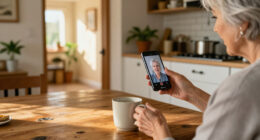

To reduce dizziness risks at home with Parkinson’s, you should review your medications with your doctor to prevent side effects. Keep pathways clear of clutter, loose rugs, and cords, and install grab bars and handrails for support. Make certain your home is well-lit, especially stairways and entry points, with nightlights if needed. Regular safety checks and home modifications can greatly improve your stability. Stay aware of these steps to make your environment safer and more secure. If you keep exploring, you’ll discover even more helpful tips.

Turn quiet afternoons into listening time
- Thousands of audiobooks, podcasts and originals
- Listen on your phone, tablet or Echo — also offline
- Cancel anytime
Key Takeaways
- Adjust or switch medications under healthcare supervision to minimize dizziness as a side effect.
- Remove clutter, secure rugs, and install grab bars to prevent falls and improve stability.
- Ensure all areas are well-lit with nightlights to enhance visibility and reduce disorientation.
- Conduct regular home safety checks and modify the environment to enhance accessibility.
- Use non-slip mats and support aids to provide additional balance and reduce dizziness episodes.

Dizziness is a common challenge for people with Parkinson’s, especially at home where everyday hazards can increase the risk of falls. Many times, this dizziness stems from medication side effects, which can cause blood pressure drops or dizziness as your body adjusts to new treatments. If you notice that your dizziness worsens after taking medication, talk to your doctor. They might need to adjust your dosage or switch you to a different medication to minimize these side effects. It’s vital not to stop or change medications without professional guidance, as doing so can worsen your symptoms.
Dizziness from medication may worsen; consult your doctor before making changes to your treatment plan.
Beyond medication, environmental hazards in your home can also contribute to dizziness and falls. Cluttered walkways, loose rugs, or uneven flooring create tripping risks that may make you feel unsteady. Ensuring your living space is clear of obstacles is essential. Use non-slip mats in the bathroom and kitchen, and secure loose cords or rugs that could cause you to trip. Installing grab bars in the bathroom and handrails along stairs provides additional support, helping you maintain balance when moving around. Additionally, regular home safety checks can help identify and address potential hazards before they cause an accident. Home safety inspections can be a proactive way to keep your environment secure. Taking steps to improve your home’s accessibility can also make a significant difference in reducing dizziness episodes.
Lighting plays an essential role in reducing dizziness risks. Poorly lit areas can obscure hazards and make it harder for you to see where you’re going. Make sure hallways, staircases, and entryways are well-lit, and consider using nightlights in bedrooms and bathrooms. Bright, even lighting can help you navigate your home safely and reduce the feeling of dizziness caused by sudden changes in lighting conditions. Additionally, lighting quality can influence your overall sense of stability and safety. Improving indoor illumination can also reduce shadowed areas that might contribute to disorientation. Incorporating adequate lighting solutions can further enhance your visibility and confidence while moving around.
As an affiliate, we earn on qualifying purchases.
Frequently Asked Questions
Can Dietary Changes Help Prevent Dizziness in Parkinson’s Patients?
Yes, dietary changes can help prevent dizziness in Parkinson’s patients. You should consider incorporating nutritional strategies that include balanced meals and proper hydration. Dietary supplements like vitamin B12 or iron may also support nerve health and prevent deficiencies linked to dizziness. Consult your healthcare provider to tailor these strategies to your needs, ensuring you avoid sudden drops in blood pressure and maintain stable energy levels, reducing dizziness risks effectively.
Are There Specific Exercises to Improve Balance and Reduce Dizziness?
You can improve your balance and reduce dizziness by practicing vestibular exercises and Tai Chi regularly. Imagine standing steady on a gentle breeze; these exercises help strengthen your core and enhance your inner ear’s function. Vestibular exercises target your balance system, while Tai Chi promotes slow, controlled movements that boost stability. Consistently integrating these into your routine helps you feel more confident and less dizzy at home.
How Does Medication Timing Affect Dizziness Risks at Home?
Medication timing markedly impacts dizziness risks because it can influence symptom fluctuations and medication side effects. When you take your meds on schedule, you help stabilize your symptoms, reducing sudden dizziness episodes. Skipping doses or taking them irregularly can cause spikes or drops in medication levels, leading to increased dizziness. Consistently timing your medication helps manage side effects and keeps your balance steady, lowering your risk of falls at home.
What Role Does Hydration Play in Managing Dizziness?
Imagine your body as a well-oiled machine, where electrolyte balance keeps everything running smoothly. Proper fluid intake guarantees your brain stays hydrated, preventing dizziness. When you stay hydrated, you’re replenishing lost electrolytes, which stabilizes blood pressure and reduces lightheadedness. Drinking water regularly and consuming hydrating foods help maintain this balance, giving you a steady, grounded feeling. Keep your body’s fluid levels ideal to minimize dizziness risks at home.
Can Assistive Devices Significantly Reduce Dizziness Episodes?
Yes, assistive devices can markedly reduce dizziness episodes by promoting fall prevention and providing better stability. Using assistive technology like grab bars, canes, or walkers helps you move more confidently, decreasing the risk of falls caused by dizziness. These devices support your balance and coordination, making daily activities safer. Incorporating assistive technology into your home environment empowers you to manage dizziness more effectively and maintain independence.
Conclusion
By taking simple steps like staying hydrated and organizing your space, you’re building a sturdy bridge over the river of dizziness. Just like a well-placed handrail keeps you steady on a treacherous path, these precautions help keep you safe at home. Remember, managing dizziness is a continuous journey, not a one-time fix. With patience and persistence, you’ll find your footing, turning potential falls into small stumbles, and keeping your independence alive.
Cold & flu season Picks
humidifiers
As an affiliate, we earn on qualifying purchases.