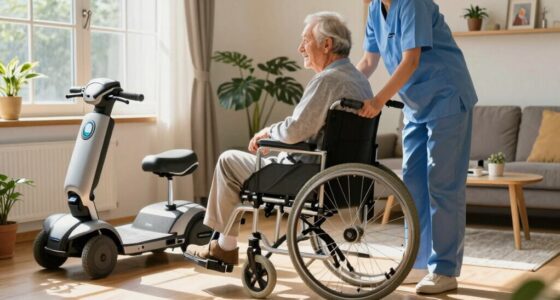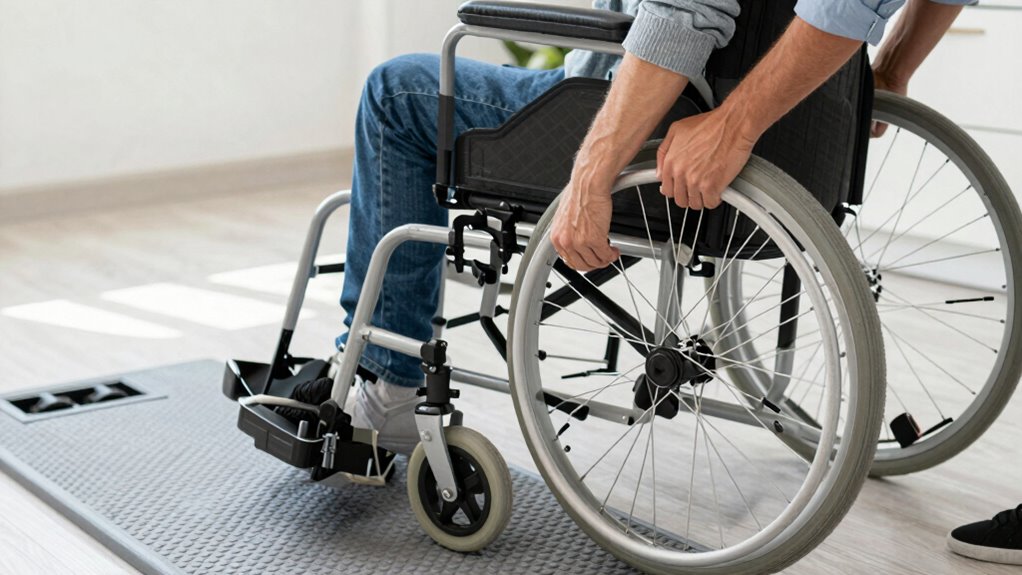

To reduce transfer stress around your power chair, guarantee you use assistive devices like transfer boards or grab bars for added stability. Practice proper techniques and communicate clearly with your caregiver to make each transfer smoother. Establish a consistent routine and check your equipment regularly for safety. With proper training and routines, you’ll feel more confident and comfortable. Keep exploring further tips to make your transfers even safer and easier.

Turn quiet afternoons into listening time
- Thousands of audiobooks, podcasts and originals
- Listen on your phone, tablet or Echo — also offline
- Cancel anytime
Key Takeaways
- Use assistive devices like transfer boards and grab bars to enhance stability and confidence during transfers.
- Ensure caregivers are properly trained in transfer techniques to minimize discomfort and reduce stress.
- Establish a consistent routine and communicate clearly to create predictability and lessen anxiety.
- Practice transfers in a controlled setting to build muscle memory and improve technique.
- Combine proper tools, training, and communication for a safe, comfortable, and stress-free transfer experience.
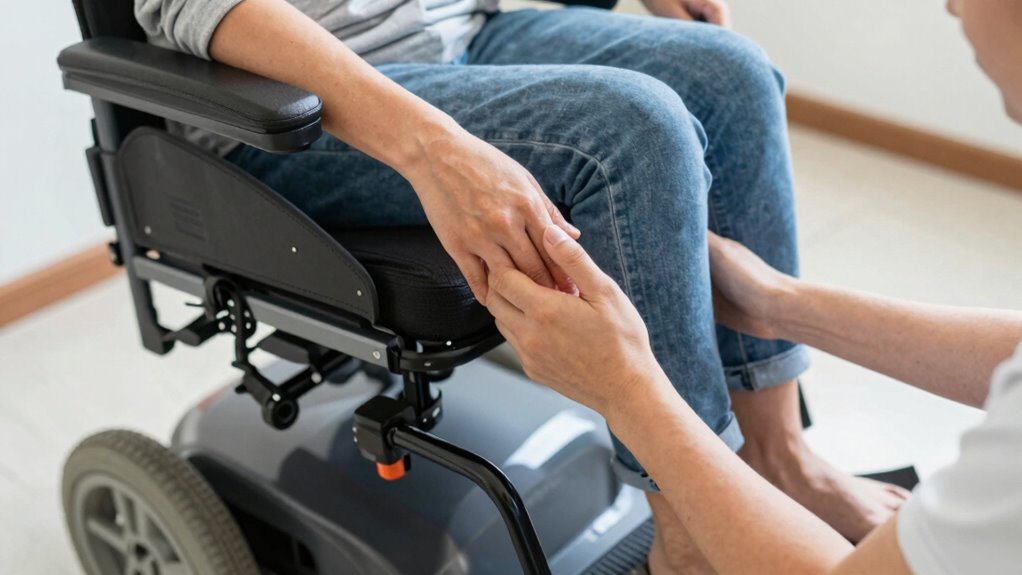
Are transfers around a power chair causing you anxiety or discomfort? You’re not alone. Many people find the process stressful, but with the right strategies, you can make it safer and more comfortable. One essential step is exploring assistive technology designed to ease transfers. Devices like transfer boards, grab bars, and slide sheets can provide extra stability and reduce the physical effort needed. These tools help you move smoothly from one surface to another, decreasing the risk of falls or injuries. Using assistive technology isn’t just about safety — it also boosts your confidence during transfers, making the whole process feel more manageable. Additionally, proper positioning is crucial for maintaining comfort and safety during transfers.
Assistive devices like transfer boards and grab bars help make transfers safer and boost your confidence.
However, technology alone isn’t enough. Caregiver training plays a crucial role in reducing transfer stress. If you’re working with a caregiver or a family member, ensuring they are properly trained can make a significant difference. Well-trained caregivers understand the correct techniques to support your transfers without causing discomfort or risking injury. They learn how to position themselves and you, how to use assistive devices effectively, and how to communicate clearly throughout the process. Proper training minimizes awkward movements and helps prevent strain on both sides, making transfers safer and less intimidating. Incorporating assistive technology into your routine can further enhance the safety and ease of transfers.
It’s also important to establish a routine. Consistency helps your body and mind adapt, reducing anxiety over time. Sit down with your caregiver to develop a step-by-step plan for each transfer. This routine can include checking assistive devices for stability beforehand, communicating clearly about each step, and ensuring the environment is safe and clutter-free. Clear communication is key; let your caregiver know what feels comfortable or painful during the transfer. When both of you are on the same page, the process becomes more predictable and less stressful. Building familiarity through routine practice can significantly improve your confidence and comfort. *In addition, understanding the benefits of proper transfer techniques can motivate you and your caregiver to adhere to safety protocols.*
Practicing transfers in a controlled, relaxed setting allows you to build muscle memory and better understand your limits. Repetition helps you become familiar with the movements, and your caregiver can correct techniques as needed. Over time, this practice will reduce your anxiety, making transfers feel more natural. Remember, patience is vital. Every person’s needs are different, and it might take some time to find the right combination of assistive technology and caregiver techniques that work best for you. Incorporating training and education can empower you to manage transfers more effectively and independently.
In the end, reducing transfer stress involves a combination of the right tools, proper training, routine, and open communication. With these elements in place, you can feel more in control during transfers, improving both your safety and overall comfort around your power chair.
transfer boards for power wheelchair
As an affiliate, we earn on qualifying purchases.
As an affiliate, we earn on qualifying purchases.
Frequently Asked Questions
What Are Common Mistakes to Avoid During Transfers?
You should avoid rushing during transfers to maintain transfer safety. Don’t forget to double-check your equipment selection—use the right transfer aids and guarantee they’re secure. Attempting transfers without proper technique or neglecting to lock the wheelchair wheels can lead to falls or injuries. Keep your feet flat on the ground, maintain proper posture, and ask for assistance if needed. These precautions help confirm a safe, smooth transfer every time.
How Do I Choose the Best Transfer Assistive Devices?
You should choose assistive technology with ergonomic design to guarantee comfortable, safe transfers. Consider devices like transfer boards, grab bars, or transfer poles that fit your specific needs. Look for options that are easy to operate and provide stability, reducing stress during transfers. Consult with a healthcare professional or occupational therapist who can recommend the most suitable assistive devices tailored to your mobility level and environment.
Can Transfer Techniques Be Customized for Different Chairs?
Yes, transfer techniques can be customized for different chairs. Think of it as tailoring a suit—personalized transfer adjustments fit your specific needs and chair features. You can explore custom chair modifications that enhance stability and ease of movement. By working with a skilled therapist or technician, you guarantee your transfer methods are adapted perfectly, making your transfers smoother and safer, no matter the chair you’re using.
How Does Body Weight Impact Transfer Safety?
Your body weight greatly impacts transfer safety and stability. If you’re heavier, you might need additional support or assistance to maintain balance and prevent falls. Lighter individuals often find transfers easier, but still need proper techniques to guarantee stability. Always adjust your transfer method based on your body weight, use grab bars, and ask for help if needed. Being mindful of your weight helps you stay safe and confident during transfers.
What Should I Do if I Feel Unsteady During Transfers?
Ever feel unsteady during transfers? If so, focus on improving your balance exercises regularly to boost stability. Prioritize mental preparedness by taking deep breaths and visualizing a successful transfer. If you start to feel unsure, pause, hold onto a sturdy surface, or ask for assistance. Remember, building confidence through practice and mental readiness helps you stay steady, making transfers safer and less stressful.
Conclusion
Think of transferring around your power chair like sailing a boat through calm waters. With patience, proper technique, and confidence, you steer smoothly, avoiding choppy waves of stress. Just as a skilled sailor trusts their skills, trusting yourself makes each transfer feel safer and more effortless. Over time, you’ll find your rhythm, turning what once felt like turbulent seas into a peaceful voyage. Keep practicing, and soon, transfers will be just another gentle glide across calm waters.
Evergreen bestsellers Picks
bestsellers
As an affiliate, we earn on qualifying purchases.