
During winter, you can reduce fall risks by dressing in layers and wearing shoes with good traction to prevent slips. Keep your walkways clear of clutter and add non-slip mats in bathroom areas. Stay warm to avoid muscle stiffness and maintain balance. Regular indoor exercises help strengthen muscles and improve stability, while a bone-healthy diet supports your bones. Taking these proactive steps can keep you safer; discover more simple strategies to stay steady all winter long.

Turn quiet afternoons into listening time
- Thousands of audiobooks, podcasts and originals
- Listen on your phone, tablet or Echo — also offline
- Cancel anytime
Key Takeaways
- Wear sturdy, non-slip footwear and layered clothing to prevent slips and maintain warmth during winter outdoor activities.
- Keep walkways clear and use non-slip mats indoors to reduce tripping hazards on icy or wet surfaces.
- Engage in indoor strength and balance exercises regularly to improve stability during winter months.
- Ensure adequate sunlight exposure or supplement vitamin D to support bone health and prevent fragility.
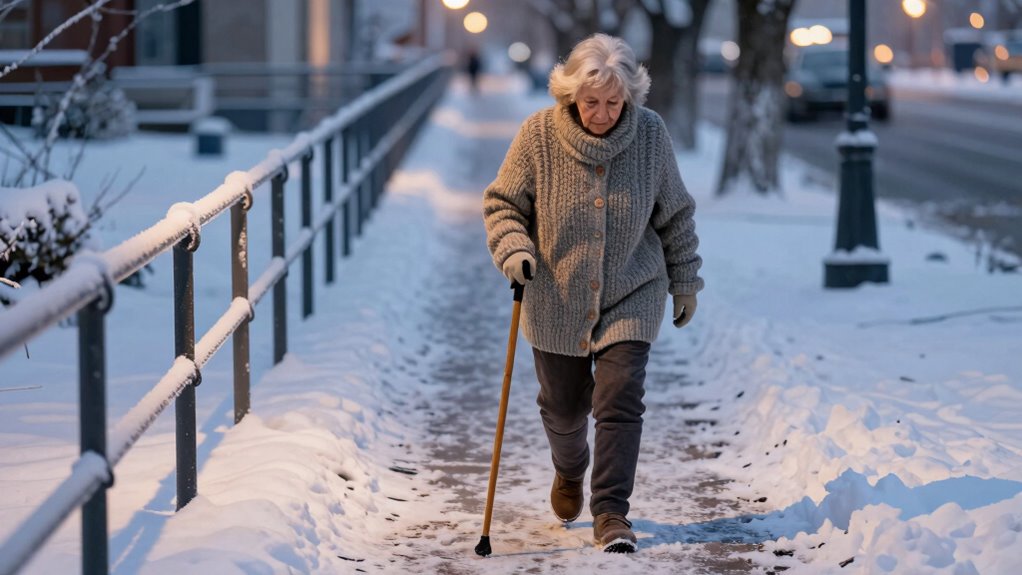
- Use assistive devices like canes or walkers for added stability on icy or slippery surfaces.
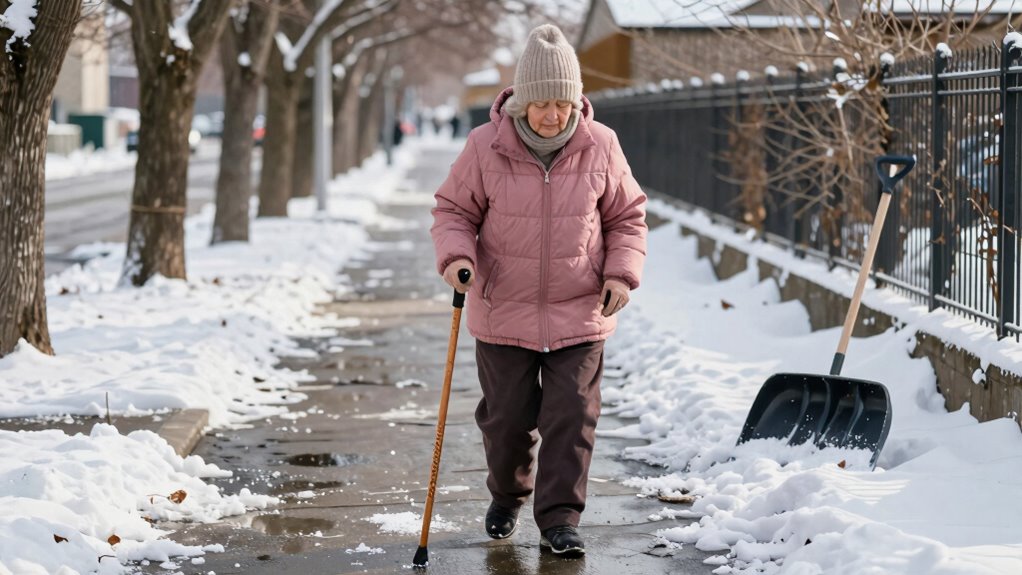
Winter can be a dangerous season for seniors with fragile bones, as icy sidewalks and slippery surfaces increase the risk of falls. To stay safe, it’s essential to focus on ways to strengthen your bones and maintain your balance indoors. Engaging in indoor exercise is a great way to keep your muscles active and improve stability without risking a fall outside. Simple activities like seated leg lifts, gentle yoga, or using resistance bands can boost your strength and help you feel more confident on your feet. Regular movement keeps your bones healthy and can reduce the likelihood of fractures if you do happen to slip.
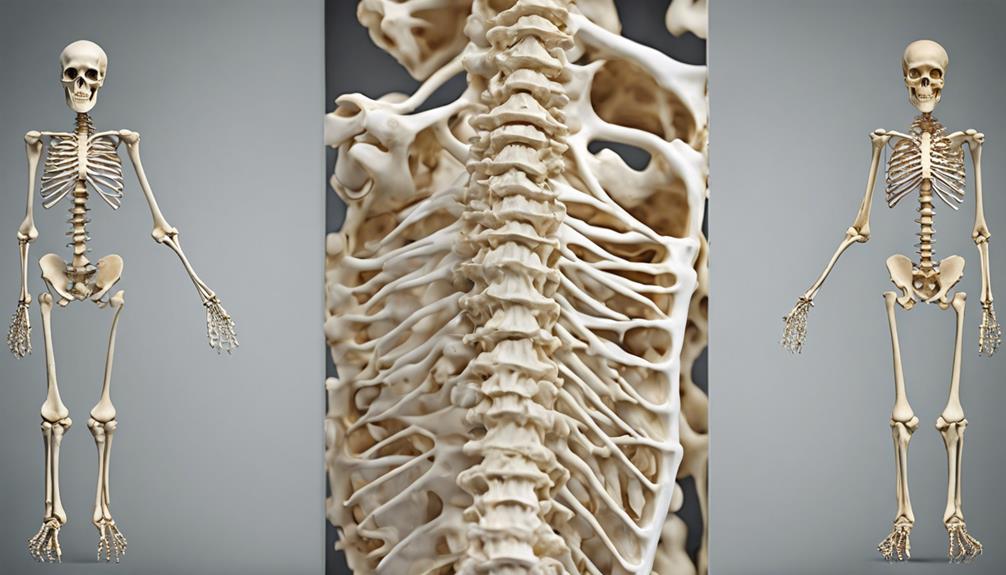
In addition to staying active indoors, paying attention to your diet plays a vital role in fall prevention. Bone strengthening foods are especially important during winter when outdoor activities are limited. Incorporate foods rich in calcium and vitamin D into your meals, such as dairy products like yogurt and cheese, leafy greens like kale and broccoli, and fortified foods like cereals and plant-based milk. These nutrients are essential for maintaining bone density and preventing osteoporosis, which makes bones more fragile and prone to fractures. Sunlight exposure, though limited in winter, can also help your body produce vitamin D naturally, so try to get some outdoor time when possible, even if it’s just a short walk on a sunny day. Additionally, understanding how bones weaken can motivate you to prioritize bone health during the winter months. Incorporating nutrients for bone health into your diet can provide extra protection against falls and fractures. Taking steps to maintain bone density is crucial for reducing fracture risk and ensuring stronger bones over time. Staying informed about osteoporosis risk factors can help you take proactive measures to protect your skeletal health.
It’s also wise to check your home environment for hazards that could cause falls. Keep walkways clear of clutter, use non-slip mats in the bathroom, and ensure your lighting is adequate to see every step clearly. Wearing sturdy, non-slip shoes indoors can provide additional grip and support, especially on slick floors. If you’re concerned about balance, consider using assistive devices like a cane or walker, and don’t hesitate to ask your healthcare provider about balance exercises or physical therapy options tailored for you. Being aware of indoor fall risks can help you take proactive steps to create a safer living space.
Staying warm and comfortable is equally important to prevent muscle stiffness, which can impair your balance. Dress in layers and wear shoes with good traction. Remember, winter isn’t just about bundling up; it’s about actively taking steps to protect your health and safety. By combining indoor exercise, a diet rich in bone strengthening foods, and a safe home environment, you considerably reduce your risk of falls and keep your bones stronger throughout the winter months.
As an affiliate, we earn on qualifying purchases.
Frequently Asked Questions
How Can I Improve My Home’s Safety for Winter?
To improve your home’s safety for winter, focus on winter preparedness and ensuring good home safety. Install grab bars in bathrooms, add non-slip mats, and keep walkways clear of snow and ice. Use ample lighting to prevent falls, and keep emergency supplies handy. Regularly check heating systems and insulate pipes to prevent cold-related issues. These steps help create a safer environment, reducing fall risks and keeping you comfortable during colder months.
Are There Specific Exercises to Strengthen Fragile Bones?
You can do bone strengthening exercises like weight-bearing activities, resistance training, and balance exercises to help bolster your fragile bones. Incorporating fall prevention activities such as tai chi, standing on one leg, or walking heel-to-toe also boosts stability. These exercises improve bone density and coordination, reducing your risk of falls during winter. Always consult your healthcare provider before starting new routines to ensure safety and effectiveness.
What Should I Wear to Prevent Slips Outdoors?
Think of your footwear as a sturdy, reliable snowshoe guiding you safely across icy terrain. You should wear shoes with good traction, like waterproof boots with non-slip soles, to prevent slips outdoors. Consider using traction devices such as ice grips or slip-on cleats for added stability. These tools help you maintain balance, reduce falls, and walk confidently through winter’s icy challenge, ensuring your safety with every step.
How Often Should I Have My Bone Density Checked?
You should have your bone density checked at least once every one to two years, especially if you’re at risk for osteoporosis or have fragile bones. Regular bone health assessments help monitor your osteoporosis management and detect any decline early. Consistent checkups enable your healthcare provider to recommend appropriate treatments or lifestyle changes to keep your bones strong and reduce fall risks during winter.
Can Dietary Changes Reduce Fall Risk in Winter?
Yes, dietary changes can reduce your fall risk in winter. Increase your calcium intake through dairy products, leafy greens, and fortified foods, which strengthen your bones. Additionally, consider vitamin D supplementation, especially when sunlight exposure is limited, as it helps your body absorb calcium effectively. These nutritional adjustments can improve bone strength, decrease fragility, and lessen your chances of falling during the winter months.
Conclusion
Staying safe this winter is essential, especially if you have fragile bones. Remember, falls are common but preventable—statistics show seniors are twice as likely to fall during icy months. By following these tips, like wearing sturdy shoes and keeping walkways clear, you can reduce your risk. Don’t forget to stay active and stay warm. With a little planning, you can enjoy the season safely and confidently, protecting your health and independence all winter long.
Cold & flu season Picks
humidifiers
As an affiliate, we earn on qualifying purchases.