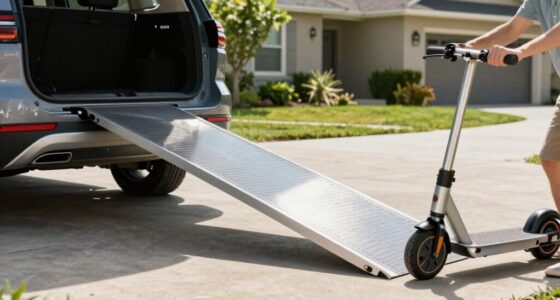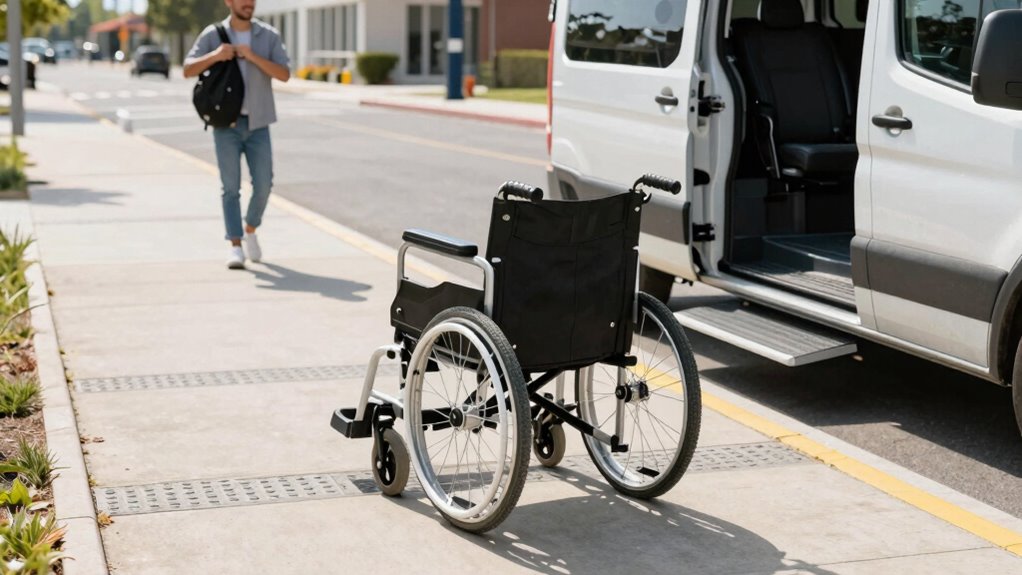

To make your outings easier, focus on smart vehicle access planning. Design clear, logical routes with proper signage and lighting to guide you smoothly. Prioritize parking convenience near your destinations to save time and reduce stress. Use traffic flow strategies like one-way lanes and dedicated entry/exit points to prevent congestion. Consider safety measures to guarantee visibility and organization. Keep optimizing these systems, and you’ll find your outings become far more relaxed and enjoyable—there’s more to explore on how to achieve this.

Turn quiet afternoons into listening time
- Thousands of audiobooks, podcasts and originals
- Listen on your phone, tablet or Echo — also offline
- Cancel anytime
Key Takeaways
- Design logical, straightforward routes with clear signage and markings to guide drivers efficiently.
- Prioritize parking convenience by providing nearby, well-marked parking spots to reduce search time.
- Implement one-way lanes and dedicated entry/exit points to minimize congestion and streamline vehicle flow.
- Ensure proper lighting and visibility measures to enhance safety and confidence during outings.
- Continuously analyze traffic patterns and use smart systems for ongoing improvements in vehicle access.
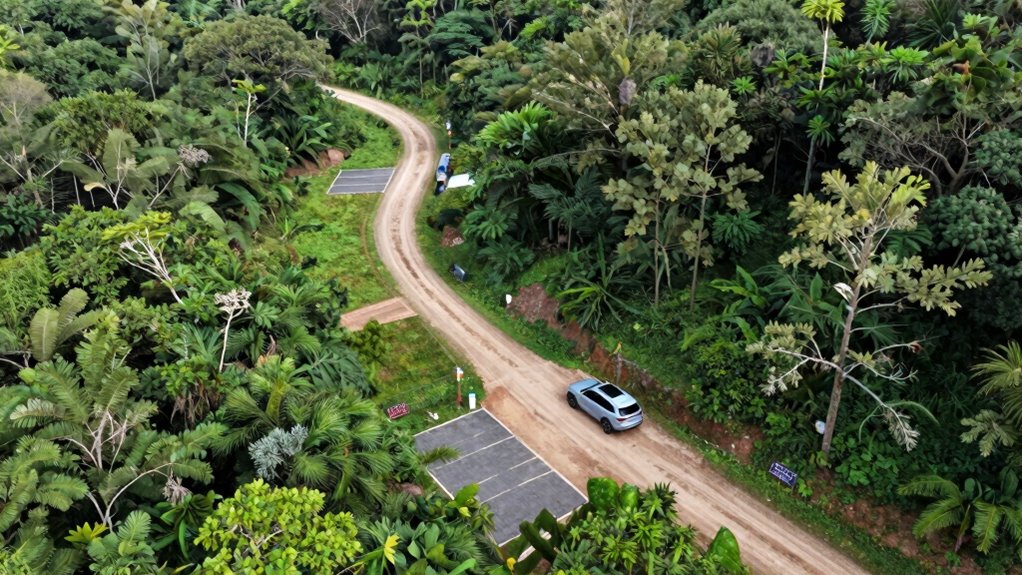
Have you ever wondered how to guarantee smooth and safe vehicle movement within a property? The key lies in effective vehicle access planning, which ensures that every trip you take around your property is efficient and hassle-free. When you prioritize parking convenience, you’re making a notable difference. Think about how easy it is to find a spot close to your destination, with clear signage and well-designed spaces. Well-planned parking not only saves you time but also reduces the stress of searching for a place to park. When parking is conveniently located and properly marked, you’re less likely to encounter congestion or confusion, making your outings smoother and more enjoyable.
Route optimization plays a pivotal role in streamlining vehicle flow. By designing logical, straightforward routes, you can avoid unnecessary detours or bottlenecks that slow down movement. This involves analyzing traffic patterns within your property and adjusting the layout to promote seamless navigation. For example, establishing one-way lanes or dedicated entry and exit points can considerably cut down on congestion. Clear signage and markings guide drivers effortlessly, helping everyone stay on course without hesitation. When routes are optimized, your property can handle higher vehicle volumes without becoming chaotic, whether you’re managing a residential complex, commercial lot, or recreational area. Incorporating these elements into your vehicle access plan also involves considering safety at every turn. Proper lighting, visible signage, and unobstructed pathways make it safer for drivers and pedestrians alike. You want your visitors or residents to feel confident that they can move around without risk or confusion. An organized system minimizes accidents and improves overall flow. Additionally, understanding the importance of vehicle access planning can help you create a more efficient and safe environment for everyone. It’s also beneficial to incorporate traffic management strategies to further enhance flow and safety, such as implementing smart traffic systems for real-time adjustments. Proper planning can also include considering environmental impact, ensuring that traffic flow does not negatively affect local ecosystems. Incorporating traffic flow analysis into your planning process can provide valuable insights for optimizing movement patterns. Ultimately, the goal is to create a cohesive system where parking convenience and route optimization work hand in hand. When you design thoughtfully, you’re reducing unnecessary travel, improving safety, and making every outing more straightforward. Whether it’s a quick trip to the store or a visit to a friend’s house, good vehicle access planning transforms what could be a stressful experience into a smooth, efficient journey. With attention to detail and strategic layout choices, you’ll ensure that vehicle movement within your property is safe, quick, and convenient—making every outing easier and more enjoyable.
parking lot signage and markings
As an affiliate, we earn on qualifying purchases.
As an affiliate, we earn on qualifying purchases.
Frequently Asked Questions
How Do I Identify Potential Access Issues Before Planning My Outing?
You can identify potential access issues by starting with route scouting—check maps or GPS for road conditions and restrictions. Use parking tips like looking for nearby, accessible parking areas and avoiding tight spaces. Call ahead or visit websites for updates on parking availability and road closures. Planning ahead helps you anticipate problems, and combining route scouting with parking tips guarantees smoother outings with fewer surprises.
What Tools Can Help Improve Vehicle Access Planning?
Did you know that over 60% of outdoor enthusiasts rely on navigation apps for planning? These tools, along with access maps, greatly improve vehicle access planning by highlighting routes and potential obstacles. Navigation apps provide real-time updates, while access maps give detailed info on trailheads and parking spots. Using both helps you avoid surprises, plan efficient routes, and guarantee smoother outings, especially in unfamiliar or challenging areas.
How Should I Prioritize Access Routes for Multiple Destinations?
You should prioritize access routes by focusing on route optimization, ensuring each path minimizes travel time and fuel use. Use traffic management tools to identify congestion points and avoid them, especially during peak hours. Plan your routes to include multiple destinations efficiently, considering the sequence that reduces backtracking. Regularly update your plans based on real-time traffic data and adjust as needed to keep your outings smooth and timely.
What Safety Considerations Are Essential for Vehicle Access Planning?
You need to prioritize safety by checking vehicle clearance to prevent surprises on tricky routes. Don’t forget weather considerations—rain, snow, or fog can make access hazardous. Always verify that your vehicle can handle the terrain and conditions ahead. Keep emergency supplies handy and inform someone of your plans. Staying alert to these factors keeps your outing safe and smooth, avoiding preventable accidents or delays.
How Can I Adapt Plans for Unexpected Access Obstacles?
You should stay flexible and have backup routes ready in case access obstacles arise. Check for any required access permits beforehand and keep them updated. Assess the environmental impact of your alternative plans to avoid causing damage. Communicate with local authorities or landowners about potential obstacles, so you can adapt quickly. By preparing for unexpected issues, you guarantee smoother outings and minimize disruptions caused by unforeseen access challenges.
Conclusion
By planning your vehicle access carefully, you turn a formidable journey into a smooth ride, like a well-tuned engine running seamlessly. When you anticipate obstacles and choose the right routes, your outings become more enjoyable and less stressful. Think of your route as a roadmap to adventure—clear, efficient, and ready to get you there with ease. With a little foresight, your trips will flow as effortlessly as a gentle breeze, making every outing a breeze.
Cold & flu season Picks
humidifiers
As an affiliate, we earn on qualifying purchases.