
Many families underestimate how physically demanding and risky bathroom transfers can be without proper technique, training, and assistive devices. Moving someone safely requires strength, coordination, and clear communication, but many overlook these needs. Without proper equipment and guidance, falls and injuries become likely hazards. Educating yourself on safe transfer methods and using the right tools can make a big difference. Keep exploring to discover essential tips that can help you protect your loved ones and yourself.

Get comfort and care essentials delivered free — and shop member deals
- Fast, free delivery on millions of items
- Access to Prime Big Deal Days deals on October 6–7
- Prime Video, Amazon Music and more included
Key Takeaways
- Families often underestimate the physical effort and skill required for safe bathroom transfers.
- Many overlook the importance of proper assistive device use and maintenance.
- Caregiver training is frequently skipped, increasing injury risk for both parties.
- The complexity of transfers is underestimated, leading to unsafe practices.
- Proper preparation and education significantly improve safety and reduce accidents during transfers.
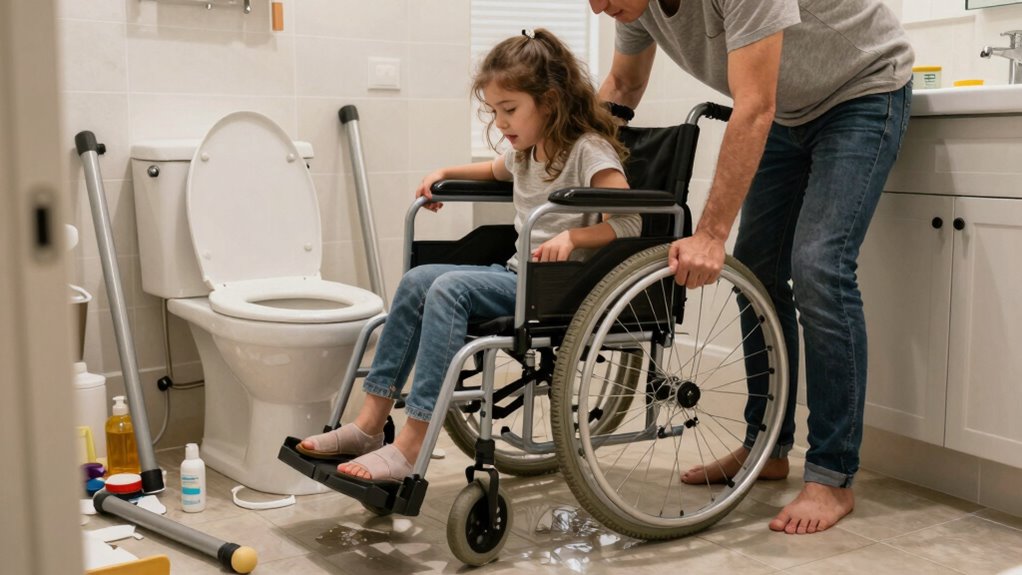
Many families underestimate just how challenging bathroom transfers can be, often overlooking the physical effort and potential risks involved. You might think helping a loved one transfer from a wheelchair to the toilet is simple, but in reality, it demands strength, coordination, and proper technique. Without the right approach, both you and your family member could be at risk of falls or injuries. That’s why understanding assistive devices and caregiver training is essential to make these transfers safer and more manageable. Utilizing proper training techniques can significantly reduce the likelihood of accidents and improve overall safety during transfers.
Assistive devices play a key role in easing the burden of bathroom transfers. Items like transfer benches, grab bars, and gait belts are designed to provide stability and support, reducing the physical strain on you and increasing safety for your loved one. When used correctly, these tools help facilitate smoother transfers, minimize the risk of slips, and give both of you confidence during the process. However, it’s not enough to simply have these devices; you need to know how to use them properly. Misinformed use of assistive devices can lead to accidents, so investing in proper guidance is essential. Additionally, proper maintenance and inspection of these tools are crucial to ensure their continued safety and effectiveness.
Proper use of assistive devices ensures safe, smooth bathroom transfers and reduces risk of accidents.
Caregiver training becomes the foundation of effective and safe bathroom transfers. Proper training teaches you the correct techniques for lifting, pivoting, and positioning your loved one, which can prevent injuries for both of you. It’s not just about physical strength; it’s about understanding body mechanics, communication, and patience. When you’re trained, you learn how to assess your loved one’s abilities, determine the safest transfer method, and adapt to specific needs. Training also covers how to handle unexpected situations, like a sudden loss of balance or a transfer that’s more difficult than anticipated. Hands-on practice is often the most effective way to build confidence and competence in these skills.
Many families skip this important step, believing they can figure it out on their own. But without proper caregiver training, you risk causing discomfort or harm, which can lead to frustration or reluctance to seek help. It’s worth investing in professional training sessions or consulting with occupational therapists who specialize in mobility and safety. These experts can guide you through proper techniques, recommend suitable assistive devices, and help you develop a personalized plan that minimizes risks. Recognizing the complexity of bathroom transfers and seeking expert guidance can make a significant difference in outcomes.
Ultimately, understanding the importance of assistive devices and caregiver training transforms bathroom transfers from a dreaded chore into a manageable task. It empowers you with the knowledge and tools needed to protect your loved one’s dignity and safety, while also safeguarding your own health. Don’t underestimate the complexity of bathroom transfers; instead, prepare yourself with the right education and equipment. This preparation makes all the difference in ensuring the process is safe, comfortable, and respectful for everyone involved.
transfer benches for bathroom safety
As an affiliate, we earn on qualifying purchases.
As an affiliate, we earn on qualifying purchases.
Frequently Asked Questions
How Can Families Improve Communication During Bathroom Transfers?
To improve communication during bathroom transfers, you should focus on clear, family communication and transfer coordination. Talk openly about each person’s needs and limitations beforehand, so everyone understands their role. Use simple signals or cues to guide transfers smoothly and avoid confusion. Regularly check in during transfers to guarantee safety and comfort. Practicing these steps builds trust, reduces stress, and makes bathroom transfers safer and more efficient for everyone involved.
What Safety Equipment Is Recommended for Transfer Assistance?
For transfer safety, you should use equipment options like transfer belts, gait belts, and grab bars to prevent accidents. While these tools seem simple, they play a critical role in maintaining stability and confidence during transfers. Don’t underestimate their importance; they’re essential for reducing falls and injuries. Properly selected and used transfer safety equipment helps you support loved ones effectively, ensuring safer bathroom transfers every time.
How Do Transfer Needs Change as Family Members Age?
As family members age, their transfer needs often become more complex due to declining elderly mobility. You’ll notice they require more support and stability during transfers. To adapt, you should seek caregiver training to guarantee safe techniques and proper use of assistive devices. This proactive approach helps prevent falls and injuries, making transfers smoother and safer for everyone involved. Staying informed and prepared is key as needs evolve.
Are There Professional Services to Assist With Bathroom Transfers?
Yes, there are professional services that can assist with bathroom transfers. You can explore home modification specialists who adapt your bathroom for safety and accessibility, making transfers easier. Additionally, caregiver training programs teach proper techniques to guarantee safe transfers and reduce injury risk. These services help you maintain independence and safety, whether you’re managing aging family members or those with mobility challenges, giving you peace of mind during daily routines.
What Are Common Injuries During Bathroom Transfers?
Like a fragile glass, your balance can shatter during bathroom transfers if you’re not careful. Common injuries include strains, sprains, and falls. To prevent these, focus on proper transfer techniques and use assistive devices when needed. Always prioritize injury prevention by planning each move carefully, engaging your core, and asking for help. Remember, a cautious approach keeps you safe and preserves your strength for everyday tasks.
Conclusion
Don’t dismiss the formidable dangers of bathroom transfers. By daring to delegate, you can diminish risks and deepen your family’s safety. Recognize the real, raw risks and reach out for resources that reinforce your resilience. Remember, proper preparation and patience pave the path to safer, smoother transfers. Take the time to tackle training together—because a well-informed, willing family is a winning family, ready to face challenges with confidence and care.
Cold & flu season Picks
humidifiers
As an affiliate, we earn on qualifying purchases.