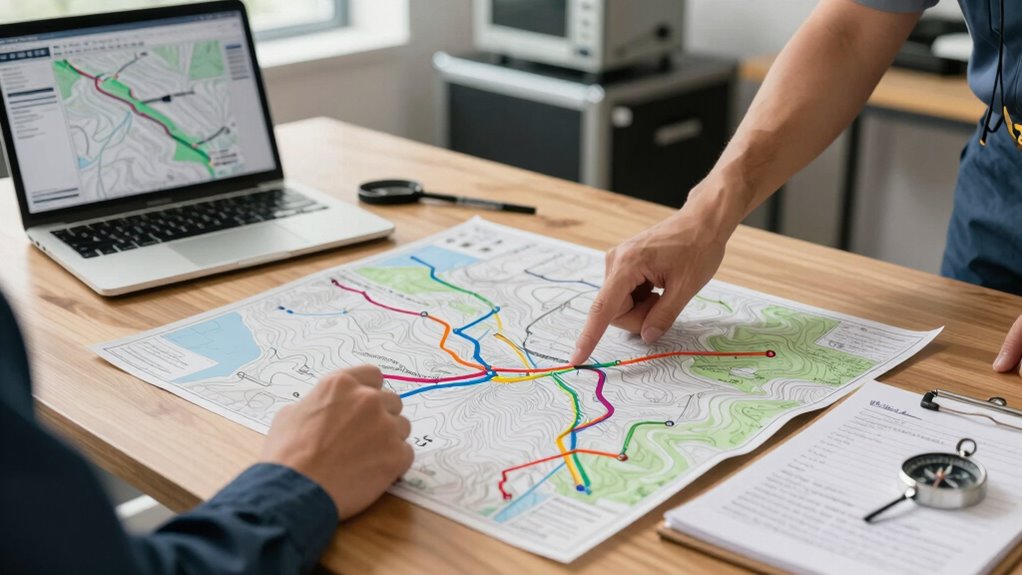

To plan a transfer route before buying equipment, you should evaluate all costs, including transportation, labor, and potential hidden expenses. Map out safe routes by checking for hazards and ensuring compliance with safety standards. Verify infrastructure supports your equipment’s size and weight, and prepare contingency plans for weather or road closures. Coordinate with authorities and communicate clearly with your team. If you keep exploring, you’ll discover how to optimize every step for maximum safety and efficiency.

Turn quiet afternoons into listening time
- Thousands of audiobooks, podcasts and originals
- Listen on your phone, tablet or Echo — also offline
- Cancel anytime
Key Takeaways
- Conduct a detailed cost analysis, considering transportation, labor, and hidden expenses for the most economical route.
- Map out the safest navigation paths, checking for hazards and ensuring compliance with safety regulations.
- Verify infrastructure support, including road capacity, permits, and proximity to repair or emergency services.
- Develop contingency plans for weather, road closures, or other unexpected obstacles with flexible scheduling.
- Integrate all factors—cost, safety, infrastructure, and contingencies—to finalize a compliant, efficient transfer route.
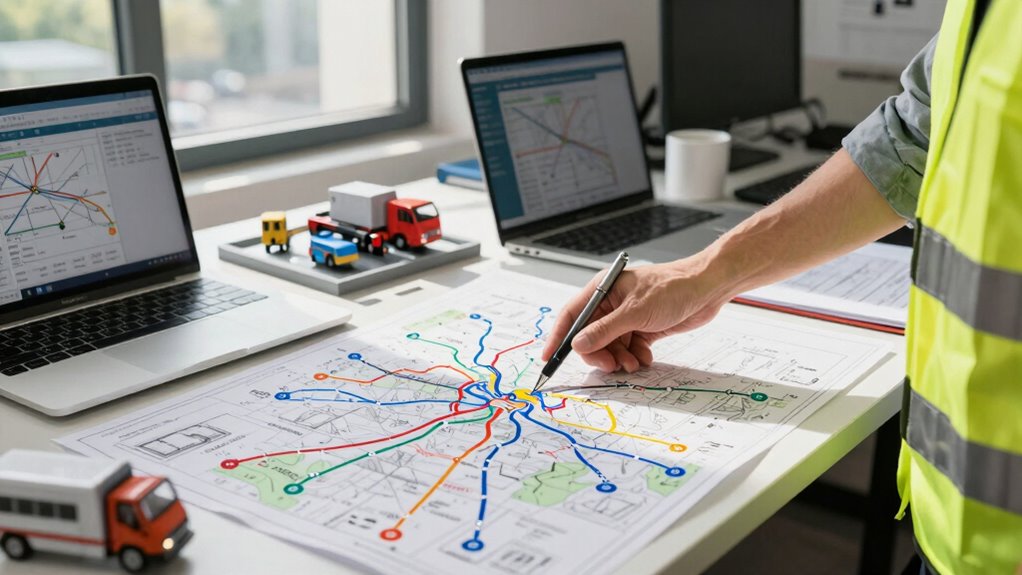
Are you unsure how to create an efficient transfer route? Planning ahead is essential to avoid costly mistakes once you purchase your equipment. The first step is conducting a thorough cost analysis. You need to evaluate all expenses involved in the transfer process, including transportation costs, labor, maintenance, and potential downtime. This analysis helps you identify the most economical route without sacrificing efficiency or safety. By comparing different options, you can determine which route offers the best balance between cost savings and operational effectiveness. Remember, a cheaper route might seem appealing initially, but hidden costs such as increased wear and tear or longer transit times can offset the savings. So, be meticulous in your calculations.
Meticulous cost analysis ensures efficient, safe transfer routes that balance expenses and operational effectiveness.
Once you’ve established a preliminary route based on cost analysis, you’ll want to incorporate safety protocols into your planning. Safety should never be compromised, especially when dealing with sensitive or heavy equipment. Map out the safest way to navigate through roads, facilities, or restricted areas. Check for any potential hazards like low bridges, sharp turns, or uneven surfaces that could jeopardize the transfer. Incorporate safety protocols by ensuring your route complies with industry standards and regulations. This includes considering the weight limits, securing loads properly, and planning for emergency scenarios. It’s a good idea to coordinate with local authorities or safety experts to confirm your route meets all safety requirements. Additionally, understanding transportation regulations can help you stay compliant and avoid penalties. Conducting a comprehensive risk assessment of your route can further help identify and mitigate potential safety issues before the transfer begins. Incorporating proper documentation can also streamline inspections and approval processes. Paying attention to infrastructure suitability along your route ensures that roads or pathways can support your equipment’s size and weight, preventing unexpected issues during transit. Moreover, evaluating the environmental impact of your route can support sustainable practices and reduce your ecological footprint.
Another critical aspect is assessing the infrastructure along your planned route. Make sure the roads or pathways are suitable for your equipment size and weight. If you’re working with large or heavy machinery, you might need to request permits or arrange for specialized transport. During your planning, consider the availability of support services like repair shops or emergency assistance along the route. Having contingency plans for unexpected obstacles, such as road closures or severe weather, also helps ensure a smooth transfer.
As you refine your route, think about logistics timing. Coordinate schedules to minimize delays and avoid peak traffic hours that could cause congestion or accidents. Communicate your plan with all involved parties—drivers, safety officers, and facility managers—to ensure everyone understands the route and safety procedures. Once your route is thoroughly planned with a detailed cost analysis, robust safety protocols, and contingency measures, you’ll be in a strong position to make a purchase confidently. Proper planning upfront saves time, money, and potential hazards down the line, making your transfer process safer and more efficient.
heavy equipment transport route planning tools
As an affiliate, we earn on qualifying purchases.
As an affiliate, we earn on qualifying purchases.
Frequently Asked Questions
What Are Common Mistakes to Avoid in Route Planning?
You should avoid neglecting route optimization, which can lead to inefficient paths that increase costs and delay deliveries. Don’t overlook conducting a thorough cost analysis beforehand, as it helps identify the most economical routes. Also, resist the temptation to ignore real-time traffic updates or unforeseen obstacles. Planning without considering these factors might result in longer travel times and higher expenses, ultimately impacting your overall transfer efficiency.
How Do Weather Conditions Affect Transfer Routes?
Weather impact can drastically alter your route, turning a straightforward path into a hazardous journey. You need to stay alert to conditions like storms, snow, or fog, which demand quick route adaptation. Ignoring weather changes risks delays or accidents. To keep your transfer safe and efficient, always check forecasts in advance and be ready to modify your route as needed, ensuring safety remains your top priority.
What Safety Measures Should Be Included in Route Planning?
You should include safety protocols and emergency preparedness in your route planning to guarantee safety. Make sure to identify escape routes, communicate safety procedures clearly, and carry emergency supplies. Also, plan for potential hazards, like weather or road conditions, and have contingency plans. Regularly update safety protocols based on new risks, and train your team to follow these measures diligently, making certain everyone knows what to do in emergencies.
How to Estimate Transfer Time Accurately?
Did you know that inaccurate transfer time estimation can delay projects by up to 30%? To estimate transfer time accurately, you should analyze route timing based on historical data, consider real-time traffic updates, and account for potential delays like weather or roadwork. By integrating these factors, you’ll improve your transfer time estimation, ensuring smoother logistics, better scheduling, and minimized downtime during equipment transfers.
What Equipment Is Essential for Secure Transfers?
You need vital equipment like sturdy loading equipment to handle items safely and securely. Security checks are vital to prevent theft or damage during transfers. Use lockable containers and tamper-evident seals to enhance security. Make certain you have proper lighting and surveillance tools. These items help maintain the safety and integrity of your transfer, giving you peace of mind that your equipment and goods stay protected throughout the process.
Conclusion
By carefully planning your transfer route, you’re not just avoiding delays—you’re embracing efficiency and foresight. Think of it like a theory: the idea that understanding the path before taking action leads to better results. When you map out your route first, you’re testing this truth in practice. It’s a reminder that preparation isn’t just a step; it’s the foundation for success, ensuring your equipment arrives smoothly and on time.
Halloween Picks
halloween
As an affiliate, we earn on qualifying purchases.