
A transfer chair makes your job easier by supporting your posture with ergonomic features like padded handles at comfortable heights and adjustable components that fit different users. It reduces physical strain by minimizing twisting, bending, and reaching, thanks to its stability and secure locking wheels. Non-slip surfaces and well-placed handles improve control, decreasing your effort and lowering the risk of falls. Keep exploring to discover more ways this innovative design can enhance your caregiving experience.

Turn quiet afternoons into listening time
- Thousands of audiobooks, podcasts and originals
- Listen on your phone, tablet or Echo — also offline
- Cancel anytime
Key Takeaways
- Ergonomic handles and armrests reduce strain during transfers, minimizing hand fatigue.
- Adjustable seat and components ensure proper positioning, decreasing awkward movements.
- Secure locking wheels and brakes provide stability, reducing the physical effort needed to control the chair.
- Non-slip surfaces and support rails enhance grip and control, easing maneuvering.
- Design features that promote natural body posture lessen bending and twisting, protecting caregivers’ backs.
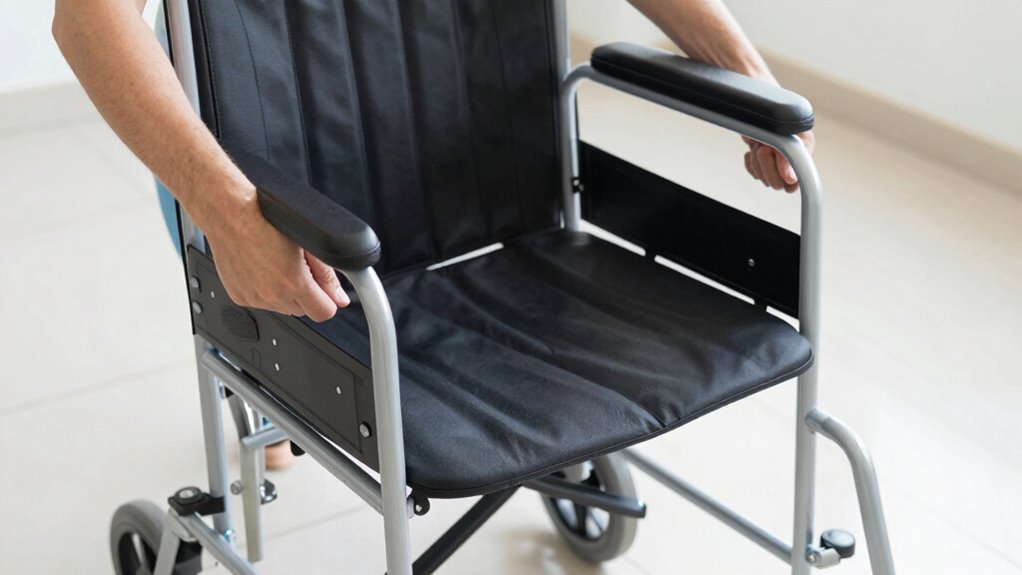
Have you ever struggled with transferring a loved one from a wheelchair to a chair or bed? If so, you know how physically demanding and sometimes risky it can be, especially if your equipment isn’t designed with your comfort and safety in mind. That’s where transfer chairs with ergonomic design and safety features come into play, making the process smoother and reducing strain on your hands and back.
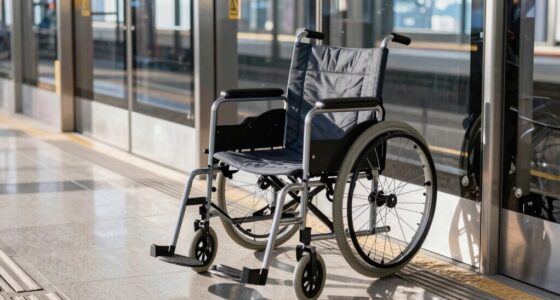
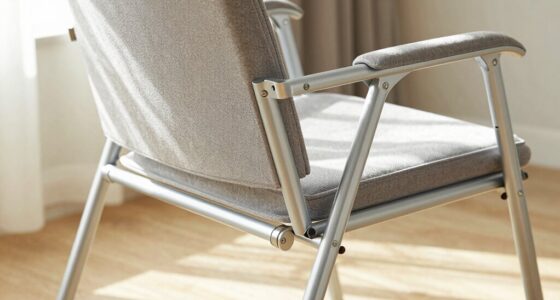
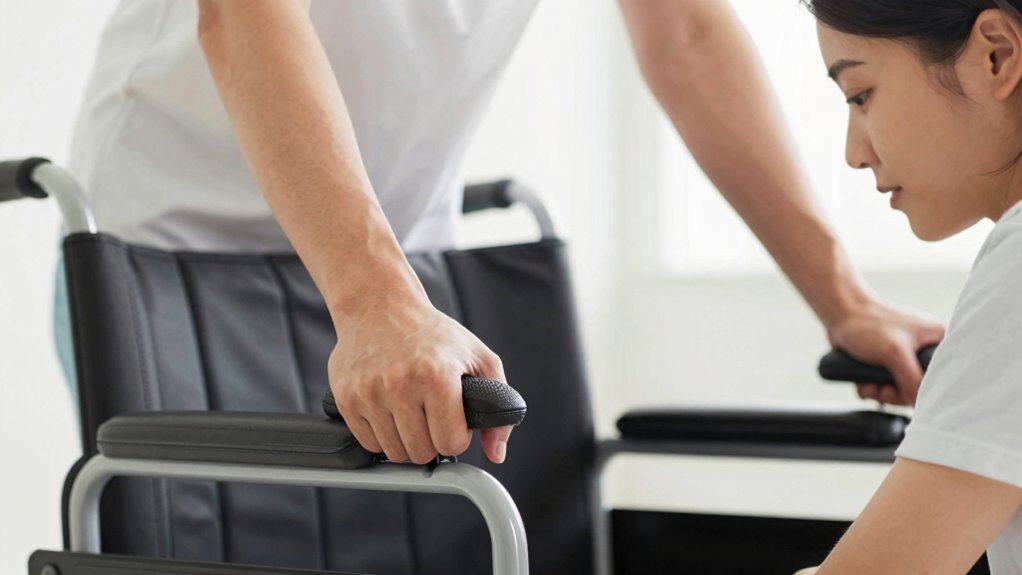
An ergonomic design is vital because it focuses on how the transfer chair supports your body as you work through each transfer. These chairs are thoughtfully built with features that promote proper posture and reduce awkward movements that can cause pain or injury. For example, you’ll find padded armrests and handles positioned at ideal heights, allowing you to grip securely without twisting or overextending your wrists. The seat height is adjustable, aligning with your loved one’s needs and your comfort, so you don’t have to bend or stretch excessively. This thoughtful design helps you maintain a natural, comfortable stance, minimizing fatigue and the risk of injury over repeated transfers. Additionally, ergonomic transfer chairs often incorporate adjustable components that accommodate different body sizes and transfer scenarios, further enhancing ease of use. Incorporating ergonomic principles in the design also ensures that caregivers experience less physical strain during transfers, which is especially important for preventing repetitive strain injuries.
An ergonomic transfer chair supports proper posture, reduces strain, and promotes comfort during each transfer.
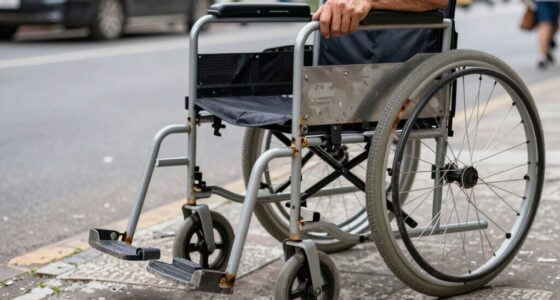
Safety features are essential to guarantee both your safety and that of your loved one. Many transfer chairs include secure locking mechanisms on the wheels, preventing any unintended movement during transfers. This stability gives you peace of mind, knowing the chair won’t shift unexpectedly and cause a fall. Some models also feature sturdy, easy-to-operate brakes that you can activate quickly without exerting too much effort, keeping the chair steady as you assist. Additionally, ergonomic transfer chairs often come with supportive, non-slip surfaces that prevent your loved one from slipping or sliding during the transfer process. These safety features, combined with well-placed handles and supportive side rails, give you better control and confidence throughout each transfer. Proper training and understanding of transfer techniques can further improve safety and ease of use, reducing the physical demands on caregivers.
Using a transfer chair built with ergonomic principles and safety features not only makes the task easier but also reduces physical strain on your hands and back. You’ll notice less twisting, bending, or reaching, which are common causes of caregiver injuries. The right design allows for smoother, more controlled movements, decreasing the risk of slips, falls, or muscle strains. Plus, these chairs often come with features like foldability or adjustable components, making storage and maneuvering more convenient. In the end, investing in a well-designed transfer chair means you can perform caregiving tasks more comfortably, efficiently, and safely, creating a safer environment for everyone involved.
ergonomic transfer chair with locking wheels
As an affiliate, we earn on qualifying purchases.
As an affiliate, we earn on qualifying purchases.
Frequently Asked Questions
How Do I Choose the Right Transfer Chair for My Needs?
To select the right transfer chair, consider your specific needs and environment. Look for an ergonomic design that reduces strain on your hands and back, making transfers easier and safer. Check the weight capacity to guarantee it can support the user comfortably and securely. Additionally, consider features like wheel size, padding, and ease of maneuverability. Matching these factors to your caregiving situation will help you pick a chair that offers comfort and safety.
Are There Specific Features That Reduce Caregiver Strain?
Think of ergonomic handles and padded armrests as your shield and comfort cushion in the battle against strain. These features reduce caregiver fatigue by providing a secure grip and soft support, making transfers smoother and less taxing on your hands and back. When choosing a transfer chair, prioritize these features, as they work together to lessen physical stress, helping you care more comfortably and confidently.
How Do I Maintain and Clean Transfer Chairs Properly?
To maintain your transfer chair, follow regular cleaning routines with mild soap and warm water, focusing on high-touch areas like armrests and wheels. Keep the chair dry to prevent rust and deterioration. Maintenance tips include checking for loose bolts and ensuring wheels turn smoothly. Regularly inspect the upholstery for tears, and lubricate moving parts as needed. Proper cleaning and upkeep extend the chair’s lifespan and keep it safe for users.
Can Transfer Chairs Be Customized for Different Users?
Yes, transfer chairs can be customized for different users. You can make personalized adjustments to seat height, width, and support features to guarantee comfort and safety. Ergonomic handles are often added or adjusted to match the caregiver’s grip, reducing strain. These customizations help accommodate users’ unique needs, making transfers easier for both the caregiver and the person being assisted. Always consult with a healthcare professional for ideal customization options.
What Safety Precautions Should I Follow During Transfers?
When performing transfers, you should always guarantee safety by using ergonomic grips to maintain a secure hold and avoid slips. Additionally, fasten safety straps correctly to keep the person stable during the transfer. Always communicate clearly with the individual, move slowly, and check that wheels and brakes are locked before starting. These precautions help prevent injuries and make the process safer for both you and the person you’re assisting.
Conclusion
Choosing the right transfer chair is like finding a trusted partner—you want one that eases your burden, not adds to it. With ergonomic features and smooth mechanisms, it can turn a tough task into a manageable dance. When your tools work with you, not against you, caregiving becomes less of a weight on your shoulders and more of a shared journey. Invest in a chair that supports you—because caring for others shouldn’t come at the cost of your own well-being.
Halloween Picks
halloween
As an affiliate, we earn on qualifying purchases.