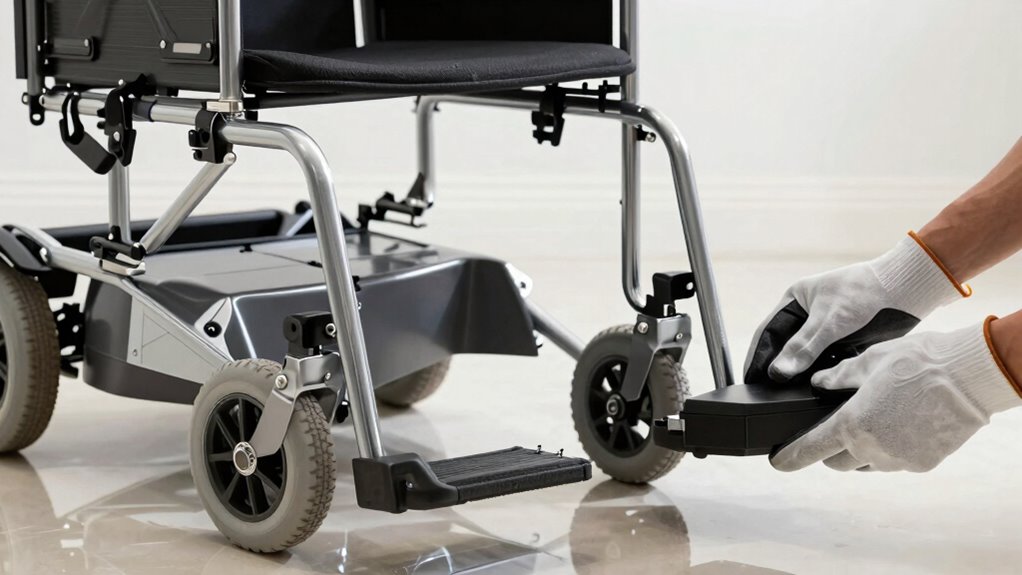

Before transporting your folding power chair, check the battery’s charge and detach it if possible, storing it safely to prevent leaks. Follow airline and transportation regulations, ensuring the wheelchair is secure and in good condition. Inspect for loose screws, worn tires, and smooth folding. Think about eco-friendly disposal of worn parts after use. Want to find out more tips for safe and efficient transport? Keep exploring to stay fully prepared.

Turn quiet afternoons into listening time
- Thousands of audiobooks, podcasts and originals
- Listen on your phone, tablet or Echo — also offline
- Cancel anytime
Key Takeaways
- Check and secure the battery, ensuring it is properly stored and complies with airline regulations.
- Confirm the wheelchair is in good condition, with no loose parts or damage, and perform necessary maintenance.
- Follow airline and transportation guidelines for folding mobility devices to prevent delays or issues.
- Remove or detach the battery if possible to reduce safety risks during transit.
- Use insulated containers and secure straps to prevent movement, short circuits, or damage during transport.
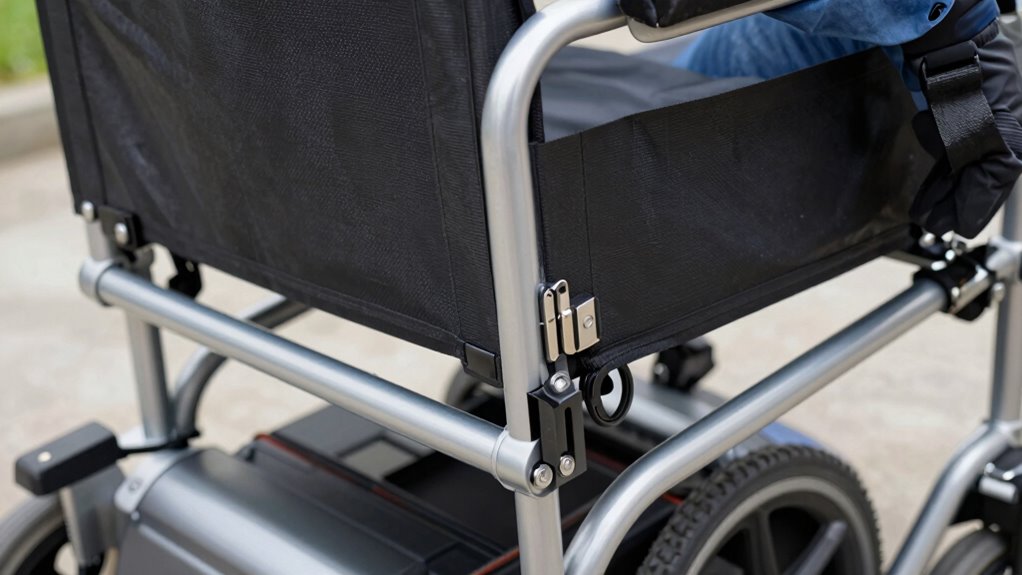
Have you ever wondered how to safely transport a folding power chair? It’s a common concern if you rely on one for mobility and want to ensure it’s secure during travel. Before you hit the road, there are several key considerations to keep in mind, especially around battery safety and wheelchair maintenance. Proper preparation not only protects your device but also keeps you safe and comfortable throughout your journey.
First, focus on battery safety. Folding power chairs are usually powered by rechargeable batteries, which need special attention before transport. Always check the battery’s charge level—overcharging or letting it drain completely can cause damage or safety issues. If you’re traveling by plane, follow airline regulations for battery removal or securing. When transporting in a vehicle, detach the battery if possible and store it in a secure, insulated container to prevent short circuits or leaks. Never leave the battery loose inside the chair during transit, as movement could damage the terminals or cause a fire hazard. Properly securing the battery ensures safety and preserves its lifespan. Additionally, understanding battery safety guidelines can help prevent accidents or malfunctions during travel. Being familiar with transportation regulations for mobility devices can also streamline your journey and avoid delays at checkpoints or airports. Remember to also check the manufacturer’s instructions for specific battery handling procedures.
Secure the battery in an insulated container and follow airline guidelines for safe travel.
Next, consider wheelchair maintenance before travel. Conduct a quick inspection to make sure all parts are in good condition—check for loose screws, worn-out tires, or damaged joints. Lubricate moving parts if necessary, and ensure the folding mechanism works smoothly. Performing a routine wheelchair inspection can help detect potential issues early and prevent unexpected breakdowns. This helps prevent breakdowns during transit and makes setup at your destination easier. Also, clean the wheelchair thoroughly, removing dirt and debris that can cause corrosion or interfere with folding functions. A well-maintained wheelchair is less likely to encounter problems on the road, and regular upkeep extends its usability. Additionally, being aware of biodiversity and environmental impact can encourage more eco-friendly practices when disposing of or recycling parts of your wheelchair after its lifespan ends. Proper maintenance and mindful disposal can contribute to a more sustainable and environmentally conscious approach to mobility devices. Remember to carry essential tools or spare parts if needed for minor repairs during your trip. Ensuring your wheelchair is in optimal condition can also help you avoid unexpected malfunctions during transit.
folding power wheelchair battery removal kit
As an affiliate, we earn on qualifying purchases.
As an affiliate, we earn on qualifying purchases.
Frequently Asked Questions
Can I Transport My Folding Power Chair on a Plane?
Yes, you can transport your folding power chair on a plane. You should check airline regulations beforehand, as they may have specific requirements for mobility devices. Typically, folding chairs can be stowed in the cargo hold or as carry-on if it fits. Consider storage options like a travel bag to protect your chair. Always notify the airline about your device in advance to guarantee smooth handling and compliance.
Are There Weight Restrictions for Transporting a Folding Power Chair?
Yes, there are weight restrictions for transporting a folding power chair. You should check the airline’s specific weight limits and confirm your chair’s weight falls within those limits. Additionally, consider your chair’s dimensions when folded—most airlines specify maximum size requirements for carry-on or checked items. Knowing the weight limits and chair dimensions helps avoid surprises and ensures smooth transportation, whether by plane, train, or other means.
How Do I Secure My Folding Power Chair in a Vehicle?
Ironically, securing your folding power chair is a breeze—if you use the right tools. You’ll want to employ securing straps tightly over the chair to prevent movement. Proper positioning is key; make sure the chair is centered and stable, not teetering on the edge. Check that straps are snug but not overly tight, ensuring your chair stays put during transit, providing safety and peace of mind.
Will Transporting Affect My Chair’s Warranty or Battery Life?
Transporting your folding power chair generally doesn’t affect your warranty or battery life if you follow proper procedures. To protect your warranty implications, avoid rough handling and make certain all components are securely fastened during transit. For battery preservation, keep the battery charged and avoid extreme temperatures, especially during long trips. Proper packing and careful transportation help maintain your chair’s performance and longevity, preventing potential issues down the line.
Can I Transport My Folding Power Chair in a Car Trunk?
Yes, you can transport your folding power chair in a car trunk, but you should first check battery safety and vehicle compatibility. Make sure the battery is turned off and secured properly to prevent damage or leaks. Confirm your car has enough space, and consider removing the battery if recommended by the manufacturer. Always follow safety guidelines to protect your chair and vehicle during transport.
Conclusion
Before you set out, remember to secure your folding power chair properly—think of it as your trusty steed, ready for the journey. Double-check the straps and make sure it’s snug. Don’t forget to keep your emergency kit handy, just like a good pirate would pack his chest. With these precautions, you’ll be cruising smoothly, guaranteeing your adventure is safe and worry-free. After all, every journey begins with a single step, and a prepared traveler is a happy one.
Cold & flu season Picks
humidifiers
As an affiliate, we earn on qualifying purchases.