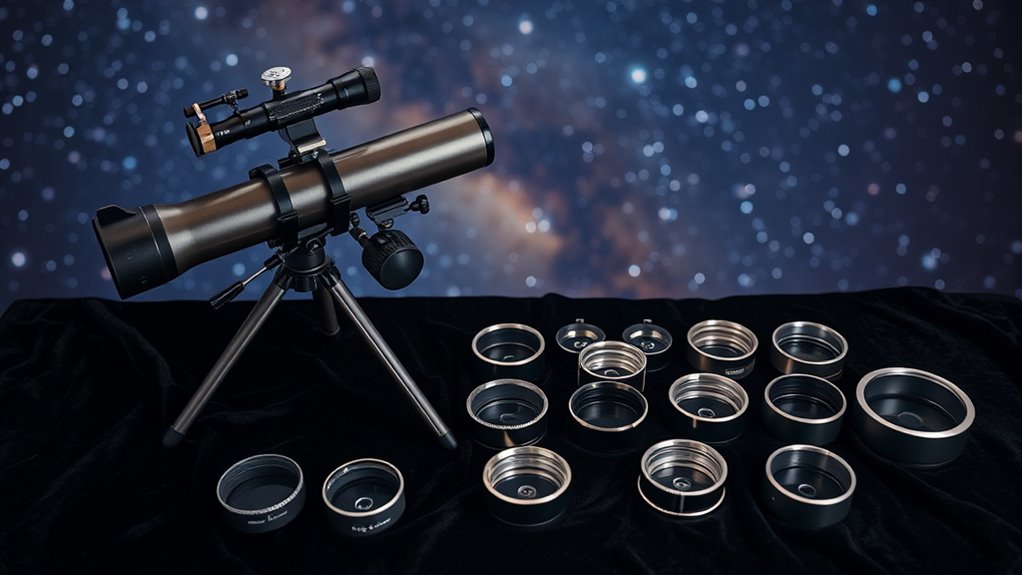

When selecting a field flattener for a refractor telescope, the goal is to achieve sharp, distortion-free images across the entire field of view. The Astromania 2 Inch Field Flattener stands out for overall versatility, offering reliable performance at a reasonable price. The SVBONY SV503 80mm ED Refractor with SV193 0.8X Field Flattener is a top choice for those seeking an integrated solution that balances quality and convenience. Conversely, the Explore Scientific Field Flattener appeals to more advanced users who prioritize optical precision. Buyers face a tradeoff between affordability, optical quality, and compatibility—this guide provides clarity on these options. Continue reading for a detailed breakdown of each product’s strengths and weaknesses.

Turn quiet afternoons into listening time
- Thousands of audiobooks, podcasts and originals
- Listen on your phone, tablet or Echo — also offline
- Cancel anytime
Complete the kit


Key Takeaways
- The top picks balance optical performance with ease of use and compatibility across various refractors.
- Integrated solutions like built-in flatteners can simplify setup but might limit flexibility.
- Price varies significantly, with premium options offering better correction but at a higher cost.
- Compatibility with different focal ratios and telescope models is critical for effective results.
- Choosing between focal reducers and flatteners depends on whether you prioritize field correction or image scale.
| Astromania 2 Inch Field Flattener for Astronomical Telescopes |  | Best Overall for Refractors in the f/4 to f/8 Range | Thread: M48 | Back Focus: 109mm | Compatible Focal Ratios: f/4 to f/8 | VIEW ON AMAZON | See Our Full Breakdown |
| SVBONY SV503 80mm ED Refractor Telescope with SV193 0.8X Field Flattener |  | Best Value for Lightweight, Versatile Astrophotography | Aperture: 80mm | Focal Ratio: F7 | Focal Length: 560mm (448mm with 0.8X reducer) | VIEW ON AMAZON | See Our Full Breakdown |
| Astromania 2 Inch Field Flattener for Astronomical Telescopes |  | Best for Full-Frame Astrophotography with Refractors | Thread: M48 | Back Focus: 109mm | Suitable Focal Ratios: f/4 to f/8 | VIEW ON AMAZON | See Our Full Breakdown |
| SVBONY SV550 80ED F6 Triplet Apochromatic Refractor Telescope with SV209 Field Flattener and SV210 Camera Angle Adjuster |  | Best for Dedicated Deep-Sky Imaging with Premium Features | Aperture: 80mm | Focal Ratio: f/6 | Optical Design: Air-spaced triplet apochromatic | VIEW ON AMAZON | See Our Full Breakdown |
| SVBONY SV193 0.8X Focal Reducer Field Flattener for SV503 102mm Telescope |  | Best for Wide-Field, Full-Frame Imaging with Compatibility Focus | Reduction Factor: 0.8x | Front Connection: Standard 2-inch socket | Filter Thread: 2″ filter thread | VIEW ON AMAZON | See Our Full Breakdown |
| HOTECH SCA 2 Inch Field Flattener for Refractor Telescopes |  | Best Overall for Simplicity and Quality | Type: Field Flattener | Barrel Size: 2 inch | Compatibility: Refractor Telescopes | VIEW ON AMAZON | See Our Full Breakdown |
| Explore Scientific Field Flattener for f/5-f/7 Refractor Telescopes |  | Best for High-Contrast, Wide-Field Imaging | Compatible Focal Ratios: f/5 to f/7 | Backfocus Spacing: 55mm (+/- 2mm) | Mount: T-ring thread | VIEW ON AMAZON | See Our Full Breakdown |
| SVBONY SV209 0.8X Field Flattener & Focal Reducer for SV550 122mm Refractor Telescope |  | Best for Wide-Field, Faster Imaging on Specific Refractors | Reduction Factor: 0.8X | Focal Length Conversion: 854mm f/7 to 683.2mm f/5.6 | Thread: M63x1 | VIEW ON AMAZON | See Our Full Breakdown |
| SVBONY SV503 70mm ED Refractor Telescope with Built-In Field Flattener |  | Best for Compact, All-in-One Wide-Field Viewing | Aperture: 70mm | Focal Ratio: F/6.78 | Optical Design: ED refractor with built-in field flattener | VIEW ON AMAZON | See Our Full Breakdown |
| SVBONY SV209 Field Flattener for SV550 80mm APO Telescope |  | Best for Preserving Focal Length with Corrected Edges | Magnification: 1.0X | Compatible Telescope: SVBONY SV550 80mm F6 APO | Effective Field of View: 45mm | VIEW ON AMAZON | See Our Full Breakdown |
More Details on Our Top Picks
Astromania 2 Inch Field Flattener for Astronomical Telescopes
This field flattener stands out for its versatility in correcting field curvature across a wide range of focal ratios from f/4 to f/8, making it an excellent choice for astrophotographers seeking sharp stars edge-to-edge. Its full aperture illumination with an M48 thread ensures no vignetting, and the 109mm back focus offers enough room for accessories, which is a key advantage over more compact options. Compared with products like the SVBONY SV193, this model emphasizes full aperture correction with multi-coated lenses for consistently crisp images. However, its design limits use strictly to refractor telescopes, so users with other types should look elsewhere. Overall, this flattener is best suited for serious astro-imagers who prioritize image quality without frequent optical compromises.
Pros:- Corrects field curvature for sharp stars to the edge of the field
- M48 thread provides full 2-inch aperture illumination
- 109mm back focus allows room for filters and accessories
- Multi-coated lenses improve image contrast and clarity
Cons:- Limited to refractor telescopes, restricting versatility
- Only suited for focal ratios between f/4 and f/8, limiting wider or faster scopes
Best for: Advanced amateur astrophotographers with refractors ranging from f/4 to f/8 seeking high-quality correction and ample accessory room.
Not ideal for: Beginners or casual users with non-refractor telescopes, as compatibility is limited and setup may be overly complex.
- Thread:M48
- Back Focus:109mm
- Compatible Focal Ratios:f/4 to f/8
- Optical Coating:Multi-coated lenses
Our verdict“This pick is ideal for dedicated astrophotographers with refractors in the f/4 to f/8 range who want reliable, high-quality field correction.”
SVBONY SV503 80mm ED Refractor Telescope with SV193 0.8X Field Flattener
The SVBONY SV503 paired with the SV193 0.8X field flattener offers a compelling balance of performance and portability. Its ED glass minimizes chromatic aberration, delivering high-contrast, edge-to-edge sharp images, comparable to more specialized setups like the SV550 with its triplet design. The 0.8X reducer not only flattens the field but also shortens exposure times, making it a practical choice for those who want quick, sharp results. Its lightweight construction at just over 5 lbs makes it easier to mount and transport than larger, more complex systems. Still, it lacks a finderscope and is limited to manual focus, which could be a drawback for beginners or those seeking automation. Overall, this kit suits astrophotographers looking for a versatile, portable solution with solid optical correction.
Pros:- ED glass reduces chromatic aberration for crisp images
- 0.8X focal reducer flattens the field and shortens exposure times
- Lightweight and portable at just over 5 lbs
- Dual-speed focuser allows precise manual focusing
Cons:- No included finderscope or mount, limiting versatility
- Manual focusing may be less convenient for some users
Best for: Intermediate astrophotographers who prioritize portability and quick setup for deep-sky imaging with small refractors.
Not ideal for: Visual observers or users requiring motorized focusing or integrated finders, as it is primarily camera-focused and manual only.
- Aperture:80mm
- Focal Ratio:F7
- Focal Length:560mm (448mm with 0.8X reducer)
- Focuser:2-inch dual-speed, 1:10
- Field of View:1.9 degrees
- Weight:2.5 kg / 5.51 lbs
Our verdict“This setup is well-suited for portable, high-contrast astrophotography, especially for those who value quick setup and minimal weight.”
Astromania 2 Inch Field Flattener for Astronomical Telescopes
This Astromania 2-inch flattener shares many features with the B0B14VPM7M version but is distinguished by its widespread compatibility with focal ratios from f/4 to f/8. Its 109mm back focus and M48 full aperture illumination make it a reliable option for high-quality astrophotography. Compared to other flatners like the SV193, it emphasizes ease of use with full aperture correction and multi-coated lenses that deliver sharp star images across the field. The main tradeoff is its restriction to refractors only, which means users with catadioptric or other scopes should consider alternatives. This model is ideal for those seeking uniform, sharp images across the entire frame without sacrificing aperture or image quality.
Pros:- Corrects field curvature for sharp stars edge-to-edge
- M48 thread supports full 2-inch aperture illumination
- 109mm back focus provides flexibility for accessories
- Multi-coated lenses for enhanced image contrast
Cons:- Limited to refractor telescopes, no compatibility with other types
- Back focus requirement may not suit all camera configurations
Best for: Astrophotographers with refractors seeking a versatile, full-aperture flatener for detailed, edge-to-edge imaging.
Not ideal for: Visual astronomers or those with non-refractor scopes, since compatibility is limited to refractors and focal ratios from f/4 to f/8.
- Thread:M48
- Back Focus:109mm
- Suitable Focal Ratios:f/4 to f/8
- Coating:Multi-coated lenses
Our verdict“This flatener is a strong choice for astrophotographers wanting sharp, flat fields in refractors within the standard focal ratio range.”
SVBONY SV550 80ED F6 Triplet Apochromatic Refractor Telescope with SV209 Field Flattener and SV210 Camera Angle Adjuster
The SVBONY SV550 80ED F6 refractor, combined with the dedicated SV209 field flattener, offers a high-end solution for astrophotographers demanding top optical correction and minimal chromatic aberration. Its triplet apochromatic design with S-FPL51 ED glass ensures superb color correction, comparable to the more specialized triplet systems like the SV550. The 2.5-inch dual-speed focuser minimizes vignetting on full-frame sensors, and the included SV209 flattener maintains a flat field over a large 45mm sensor area. The SV210 camera angle adjuster adds framing flexibility, making this setup ideal for detailed deep-sky imaging. The main tradeoff is its focus on astrophotography only, as it lacks visual features and may require additional accessories. Overall, it’s best for serious imagers wanting a premium, dedicated system.
Pros:- Triplet apochromatic design virtually eliminates chromatic aberration
- 2.5-inch dual-speed focuser reduces vignetting on full-frame cameras
- Includes dedicated flatener and framing accessories for precise imaging
- Excellent color correction for detailed deep-sky shots
Cons:- Designed exclusively for astrophotography, limiting visual use
- Requires additional accessories for complete setup, increasing cost
Best for: Experienced astrophotographers focused on deep-sky imaging, requiring premium optics and precise framing tools.
Not ideal for: Casual observers or visual astronomers, since the system emphasizes astrophotography and lacks simple visual features.
- Aperture:80mm
- Focal Ratio:f/6
- Optical Design:Air-spaced triplet apochromatic
- Focuser:2.5-inch dual-speed, 1:10
- Field Flattener:SV209
- Back Focal Length:55mm
Our verdict“This system makes the most sense for serious deep-sky astrophotographers seeking top optical performance and flexible framing tools.”
SVBONY SV193 0.8X Focal Reducer Field Flattener for SV503 102mm Telescope
The SVBONY SV193 0.8X focal reducer and field flattener provides a practical solution for expanding the imaging field of the SV503 102mm refractor. Its 0.8X reduction factor shortens effective focal length, allowing wider fields of view, similar to the benefits seen with the SV550 80ED F6 system but with a focus on full-frame compatibility. Its multi-coated optics ensure clear star points across the frame, and the durable anodized aluminum body adds to its reliability. Compared to larger, more complex flatners, the SV193 offers a straightforward, lightweight option that suits those needing a wider view without sacrificing image quality. The main limitation is its design specificity for the SV503 102mm, restricting broader use with other scopes.
Pros:- Produces flat, undistorted star points across wide fields
- Lightweight and durable aluminum body
- Multi-coated optics improve image contrast and clarity
- Standard 2-inch thread compatibility for filters and cameras
Cons:- Limited compatibility with only the SV503 102mm telescope
- Fewer customer reviews, making long-term reliability less certain
Best for: Amateur astrophotographers with the SV503 102mm refractor looking to expand their field of view for wide-field imaging.
Not ideal for: Users with different telescope models or those requiring a more universal flatener, due to its specific design for the SV503.
- Reduction Factor:0.8x
- Front Connection:Standard 2-inch socket
- Filter Thread:2″ filter thread
- Rear Thread:M48x0.75
- Optics:Multi-coated
- Body Material:Hard-anodized aluminum
Our verdict“This focal reducer and flattening solution works best for SV503 owners seeking wider, high-quality imaging frames with minimal distortion.”
HOTECH SCA 2 Inch Field Flattener for Refractor Telescopes
The HOTECH SCA 2 Inch Field Flattener offers a straightforward solution for correcting field curvature in refractor telescopes, making it ideal for astrophotographers seeking sharp images across the entire field. Compared with specialized models like the Explore Scientific flattener, the HOTECH provides a more plug-and-play experience, especially given its like-new condition and standard 2-inch barrel compatibility. However, its limited information and exclusive compatibility with refractors mean it’s less versatile for multi-focal setups or more complex imaging systems. This unit shines for those who want a reliable, hassle-free correction tool without fussing over compatibility or extensive adjustments.
Pros:- Corrects field curvature for sharper astrophotography images
- Standard 2-inch barrel fits many refractors
- Listed in like-new condition ensures reliability
Cons:- Only compatible with refractor telescopes, limiting flexibility
- Limited detailed product information available
Best for: Beginners and intermediate astrophotographers who want an easy-to-install, effective field flattener for refractors.
Not ideal for: Advanced imagers with complex setups or those needing a multi-purpose device, due to limited compatibility and details.
- Type:Field Flattener
- Barrel Size:2 inch
- Compatibility:Refractor Telescopes
- Brand:HOTECH
- Condition:Like New
Our verdict“Ideal for those seeking a simple, effective field flattening solution for refractors without complex setup requirements.”
Explore Scientific Field Flattener for f/5-f/7 Refractor Telescopes
The Explore Scientific Field Flattener excels at providing sharp, edge-to-edge star images in fast refractors with focal ratios between f/5 and f/7. Its fully multi-coated optics maximize contrast and light transmission, making it a favorite for astrophotographers aiming for vibrant, detailed captures of deep-sky objects. Compared to the SVBONY models that focus on specific telescopes, this flattener’s versatility with compatible focal ratios and its straightforward T-ring connection make it a flexible choice. A key consideration is the need for precise backfocus adjustment (55mm), which could be a hurdle for less experienced users. For those with compatible refractors, this device offers a balance of performance and ease of use.
Pros:- Corrects field curvature for sharp stars across the frame
- Fully multi-coated optics for high contrast and light transmission
- Easy T-ring thread connection simplifies attachment
Cons:- Requires user-supplied T-ring (not included), adding extra cost
- Limited to f/5 to f/7 focal ratios, reducing versatility
Best for: Astrophotographers with fast refractors (f/5 to f/7) seeking high-contrast, wide-field images.
Not ideal for: Users with slower or very fast telescopes outside the specified focal ratios, as performance may diminish.
- Compatible Focal Ratios:f/5 to f/7
- Backfocus Spacing:55mm (+/- 2mm)
- Mount:T-ring thread
- Optics:Fully multi-coated
- Brand:Explore Scientific
Our verdict“Best suited for dedicated astrophographers with fast refractors wanting high image quality and straightforward setup.”
SVBONY SV209 0.8X Field Flattener & Focal Reducer for SV550 122mm Refractor Telescope
The SVBONY SV209 0.8X combines focal reduction with field flattening, making it an excellent choice for wide-field astrophotography with the SV550 122mm refractor. It effectively reduces focal length and f-ratio from 854mm f/7 to 683.2mm f/5.6, enabling faster exposures and wider coverage. When compared with dedicated flatteners like the Explore Scientific model, the SV209’s specialization for the SV550 ensures optimal correction but limits flexibility to just that telescope. Its threaded M63x1 connection offers a secure fit, but compatibility issues could arise if you wish to adapt it to other scopes or camera systems. This product is best for users who want a ready-made, integrated solution for their specific setup.
Pros:- Reduces focal ratio for faster imaging and wider fields
- Corrects field curvature for sharp corners on DSLR and CCD sensors
- Secure threaded connection to focusers
Cons:- Limited to the SV550 122mm refractor, restricting versatility
- May require additional adapters for different cameras or setups
Best for: Owners of the SVBONY SV550 122mm refractor seeking a combined focal reducer and flattening solution.
Not ideal for: Users with other telescope models or those needing a highly versatile flattening device across multiple setups.
- Reduction Factor:0.8X
- Focal Length Conversion:854mm f/7 to 683.2mm f/5.6
- Thread:M63x1
- Compatible Telescope:SVBONY SV550 122mm APO refractor
- Intended Use:Prime focus astrophotography
Our verdict“Perfect for dedicated SV550 users wanting to speed up imaging and improve corner sharpness without extra components.”
SVBONY SV503 70mm ED Refractor Telescope with Built-In Field Flattener
The SVBONY SV503 combines a 70mm aperture with a built-in field flattener, making it ideal for wide-field visual observing and astrophotography in a compact package. Its ED glass minimizes chromatic aberration, producing colors that are true-to-life, while the dual-speed focuser allows precise focusing for sharp images. Unlike models requiring separate flatteners, this telescope’s integrated design simplifies setup and reduces additional equipment needs. Still, the 70mm aperture limits its deep-sky capabilities compared to larger scopes, and the absence of a mount or tripod means users need to invest separately in stability options. This pick suits those looking for a portable, all-in-one telescope for wide-field viewing and basic astrophotography.
Pros:- Built-in field flattener eliminates extra accessories
- ED glass reduces chromatic aberration for vibrant colors
- Dual-speed focuser enhances focusing precision
Cons:- Limited aperture may restrict observing faint objects
- Mount and tripod are not included, requiring additional purchase
Best for: Amateur astronomers who prioritize portability and wide-field views in a compact system.
Not ideal for: Deep-sky enthusiasts seeking high-magnification or larger aperture performance, due to limited light-gathering power.
- Aperture:70mm
- Focal Ratio:F/6.78
- Optical Design:ED refractor with built-in field flattener
- Focuser:Dual-speed
- Construction:2-inch CNC aluminum
Our verdict“Suitable for beginners or portable users who want a compact scope with integrated correction for wide-field imaging.”
SVBONY SV209 Field Flattener for SV550 80mm APO Telescope
The SVBONY SV209 for SV550 80mm APO is designed to correct field curvature while maintaining the original focal length and focal plane, making it ideal for users who want sharp images across the field without altering their setup. Its 45mm effective field of view supports full-frame cameras, providing flexibility for high-resolution imaging. When compared to focal reducers like the SV209 0.8X, this model focuses on correction rather than speed, making it suitable for detailed astrophotography rather than wide-field, fast imaging. The inclusion of a built-in filter thread adds convenience, but precise back focus must be maintained at 55mm, which can be challenging for some setups. It’s a targeted solution for specific refractors aiming to maximize image quality without changing focal length.
Pros:- Corrects field curvature without altering focal length
- Supports full-frame cameras with a large 45mm image circle
- Built-in 2-inch filter thread adds convenience
Cons:- Limited to the SV550 80mm F6 APO, reducing adaptability
- Requires precise back focus of 55mm for optimal results
Best for: Owners of the SV550 80mm F6 APO seeking to maintain their focal length while improving image quality at the edges.
Not ideal for: Those with different telescopes or who want to significantly speed up their imaging system, as it preserves focal length.
- Magnification:1.0X
- Compatible Telescope:SVBONY SV550 80mm F6 APO
- Effective Field of View:45mm
- Back Focal Length:55mm
- Filter Thread:2-inch
Our verdict“Best for users who want to correct field edges without changing their focal length or focal plane, specifically with the SV550 80mm refractor.”
How We Picked
These products were evaluated based on their optical performance, build quality, ease of installation, and overall value. We prioritized options that are compatible with a range of refractor telescopes and that offer consistent, distortion-free images across the field. Products were ranked considering user reviews, brand reputation, and the ability to meet different user needs—from beginners to advanced astronomers. The goal was to identify solutions that strike the best balance between cost and quality, helping buyers avoid common pitfalls like poor image correction or compatibility issues.Factors to Consider When Choosing Field Flatteners For Refractor Telescopes
Choosing the right field flattener involves understanding several key factors that influence image quality and usability. It’s important to consider compatibility with your telescope’s focal ratio, the optical quality of the glass, and how easy the device is to install and adjust. Additionally, buyers should weigh the benefits of integrated solutions versus standalone flatteners, especially if they plan to upgrade or change telescopes later. Understanding these broader considerations helps avoid costly mistakes and ensures you select a solution that enhances your astrophotography experience.Compatibility with Focal Ratios
Not all flatteners work equally well across different focal ratios. Some are optimized for faster optics (f/5-f/7), while others perform best at longer focal lengths. Choosing a flattener that matches your telescope’s focal ratio is essential to prevent vignetting or poor correction at the edges. Consider future upgrades as well, so that your chosen device remains versatile and effective across different setups.
Optical Quality and Glass Materials
The quality of the glass and coatings impacts image sharpness and contrast. Higher-grade ED or apochromatic elements tend to deliver superior correction with minimal chromatic aberration. Cheaper flatteners may introduce distortions or reduce contrast, especially at the edges. Investing in a well-made flattener can significantly improve your astrophotography results, but be aware that premium options often come with a higher price tag.
Ease of Installation and Adjustment
A device that is straightforward to attach and fine-tune saves time and frustration. Some flatteners include adjustable elements or camera angle adapters, which help align the optical axis precisely. Conversely, overly complex setups can lead to misalignment, negating the benefits of correction. Look for models with clear instructions and user-friendly features, especially if you plan to switch between different telescopes frequently.
Price and Value
While high-end flatteners offer the best optical correction, they often come at a premium. Budget-friendly options can still deliver decent correction for casual imaging but might fall short in edge sharpness or consistency. Assess your imaging needs and budget to find a balanced choice—sometimes investing a bit more yields significantly better results, especially for long-term use.
Standalone vs. Built-in Solutions
Some telescopes, like certain SVBONY models, come with integrated flatteners, simplifying setup but limiting flexibility. Standalone flatteners can be used across multiple telescopes or upgraded independently, offering more versatility. Consider your future plans and whether you prefer a dedicated, plug-and-play solution or a modular approach that can grow with your equipment.
Frequently Asked Questions
Can I use a field flattener with any refractor telescope?
Most field flatteners are designed for specific focal ratios and optical designs, so compatibility varies. It’s essential to check the manufacturer’s specifications to ensure the flattener matches your telescope’s focal length and aperture. While some flatteners are versatile and work across a range of models, others are optimized for particular setups. Using an incompatible flattener may result in poor correction or vignetting, so matching your equipment carefully is key.
Do I need a focal reducer as well as a flattener?
Not necessarily; focal reducers are primarily used to decrease the focal length, increasing the field of view and decreasing exposure times. Flatteners, on the other hand, correct field curvature to produce sharp images across the entire frame. Some devices combine both functions, but if your priority is flat, distortion-free images, a dedicated flattener is usually preferable. Consider your imaging goals—if wider fields are needed, a focal reducer might be a good addition.
Will a higher-priced flattener automatically give better results?
Generally, more expensive flatteners tend to offer superior optical correction and build quality, but this isn’t always the case for every user. Premium models often excel at reducing edge distortions and chromatic aberrations, especially in high-density astrophotography. However, for casual or beginner use, more affordable options can still provide acceptable correction. Evaluate your specific needs and how much you’re willing to invest in image quality.
How difficult is it to install and calibrate a field flattener?
Installation complexity varies among models; some feature straightforward, tool-free attachments, while others require precise adjustments. Calibration typically involves aligning the optical axis and focusing, which can be straightforward if the device includes adjustable components. For beginners, choosing a flattener with clear instructions and simple adjustment mechanisms helps prevent frustration. Proper setup is essential to achieve the best correction, so investing time in calibration pays off in image quality.
Can I use a field flattener with my existing camera gear?
Most flatteners are compatible with standard camera adapters, but compatibility depends on the size and thread type of your camera and telescope. Some flatteners include specific adapters or adjustable features to accommodate different camera models, including DSLR and dedicated astro cameras. Always verify the thread sizes and the distance from the flattener to your camera sensor to ensure proper fit and focus. Proper spacing and alignment are crucial for optimal correction.
Conclusion
For those seeking an overall reliable solution, the Astromania 2 Inch Field Flattener offers consistent correction at a reasonable price, making it ideal for intermediate users. Beginners who want an easy-to-install, integrated setup should consider models like the SVBONY SV503 80mm ED Refractor with SV193 0.8X Field Flattener. Advanced astrophotographers aiming for maximum image sharpness and minimal distortions will find the Explore Scientific Field Flattener compelling, despite its higher cost. Budget-conscious buyers should weigh the tradeoffs carefully, but the right choice depends on your specific equipment and imaging goals. Overall, matching your telescope’s focal ratio and optical design remains the key to selecting the best field flattener for your needs.
Halloween Picks
halloween
As an affiliate, we earn on qualifying purchases.