Choosing a MacBook Pro for data science and AI comes down to how much work you plan to run locally, how much memory your projects need, and whether you value portability over screen space. My top pick for demanding local experiments is the 16-inch M5 Max with 128GB memory; it pairs the strongest listed GPU configuration with a roomy display and substantial unified memory. For a more balanced daily machine, the 14-inch M5 Pro with 24GB keeps the footprint smaller while offering a newer processor and modern connectivity. The 16-inch M5 Pro with 48GB is my middle-ground choice for larger notebooks and multitasking without stepping up to an M5 Max.

Turn quiet afternoons into listening time
- Thousands of audiobooks, podcasts and originals
- Listen on your phone, tablet or Echo — also offline
- Cancel anytime
The tradeoff is straightforward: more memory and GPU capacity can make local model work more practical, but raise the machine’s cost and weight. A cloud-first workflow may not need a Max chip at all, while the older M1 Pro is better treated as a portable entry point than a long-term machine for large AI workloads. I rank these picks by their fit for data science tasks, memory headroom, portability, and how clearly each configuration suits a particular buyer.
Complete the kit


Key Takeaways
- The 16-inch M5 Max and 128GB unified memory is the strongest fit here for local AI experiments and large multitasking workloads.
- The 16-inch M5 Pro’s 48GB memory offers a practical middle ground for data scientists who want more headroom than the 24GB model.
- The 14-inch M5 Pro with 24GB suits students and cloud-first users who value a smaller workstation over maximum local model capacity.
- The 14-inch M5 Max combines 128GB memory with a more compact display, but its high-end hardware may be unnecessary for remote compute workflows.
- The 2021 M1 Pro remains a portable option for coding and conventional analysis, but 16GB memory limits its appeal for heavier AI workloads.


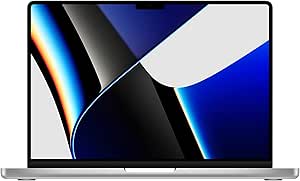
| macbook pro for data science and ai | Processor | GPU | Display | Memory |
|---|---|---|---|---|
| Apple MacBook Pro 16-inch with | M5 Max, 18-core CPU | 40-core Apple GPU | 16.2-inch Liquid Retina XDR | 128GB unified memory |
| Apple MacBook Pro with M5 Max | M5 Max, 18-core CPU | 40-core Apple GPU | 14.2-inch Liquid Retina XDR | 128GB RAM |
| Apple 2026 MacBook Pro Laptop | M5 Pro, 18-core CPU | 20-core GPU | 16.2-inch Liquid Retina XDR | 48GB unified memory |
| Apple 2026 MacBook Pro Laptop | M5 Pro, 15-core CPU | 16-core GPU | 14.2-inch Liquid Retina XDR | 24GB unified memory |
| Apple MacBook Pro | M1 Pro, 10-core CPU | 16-core GPU | 14-inch Liquid Retina XDR | 16GB RAM |
More Details on Our Top Picks
Apple MacBook Pro 16-inch with M5 Max Chip, 18-core CPU, 40-core GPU, 128GB Unified Memory, 2TB SSD, Space Black
This configuration earns my top position because it combines the lineup’s strongest listed GPU tier with 128GB unified memory, a 2TB SSD, and a spacious 16.2-inch display. For data science work, that blend favors large multitasking sessions: code editor, notebook, local data, documentation, and other tools can stay in play together. The memory headroom also makes it the most suitable option here for experimenting with larger local workloads, subject to the limits of the software and model in use.
Compared with the 14-inch M5 Max, it offers the same listed CPU, GPU, memory, and storage but more screen area. That makes the 16-inch model the more comfortable desk-based workstation; the smaller Max is the better fit if travel matters more. Against the 16-inch M5 Pro with 48GB, this model gives substantially more listed memory and GPU cores, but may be more machine than a cloud-first analyst needs. Its drawbacks are real: the larger chassis is less portable, and macOS or Apple silicon may not suit teams tied to Windows-only tools. I would also check framework and accelerator support before choosing it for a specific training workflow.
Pros:- 128GB unified memory gives this group’s strongest headroom for large multitasking workloads.
- M5 Max with a 40-core GPU is the highest listed GPU configuration here.
- 16.2-inch Liquid Retina XDR display gives notebooks and data visualizations more room.
- 2TB SSD and a broad selection of ports support a substantial mobile workstation setup.
Cons:- The 16-inch chassis is a less convenient daily carry than either 14-inch M5 model.
- Its high-end hardware may go unused by cloud-first or introductory data science users.
- Apple silicon and macOS may not fit every specialized software environment.
Best for: Data scientists who want maximum listed memory and GPU capacity in this group for local experimentation, parallel work, and a large on-screen workspace.
Not ideal for: Cloud-first users, frequent travelers who prioritize a compact laptop, or anyone whose required software depends on Windows-specific hardware or workflows.
- Processor:M5 Max, 18-core CPU
- GPU:40-core Apple GPU
- Display:16.2-inch Liquid Retina XDR
- Memory:128GB unified memory
- Storage:2TB SSD
- Ports:Three Thunderbolt 5, MagSafe 3, SDXC, HDMI, headphone jack
- Wireless:Wi-Fi 7, Bluetooth 6
Our verdict“I recommend this as the most capable all-round choice here when local workload headroom matters more than portability.”
Apple MacBook Pro with M5 Max, 18-core CPU, 40-core GPU, 14.2-inch Liquid Retina XDR display, 128GB RAM, 2TB SSD, Space Black
This 14-inch MacBook Pro keeps the M5 Max, 40-core GPU, 128GB memory, and 2TB SSD found in my top pick, but trims the display size for a more travel-friendly workstation. For people who move between lab, office, and home, it offers unusually high listed capacity in a smaller format. The 14.2-inch Liquid Retina XDR screen still gives a sharp workspace, and the Thunderbolt 5, HDMI, and SDXC connections make it easier to attach external gear without building a workstation around adapters.
The key comparison is with the 16-inch M5 Max: processing and memory specifications are essentially aligned in the supplied details, so the decision is chiefly about screen space and carrying comfort. Choose the 16-inch model if you regularly split the screen between code, plots, and reference material. Choose this one if a smaller footprint matters more. It is also far beyond the M5 Pro models in listed memory and GPU cores, but that advantage only matters when your workloads can use it. It remains a premium, high-capacity machine, and the 14-inch display can feel cramped for long notebook sessions. It is not a sensible match for every cloud-based workflow.
Pros:- M5 Max and 40-core GPU provide the same listed chip tier as the 16-inch Max.
- 128GB memory and a 2TB SSD provide substantial capacity for local projects.
- 14.2-inch format is more compact than the 16-inch Max option.
- Thunderbolt 5, HDMI, SDXC, and MagSafe 3 support flexible desk connections.
Cons:- The smaller display offers less room for coding and visual analysis than the 16-inch models.
- Its high memory and GPU capacity can be excessive for cloud-first work.
- The supplied details do not specify exact battery runtime or weight.
Best for: Researchers and practitioners who need the listed M5 Max and 128GB memory but want a smaller laptop than the 16-inch workstation.
Not ideal for: Buyers who mainly run remote notebooks, want a large built-in screen, or need a lighter, more modest machine for basic coding.
- Processor:M5 Max, 18-core CPU
- GPU:40-core Apple GPU
- Display:14.2-inch Liquid Retina XDR
- Memory:128GB RAM
- Storage:2TB SSD
- Ports:Three Thunderbolt 5, MagSafe 3, SDXC, HDMI, headphone jack
- Wireless:Wi-Fi 7, Bluetooth 6
Our verdict“I would choose this over the 16-inch Max when carrying a high-capacity AI workstation matters more than built-in screen area.”
Apple 2026 MacBook Pro Laptop with M5 Pro Chip, 16.2-inch Liquid Retina XDR Display, 48GB Memory, 1TB SSD, Wi-Fi 7, Space Black
The 16-inch M5 Pro is my middle-ground pick for data scientists who want more than an everyday configuration without jumping straight to the 128GB M5 Max machines. Its 48GB unified memory gives more capacity than the 24GB 14-inch M5 Pro, while the 18-core CPU, 20-core GPU, and 1TB SSD make it a modern platform for development, analysis, and supported local AI work. The large display is useful when a notebook, terminal, and results need to share the screen.
Compared with either M5 Max, it has fewer listed GPU cores and less memory, so it is not my choice for the most demanding local experiments in this group. In return, it makes a more restrained workstation for people who can use the extra memory but do not need the Max tier. Against the 14-inch M5 Pro, the meaningful gains are the larger screen and doubled memory, while the cost is greater weight and less convenient travel. This model is listed at 4.71 pounds, and the supplied battery information gives no specific runtime. If most computation happens in the cloud, the smaller M5 Pro may be the more sensible everyday fit.
Pros:- 48GB unified memory provides more headroom than the 24GB M5 Pro configuration.
- 16.2-inch display supports multi-pane coding and analysis.
- M5 Pro pairs an 18-core CPU with a 20-core GPU.
- Thunderbolt 5, HDMI, SDXC, and MagSafe 3 offer useful workstation connectivity.
Cons:- At 4.71 pounds, it is the least appealing choice for frequent carrying.
- Its GPU and memory specifications trail both M5 Max configurations.
- The listed battery information does not provide a specific runtime.
Best for: Data science professionals who want a spacious display and 48GB memory for larger notebooks, data preparation, and sustained multitasking.
Not ideal for: Frequent commuters seeking a lighter machine, users needing the lineup’s maximum local GPU capacity, or cloud-only workers who do not need 48GB.
- Processor:M5 Pro, 18-core CPU
- GPU:20-core GPU
- Display:16.2-inch Liquid Retina XDR
- Memory:48GB unified memory
- Storage:1TB SSD
- Ports:Three Thunderbolt 5, MagSafe 3, SDXC, HDMI, headphone jack
- Wireless:Wi-Fi 7, Bluetooth 6
Our verdict“I recommend this for buyers who need a bigger display and useful memory headroom but do not need the M5 Max tier.”
Apple 2026 MacBook Pro Laptop with M5 Pro Chip, 14.2-inch Liquid Retina XDR Display, 24GB RAM, 1TB SSD, Space Black
This 14-inch M5 Pro is the most balanced choice for buyers starting serious data science work or relying on remote compute for heavier jobs. Its 15-core CPU, 16-core GPU, and 24GB unified memory suit coding, notebooks, data cleaning, and everyday multitasking, while the 1TB SSD leaves room for local datasets and development tools. Compared with the 16-inch M5 Pro, it is lighter at 3.52 pounds and easier to carry, though it gives up the larger screen and 48GB memory.
That memory difference matters if you expect to keep many demanding applications or larger datasets active at once. For users running models through a cloud service or institutional cluster, however, the 24GB configuration can be a more balanced fit than the Max models. It also has modern ports and a 12MP Center Stage camera, useful details for hybrid study and work. The tradeoff is clear: less local memory and GPU capacity than the higher-ranked machines, plus a smaller display for long analysis sessions. I would choose the 16-inch M5 Pro if local multitasking and screen space take priority; I would skip both if the workload is simple enough for a less capable machine.
Pros:- M5 Pro provides a current-generation platform for development and supported AI tasks.
- 24GB unified memory and 1TB SSD suit many coding and analysis workflows.
- At 3.52 pounds, it is easier to carry than the listed 16-inch M5 Pro.
- Thunderbolt 5, HDMI, SDXC, and a 12MP Center Stage camera add practical flexibility.
Cons:- 24GB memory is substantially less headroom than the 48GB and 128GB options.
- The 14.2-inch screen gives less room for side-by-side code and visualizations.
- Its GPU configuration is below the listed M5 Max models.
Best for: Students, analysts, and cloud-first developers who want a current 14-inch MacBook Pro for coding and routine data work.
Not ideal for: People planning to run large local models, work with large datasets entirely on-device, or keep many memory-heavy tools open at once.
- Processor:M5 Pro, 15-core CPU
- GPU:16-core GPU
- Display:14.2-inch Liquid Retina XDR
- Memory:24GB unified memory
- Storage:1TB SSD
- Weight:3.52 pounds
- Camera:12MP Center Stage
- Ports:Thunderbolt 5, MagSafe 3, SDXC, HDMI, headphone jack
Our verdict“I see this as the most sensible current-generation pick for portable, cloud-first data science rather than heavy local model work.”
Apple MacBook Pro (14-inch, M1 Pro, 16GB RAM, 1TB SSD, Silver)
The M1 Pro is the outlier in this lineup: a 2021 14-inch MacBook Pro with a 10-core CPU, 16-core GPU, 16GB RAM, and 1TB SSD. It still has the pro-portable format and Liquid Retina XDR display, making it suitable for coding fundamentals, smaller datasets, and conventional analysis. Its stated battery life is up to 17 hours, and its 1.6kg weight is more manageable than the 16-inch M5 Pro. For a buyer who needs a MacBook Pro mainly for coursework and does not expect substantial local AI workloads, that mix may be enough.
Compared with the 14-inch M5 Pro, it falls behind on generation, memory capacity, and listed connectivity; the newer model is the stronger choice for a longer-term AI-focused purchase. It also has only 16GB RAM, the least in this group, which narrows its comfort zone for simultaneous notebooks, large datasets, and local models. The 1TB SSD remains useful, but storage cannot compensate for limited memory or a less capable GPU tier. I would choose it only when the workload is modest and the older platform fits the buyer’s needs. Anyone building a machine around local AI should look to an M5 Pro or M5 Max configuration instead.
Pros:- 14-inch form factor and 1.6kg weight suit portable study and development.
- 1TB SSD offers useful local project storage.
- Liquid Retina XDR display and pro-port selection support a capable coding setup.
- Listed battery life is up to 17 hours.
Cons:- 16GB RAM is the lowest memory capacity in this comparison.
- M1 Pro is an older platform than all three M5 configurations.
- Less suitable for demanding local AI workloads and large-scale multitasking.
Best for: Learners and developers focused on programming, smaller datasets, and traditional analysis who want a portable MacBook Pro.
Not ideal for: AI practitioners planning to run larger models locally, users with memory-heavy multitasking, or buyers seeking the newest connectivity and platform generation.
- Processor:M1 Pro, 10-core CPU
- GPU:16-core GPU
- Display:14-inch Liquid Retina XDR
- Memory:16GB RAM
- Storage:1TB SSD
- Battery life:Up to 17 hours
- Weight:1.6kg
- Operating system:macOS
Our verdict“I would choose this only for portable coding and modest analysis, not as my main recommendation for local AI work.”

How We Picked
I ranked these configurations by how well their listed hardware supports common data science and AI workloads: coding, notebooks, data preparation, multitasking, and running suitable models locally. Unified memory matters because it is shared across the CPU and GPU, so capacity can affect how much data and model work fits on the machine at once. I also weighed chip tier and GPU core count, since those help distinguish the Max configurations from the Pro models, while avoiding the assumption that a laptop replaces a dedicated accelerator or cloud compute for every training job.
Portability and display size shaped the order as well. A 14-inch model is easier to carry between class, office, and meetings; a 16-inch model gives more room for code, charts, notebooks, and documentation. I considered storage, ports, and the age of the M1 Pro option, then assigned each product a clear role instead of treating every configuration as a universal recommendation. The supplied specifications do not establish performance for particular frameworks or model sizes, so I frame those outcomes as workload fit rather than promises. I also leave out price comparisons: the useful question here is whether the added hardware matches your work.
| macbook pro for data science and ai | Processor | Ports |
|---|---|---|
| Apple MacBook Pro 16-inch with | M5 Max, 18-core CPU | Three Thunderbolt 5, MagSafe 3, SDXC, HDMI, headphone jack |
| Apple MacBook Pro with M5 Max | M5 Max, 18-core CPU | Three Thunderbolt 5, MagSafe 3, SDXC, HDMI, headphone jack |
| Apple 2026 MacBook Pro Laptop | M5 Pro, 18-core CPU | Three Thunderbolt 5, MagSafe 3, SDXC, HDMI, headphone jack |
| Apple 2026 MacBook Pro Laptop | M5 Pro, 15-core CPU | Thunderbolt 5, MagSafe 3, SDXC, HDMI, headphone jack |
| Apple MacBook Pro | M1 Pro, 10-core CPU | — |
Factors to Consider When Choosing Macbook Pro For Data Science And Ai
I would choose a MacBook Pro for data science by starting with the work that must happen on the laptop itself. Local coding and remote training have different hardware needs, so the most capable configuration is not automatically the right one.Memory sets the local-work ceiling
For local data science, memory affects how much data, code, and supporting software can stay active together. In this lineup, the options range from 16GB on the M1 Pro to 24GB, 48GB, and 128GB on newer models. The 24GB M5 Pro is a reasonable starting point for notebooks and cloud-connected work; 48GB offers more room for heavier multitasking. The 128GB Max models lead for local experiments, but a large memory number does not guarantee that every model or framework will run well. Check the memory needs and Apple silicon support for the tools you plan to use.
Pick chip tier around the workload
The M5 Pro configurations fit a broad set of development and analysis tasks, with the 16-inch version listing more CPU and GPU cores and more memory than the 14-inch version. The M5 Max models raise the listed GPU core count to 40 and memory to 128GB, making them the strongest candidates here for work that can use those resources locally. For many AI projects, training or inference may still belong on a supported server or cloud platform. I would pay for Max-class capacity only when local processing is part of the regular workflow.
Choose screen size for how you work
A 16.2-inch display is more comfortable for reviewing code beside charts, logs, or documentation. That advantage favors the 16-inch M5 Max for a large all-purpose workstation and the 16-inch M5 Pro for a balanced but less GPU-heavy setup. The 14-inch models are easier to carry and still pair well with an external monitor at a desk. If you travel often or attend classes across campus, a compact model may be more useful day to day than the largest built-in workspace.
Storage and connections matter after memory
Local datasets, project files, and development tools use SSD space, so the listed 2TB SSD on the Max models leaves more room than the 1TB configurations. External storage can help, though it adds another item to carry and manage. Thunderbolt 5, HDMI, and SDXC across the newer selections make it easier to connect displays and peripherals. Port count does not decide which model is fastest, but it can simplify a desk setup and reduce reliance on adapters.
Check software support before buying
Data science stacks differ: one team may rely on Python notebooks and remote Linux servers, while another depends on a specific package, accelerator, or Windows-only application. Apple silicon and macOS suit many development workflows, but compatibility should be checked for your actual tools. The M1 Pro is an older platform, so I would be especially careful about support requirements and expected service life before selecting it. For AI work, confirm that frameworks can use the relevant Apple hardware or plan to run demanding jobs remotely.
Frequently Asked Questions
Which MacBook Pro in this list is best for local AI work?
I would start with the 16-inch M5 Max because it combines a 40-core GPU, 128GB unified memory, and a 2TB SSD. The 14-inch M5 Max has the same listed CPU, GPU, memory, and storage in a smaller format, so it is a strong alternative if portability matters more than screen space. Actual support and performance depend on the model, framework, and workload.
Is 24GB of unified memory enough for data science?
It can suit coding, notebooks, data cleaning, and cloud-first workflows, especially when large training jobs run on remote compute. The 24GB M5 Pro is less suited to keeping several memory-heavy tools or large datasets active at once than the 48GB and 128GB options. I would choose more memory when local model work or larger datasets are a regular part of the job.
Should I choose the 14-inch or 16-inch MacBook Pro?
I would pick 14 inches for a laptop that travels regularly and 16 inches for a more spacious built-in workspace. The 16-inch display helps when code, charts, and reference material need to be visible together, while the 14-inch models take less space in a bag. If you mostly work at a desk, an external display can reduce the difference.
Is the M1 Pro still suitable for AI and data science?
The M1 Pro can handle programming fundamentals, smaller datasets, and conventional analysis, but its 16GB RAM makes it the least flexible option in this comparison for demanding local AI work. It is also older than the M5 models listed here. I would consider it for modest workloads only after checking current support for the software you depend on.
Does a MacBook Pro replace cloud or server compute for AI?
No single laptop in this roundup should be treated as a replacement for every cloud or server workload. A MacBook Pro can support development, data preparation, and some local experiments, while larger training jobs may need dedicated remote accelerators. I would choose laptop memory and GPU capacity based on the work that must run locally, then confirm framework support before relying on it for a particular model.
Conclusion
For the most demanding local workloads, I recommend the 16-inch M5 Max with 128GB memory: it has the strongest listed combination of GPU, memory, storage, and workspace. If you need similar listed capacity in a smaller laptop, choose the 14-inch M5 Max, accepting less screen area. For a balanced workstation with more memory than the compact M5 Pro, the 16-inch M5 Pro with 48GB is the better middle ground. Students and cloud-first users should look at the 14-inch M5 Pro with 24GB, while the M1 Pro makes sense mainly for coding and modest analysis. My deciding question would be whether your work truly runs locally: if not, portability and software fit may matter more than the largest chip.
Fall Picks
fall essentials
As an affiliate, we earn on qualifying purchases.