
To make ramps safer in rain and ice, you should focus on textured surface patterns like grooved, stippled, or patterned finishes. These textures improve grip by channeling water away and increasing friction, reducing the risk of slips. Materials with a rough or non-slip coating also help maintain traction in adverse weather. If you want to explore more about effective surface details for safety, there’s more to contemplate that could make a real difference.
Key Takeaways
- Grooved or patterned surfaces channel water away, reducing slipperiness in wet conditions.
- Textured aggregates and stamped concrete increase grip on ramp surfaces.
- Surface treatments like stippling or roughening enhance traction during rain and ice.
- Rubberized coatings maintain slip resistance in cold weather and icy conditions.
- Durable, weather-resistant materials prevent surface smoothing over time, ensuring consistent safety.
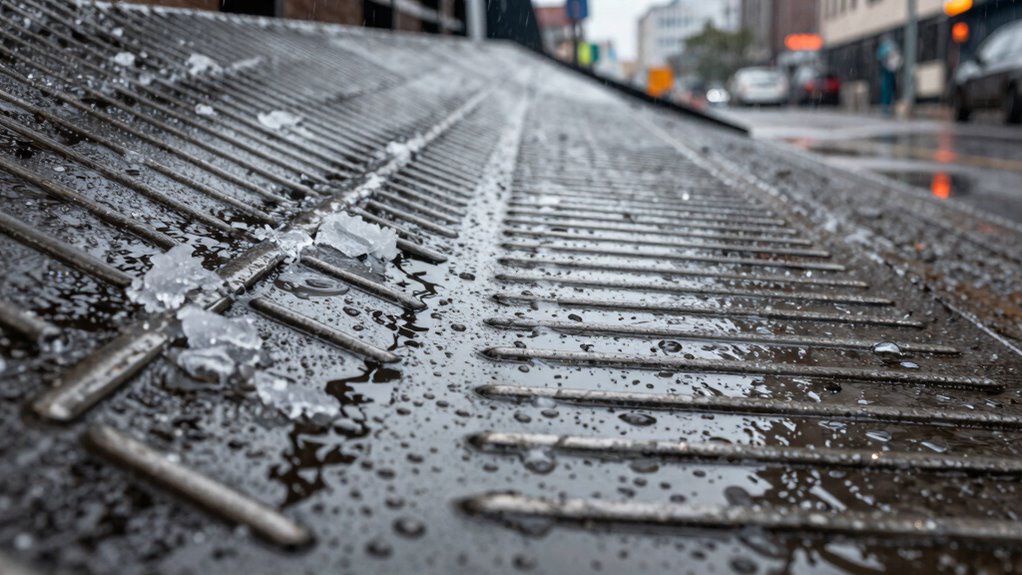
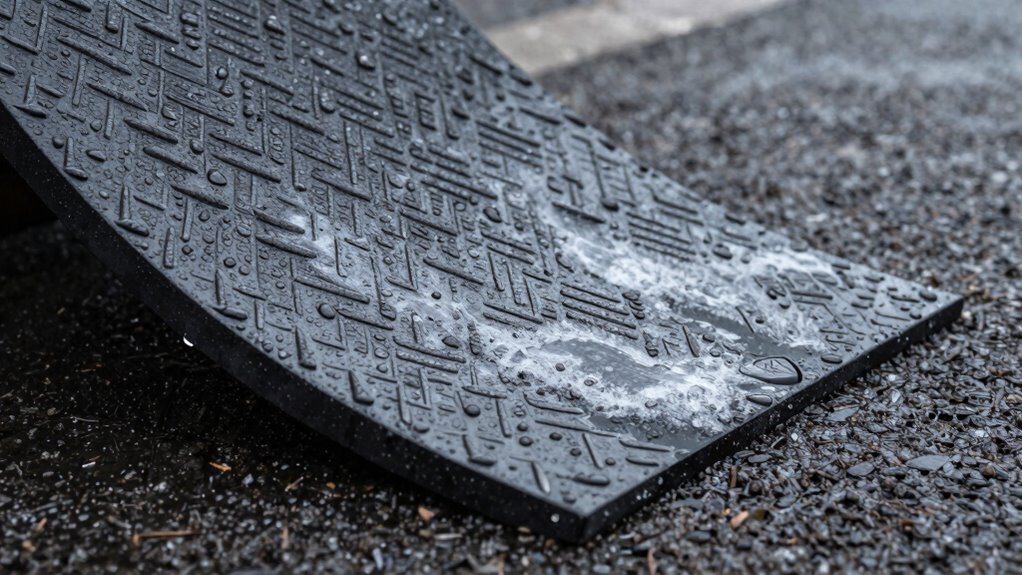
When rain or ice makes surfaces slippery, the key to safer ramps lies in their textured finish. You need to focus on the surface texture because it directly impacts traction and slip resistance. A rougher, more grippy surface helps prevent accidents, especially when conditions are wet or icy. Smooth surfaces might look sleek, but they’re dangerous when moisture reduces friction. Instead, opt for textures designed specifically to grip shoes, tires, or mobility aids, giving you confidence that you won’t slip unexpectedly. Material choice plays a critical role in creating the right surface texture. Some materials naturally offer better traction, especially in wet or icy conditions. For example, concrete infused with textured aggregates or stamped with slip-resistant patterns provides a durable, high-traction surface. Asphalt can also be modified with additives or surface treatments to improve its grip. When selecting materials, you should consider their ability to withstand weather exposure while maintaining their slip-resistant qualities over time. Materials that degrade or become smooth with weathering can compromise safety, so durability is essential. You might also explore rubberized surfaces or coatings, which offer excellent slip resistance and are often used in ramps and walkways. These materials tend to be more forgiving, providing a softer, more textured feel underfoot or under wheel. They also tend to retain their grip better in freezing conditions compared to traditional concrete or asphalt. Weathering effects can influence the long-term safety of these surfaces, so understanding how materials behave over time is crucial. The choice of material isn’t just about initial performance; it’s about maintaining safety in varying weather conditions over the long term. Additionally, the application of appropriate surface treatments can significantly enhance texture and grip. In addition to choosing the right material, you should pay attention to the surface finish. Profiles with grooved, patterned, or stippled textures significantly enhance surface traction. These textures can be integrated during manufacturing or added as surface treatments afterward. The key is to ensure the pattern is deep enough to channel water away and expose enough roughness for grip. The combination of a well-chosen material and a textured finish forms the foundation of a ramp that remains safe no matter the weather. Ultimately, you want a surface that balances durability with slip resistance, especially in rain and ice. By prioritizing a textured finish and making informed material choices, you create a safer environment. It’s these details that make the difference between a ramp that’s merely accessible and one that’s genuinely safe under all conditions.
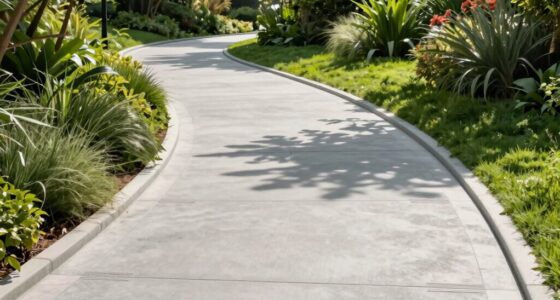
non-slip textured concrete surface
As an affiliate, we earn on qualifying purchases.
As an affiliate, we earn on qualifying purchases.
Frequently Asked Questions
How Long Does the Anti-Slip Surface Treatment Last?
The anti-slip surface treatment typically lasts about 2 to 5 years, depending on usage and environmental factors. Its durability lifespan varies with foot traffic, weather exposure, and maintenance. To maximize treatment longevity, you should regularly clean the surface and reapply the treatment as needed. Proper upkeep guarantees continued safety during rain and ice, helping you avoid slips and falls on ramps.
Are There Environmentally Friendly Options for Ramp Surface Treatments?
Imagine walking on a ramp covered in lush green moss, feeling confident even on wet days. Eco-friendly options and sustainable materials let you achieve this comfort, as they reduce environmental impact while providing excellent traction. These environmentally friendly options include recycled rubber, cork, and natural coatings, which are safe for both people and the planet. Choosing these materials guarantees your ramp remains safe, durable, and kind to the environment.
Can the Surface Be Customized for Different Lighting Conditions?
Yes, you can customize the surface for different lighting conditions by incorporating lighting adaptation features that enhance surface visibility. You might add textured or reflective materials that improve grip and visibility in low light or glare. These adjustments guarantee your ramp remains safe and accessible no matter the lighting situation, making it easier for users to navigate confidently. Proper lighting adaptation directly boosts safety and usability in various environmental conditions.
What Maintenance Is Required to Keep the Surface Effective?
Like a well-oiled machine, your ramp’s surface needs regular care. To maintain its effectiveness, check for wear and tear, clean debris, and reapply anti-slip coatings as needed. The surface’s durability depends on consistent maintenance, which should be done at least quarterly or after severe weather. This routine keeps the surface safe during rain and ice, ensuring it remains reliable and slip-resistant, just like a hero from a vintage comic.
Is the Surface Suitable for Wheelchair Users in All Weather Conditions?
Yes, the surface is suitable for wheelchair users in all weather conditions thanks to its textured surface and weather adaptability. The textured surface provides better grip, reducing the risk of slipping, even during rain or ice. Its weather-adaptable design ensures it remains functional and safe across various conditions. Regular maintenance keeps the surface in peak condition, ensuring consistent safety and accessibility for wheelchair users regardless of weather changes.
Conclusion
By paying attention to surface detail, you transform a potentially treacherous ramp into a safer passage through rain and ice. Think of it as guiding a ship through stormy seas—your careful choices steer you clear of danger. When you guarantee proper traction, textured surfaces, and effective drainage, you’re not just improving safety; you’re creating a path that beckons confidence instead of caution. With these details in place, your ramp becomes a resilient bridge over slippery hazards.