
Before buying a ramp, you should accurately measure the height from ground to door or threshold to determine the needed ramp length and incline. Check the doorway width and add a little extra space for easy maneuvering. Also, assess the available area for installation, including any landings or turns. Don’t forget to take into account outdoor weather conditions to select the right materials. Keep these measurements in mind to guarantee safety and proper fit—you’ll find more helpful tips ahead.
Key Takeaways
- Measure the ground-to-threshold height to determine the necessary ramp length and incline.
- Check doorway or entryway width, adding clearance for safe maneuvering.
- Assess environmental exposure to select weather-resistant materials.
- Confirm available space for installation, including landings or turns.
- Review local building codes to ensure compliance with safety and accessibility standards.

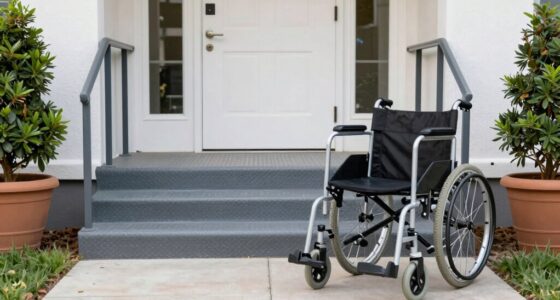
When considering a ramp for your home, taking accurate measurements is essential to guarantee safety and functionality. Proper measurements ensure the ramp fits seamlessly into your space and meets the necessary accessibility standards. You’ll want to start by evaluating the height from the ground to the entry point of your door or threshold. Measure this height precisely, as it determines the length and incline of the ramp needed. An improper measurement can lead to a ramp that’s either too steep or too flat, which can be dangerous and difficult to navigate. Remember, accessibility standards typically recommend a gentle slope—most guidelines suggest a ratio of 1:12, meaning for every inch of height, you need at least one foot of ramp length. This makes it easier and safer for wheelchair users or those with mobility challenges to ascend and descend comfortably.
Next, focus on the width. Measure the width of the doorway or entryway where you plan to install the ramp. It’s advisable to add a little extra space—about 2 to 4 inches on each side—to ensure there’s enough room for maneuvering and to accommodate any mobility aids. Keep in mind that your ramp should be wide enough to meet accessibility standards and allow a wheelchair or walker to pass through without feeling cramped. Don’t forget to measure the available space where the ramp will be installed, including any landings or turns if you’re opting for a curved or modular design. This way, you can choose a ramp that fits comfortably within your designated area without obstructing pathways or doorways. Additionally, understanding the environmental conditions where the ramp will be placed can influence your choice of materials to ensure longevity and safety.
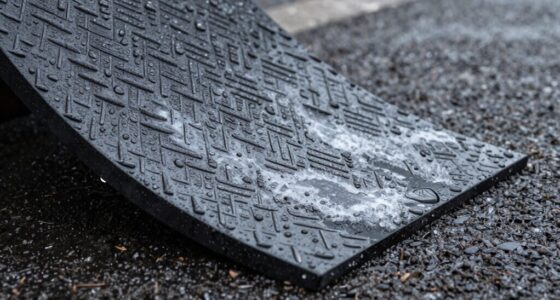
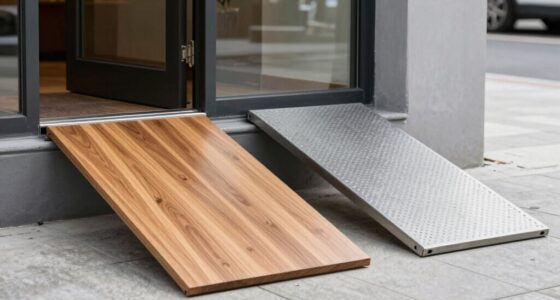
Material durability is another critical aspect to contemplate during measurements. Think about the environment where the ramp will be placed—will it be exposed to rain, snow, or direct sunlight? If so, you’ll need materials that withstand weather conditions without deteriorating quickly. When measuring for material needs, include the total length and width, but also consider the thickness and weight capacity. Strong, durable materials like aluminum, treated wood, or composite options can resist corrosion and wear over time, ensuring your ramp remains safe and functional for years. Accurate measurements help you determine how much material you’ll require and prevent costly mistakes or shortages during installation. Additionally, understanding how weather conditions affect different materials can help you select the most suitable option for your environment. It’s also beneficial to consider installation space to ensure the ramp can be properly anchored and stable for safety. Being aware of local building codes can further ensure your ramp meets all necessary safety and accessibility requirements.
As an affiliate, we earn on qualifying purchases.
Frequently Asked Questions
How Do I Determine the Maximum Weight Capacity Needed?
To determine the maximum weight capacity needed, consider the weight of the person using the ramp plus any mobility aids and belongings. Think about material durability to guarantee the ramp can support this weight over time. Also, factor in cost considerations, as higher weight capacities often mean more sturdy, and sometimes pricier, materials. Always choose a ramp with a weight capacity that exceeds your combined total for safety and longevity.
What Are the Safety Features to Look for in a Ramp?
You should look for ramps with sturdy safety features like reliable handrail options, ensuring secure support, especially on uneven surfaces. Make sure the ramp is made from material with high durability to withstand weather and daily use. Non-slip surfaces are essential to prevent accidents. Check that the handrails extend the full length of the ramp for added safety, and opt for materials like aluminum or steel that offer strength and longevity.
How Do I Account for Uneven Terrain or Outdoor Installation?
Think of uneven terrain as a winding river challenging your boat’s stability. To navigate this, you should assess surface stability and slope carefully. Measure the incline to guarantee the ramp can handle outdoor conditions without slipping or shifting. Use levelers or adjustable supports to create a stable, safe surface. Proper slope assessment and secure footing ensure your ramp adapts smoothly to outdoor terrain, providing safe, reliable access.
Can I Customize Ramp Length for Specific Doorways?
Yes, you can customize ramp length for specific doorways. When choosing a ramp, consider material options like aluminum, wood, or composite, which impact durability and weight. Also, think about aesthetic considerations to match your home’s style. Custom lengths guarantee a seamless fit, making entry safer and more comfortable. Discuss your needs with suppliers, who can often tailor the ramp’s size and design to perfectly suit your doorway’s measurements and appearance preferences.
What Is the Best Way to Measure for Wheelchair Width?
You’ll want to start by knowing the wheelchair’s width, which is part of its dimensions. Use measurement techniques like placing a tape measure across the widest part of the chair, including any armrests. Make certain to measure the entire width at the points that matter most for clearance. This way, you guarantee the ramp you choose will comfortably accommodate the wheelchair, preventing any tight fits or accidents.
Conclusion
Remember, a well-measured ramp isn’t just a piece of equipment—it’s the bridge to independence and safety. By carefully measuring your space and understanding your needs, you turn guesswork into certainty, transforming obstacles into opportunities. Don’t leave the journey to chance; instead, be the architect of accessibility. After all, the right ramp isn’t just a purchase—it’s a promise to support every step your loved ones take. Make the measurements, and build a path to a more inclusive future.