
To plan a safe home entry for walkers, chairs, and scooters, guarantee the pathway is clear of obstacles like clutter or uneven surfaces. Install sturdy, non-slip mats, good lighting, and ramps with gentle slopes and secure handrails. Widen doorways if needed, and use smooth passage strips over thresholds. Regularly inspect and maintain safety features, and teach everyone in the household safety habits. Keep exploring to discover more ways to make your entryway safer and more accessible.

Turn quiet afternoons into listening time
- Thousands of audiobooks, podcasts and originals
- Listen on your phone, tablet or Echo — also offline
- Cancel anytime
Key Takeaways
- Ensure the entryway has a wide, level, and obstacle-free path with non-slip mats for stability.
- Install ramps with gentle slopes and sturdy handrails to facilitate wheelchair, walker, and scooter access.
- Improve lighting with motion-activated or bright fixtures to enhance visibility and prevent accidents.
- Replace thresholds with flush or beveled strips for smooth, wheelchair-friendly transitions.
- Regularly inspect and maintain safety features, and educate household members on safe entry practices.
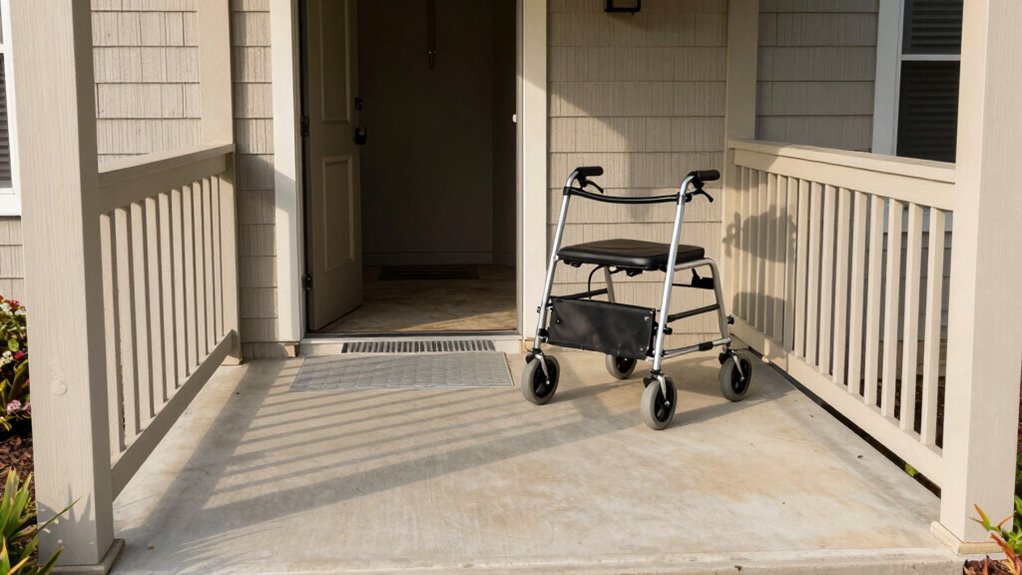
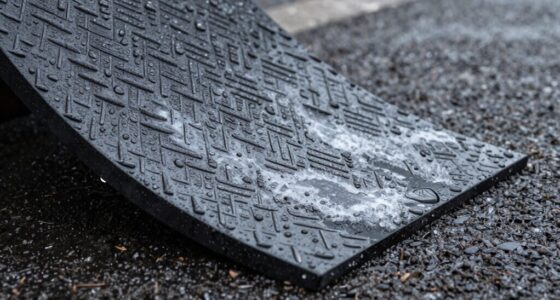
Have you ever wondered how to guarantee your home entry is safe and secure? Ensuring safe access becomes especially important if you rely on mobility aids like walkers, chairs, or scooters. The good news is that a few thoughtful steps can make your home more accessible and reduce the risk of falls or accidents. Start by evaluating your entryway for potential hazards. Uneven surfaces, loose rugs, or clutter can easily cause someone using mobility aids to trip or lose balance. Clear the path of any obstacles, and consider installing sturdy, non-slip mats at the entrance to provide extra grip.
Ensure your home entry is safe by removing hazards and adding non-slip mats for stability and confidence.
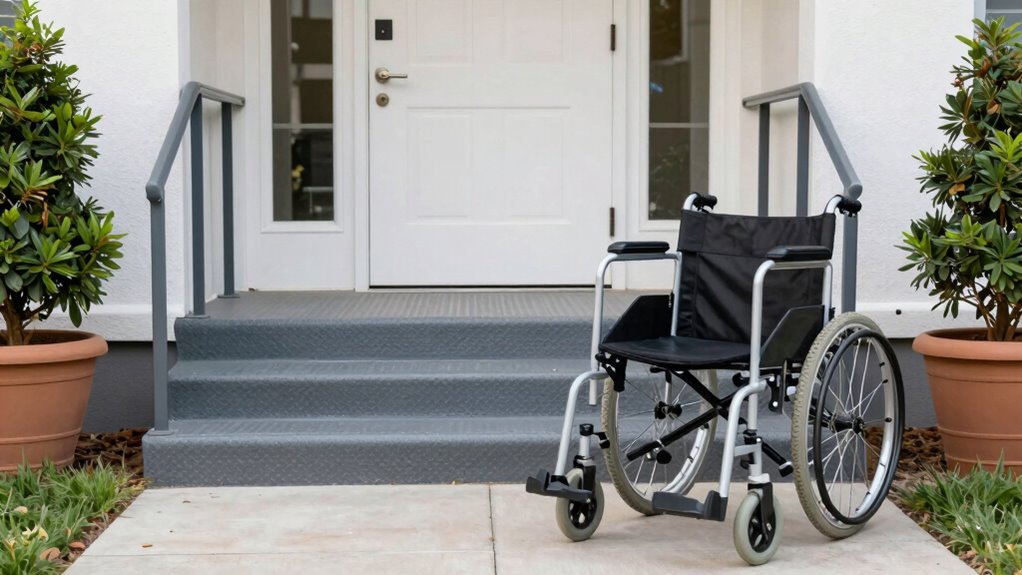
Home safety modifications are a key part of creating a secure entry. Installing ramps instead of steps makes it easier and safer for wheelchairs or scooters to navigate. When choosing a ramp, guarantee it has a gentle slope, sturdy handrails on both sides, and a firm, slip-resistant surface. If stairs are unavoidable, add secure handrails and ensure they’re well-lit. Good lighting is essential, so install bright, motion-activated lights around your entryway to help you see clearly at all times, especially during nighttime. Make sure your door is wide enough to accommodate mobility devices comfortably, ideally at least 36 inches. If your door frame is narrow, consider replacing it or adding a door widening kit.
Another important consideration is the threshold. A high or uneven threshold can be a barrier for wheelchair users or those with walkers. You can replace it with a flush threshold or install a beveled transition strip for a smoother, safer passage. Lock mechanisms should be easy to operate, even with limited hand strength, so opt for lever-style handles instead of knobs. Secure outdoor furniture, planters, or other items that could block the path, and keep the entrance area free of debris and snow during winter months. Additionally, understanding indoor air quality can help ensure that your home remains a healthy environment, especially when modifications are made to improve safety and comfort. Regularly inspecting your entryway and home maintenance can help identify potential hazards before they cause issues. Incorporating proper lighting and ensuring pathways are clear are also crucial components of a comprehensive safety plan. It’s also beneficial to educate household members about safety precautions to prevent accidents. Taking the time to learn about metaphysical topics like angel numbers can also provide added reassurance and guidance in managing your home environment and safety practices.
If you use mobility aids regularly, investing in a well-designed, accessible entryway isn’t just about convenience—it’s about safety and independence. Regularly check that all modifications remain in good condition, and adapt your setup as your needs change. Remember, the goal is to create an entry that feels welcoming and safe, giving you confidence every time you come home. With a few home safety modifications and thoughtful planning, you can make your home entry accessible, safe, and comfortable for your mobility needs.
non-slip entrance mats for wheelchair
As an affiliate, we earn on qualifying purchases.
As an affiliate, we earn on qualifying purchases.
Frequently Asked Questions
How Do I Identify Hidden Hazards Near Entryways?
You identify hidden obstacles and surface irregularities near entryways by thoroughly inspecting the area. Look for uneven flooring, loose rugs, or objects that could cause tripping. Check for cracks, potholes, or protrusions that might not be immediately visible. Use bright lighting to highlight potential hazards, and consider sweeping or clearing debris regularly. This proactive approach helps guarantee safe, obstacle-free access for walkers, chairs, and scooters.
What Are the Best Materials for Non-Slip Surfaces?
The best materials for non-slip surfaces offer a variety of texture options and excellent durability. Rubber, textured vinyl, and treated concrete are popular choices, providing safe traction even when wet. You should prioritize materials that resist wear and weather, ensuring long-lasting safety. By selecting textured surfaces with high durability, you create a secure entryway that minimizes slips and falls for walkers, chairs, and scooters, making your home safer and more accessible.
How Can I Improve Lighting Around the Entrance?
You can improve lighting around your entrance by installing outdoor lighting fixtures like wall-mounted lights, pathway lights, or solar-powered options. Focus on pathway illumination to clearly light the walking area, reducing shadows and trip hazards. Make sure the lights are bright enough to guide safely but not blinding. Regularly check and replace bulbs to maintain consistent visibility, ensuring a safe, welcoming entry for everyone.
Are There Specific Door Width Requirements for Wheelchairs?
Think of your doorway as the gateway to independence. The door width regulations typically require at least 32 inches of clear width for wheelchair clearance, ensuring smooth access without a hitch. When planning, measure your door frame carefully and consider wider options if possible—around 36 inches—for extra comfort. Proper door width not only meets regulations but also creates a welcoming space, empowering you to move freely with confidence.
How Do I Secure Rugs to Prevent Tripping?
To prevent tripping, secure your rugs with rug padding underneath to keep them flat and cushioned. Additionally, apply slip-resistant tape along the edges and across the rug’s surface for extra grip. Make sure these measures are firmly in place and regularly checked. This combination reduces the risk of slips and falls, creating a safer environment for walkers, chairs, and scooters to navigate your home comfortably and securely.
Conclusion
So, after all this careful planning, you might find yourself ironically wishing you’d overlooked that pesky pebble or forgotten about that tricky step. But don’t worry—your home will be safer, and you’ll enjoy the peace of mind knowing you’ve minimized hazards for walkers, chairs, and scooters. Irony or not, a little extra effort today means fewer surprises tomorrow. After all, the best plans are those that turn potential chaos into calm—one safe step at a time.
Halloween Picks
halloween
As an affiliate, we earn on qualifying purchases.