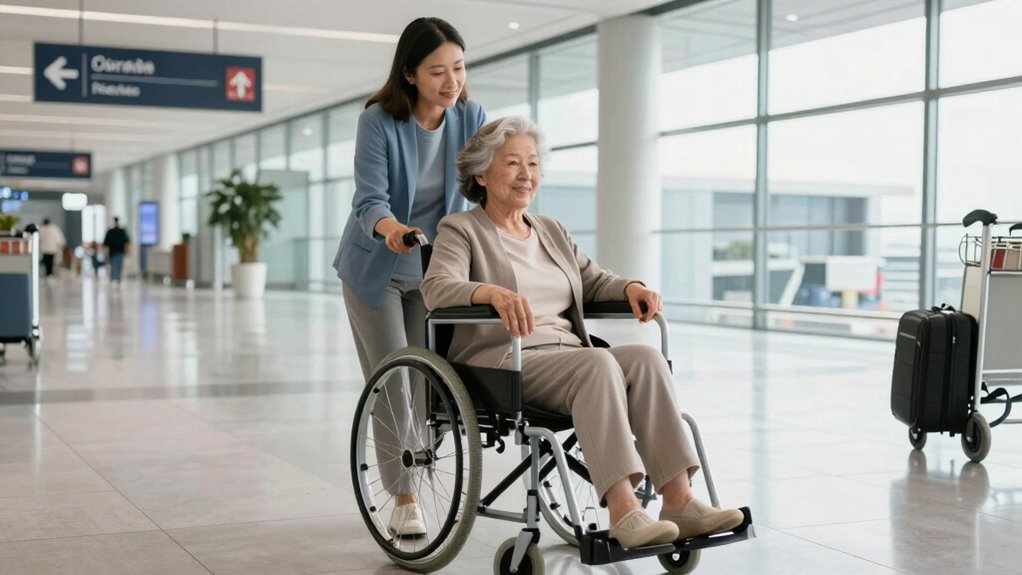
To build a safer travel day for seniors with limited mobility, plan your itinerary with plenty of accessible stops and transport options, and verify that accommodations and venues are wheelchair-friendly. Keep emergency contacts and medical info handy, and pack a well-organized medical kit. Schedule frequent breaks to prevent fatigue, and confirm devices like phones are fully charged. For more tips on creating a smooth, safe trip, you’ll find helpful strategies to ensure comfort and security throughout your journey.
Key Takeaways
- Plan a flexible itinerary with frequent rest stops and accessible attractions to prevent fatigue and ensure comfort.
- Confirm accessible transportation options and accommodations equipped to meet mobility needs.
- Keep emergency contacts, medical records, and a well-stocked medical kit easily accessible throughout the day.
- Use navigation tools and assign a support companion for guidance and reassurance during travel.
- Prepare for emergencies by understanding local procedures, carrying chargers, and having travel insurance.
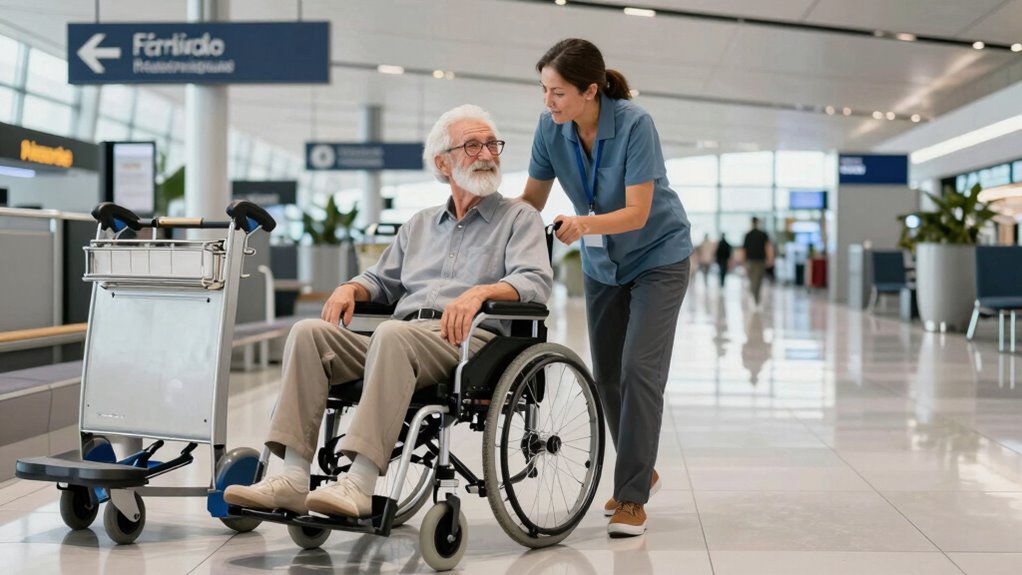
Emergency preparedness plays a significant role in building a safer travel day. Before you leave, research the healthcare facilities near your destination. Know how to access medical help quickly if needed. Keep a list of emergency contacts both at home and locally, and share this information with someone you trust. Bringing along a well-organized medical kit, including any prescription medications, mobility aids, and personal health records, helps you manage health concerns without hassle. Make sure to stay hydrated and wear comfortable, supportive shoes to reduce the risk of falls or fatigue.
Planning your itinerary with mobility limitations in mind makes the day safer and more enjoyable. Look for accessible transportation options, such as shuttles or wheelchair-friendly taxis, and verify that your accommodations are equipped to handle your needs. Schedule breaks frequently to rest and avoid overexertion. When visiting attractions, choose those that offer accessible paths or seating areas, and consider using mobility devices like walkers or wheelchairs if necessary. Informing staff at venues about your mobility needs in advance can also facilitate smoother assistance. Biodiversity awareness can enhance your experience by allowing you to appreciate local natural environments more fully. Additionally, understanding emergency preparedness procedures specific to your destination can help you respond swiftly in case of unexpected situations.
Plan your itinerary with accessible transportation, breaks, and venues to ensure a safe, comfortable, and enjoyable day.
Being familiar with local emergency services can further streamline your response in urgent situations. Transporting yourself safely is essential. If you’re using public transportation, familiarize yourself with routes and accessibility features beforehand. If you’re driving, plan your route to include rest stops and ensure your vehicle is in good condition. Always carry a fully charged phone and a portable charger in case you need to call for help or directions. Having a navigation aid like GPS or maps can be especially helpful when orienting yourself in unfamiliar areas. Knowing how to use these devices properly can save valuable time during emergencies. Having a companion accompany you can offer additional support, help with navigation, and provide reassurance.
Ultimately, building a safer travel day for seniors with limited mobility involves thoughtful planning, awareness of your needs, and proactive safety measures. By combining travel insurance, emergency preparedness, accessible planning, and reliable transportation, you can create a smooth, enjoyable experience. Remember, taking small steps to prepare today ensures that your trip remains safe, comfortable, and memorable.
wheelchair accessible travel luggage
As an affiliate, we earn on qualifying purchases.
As an affiliate, we earn on qualifying purchases.
Frequently Asked Questions
What Emergency Contacts Should Seniors Carry During Travel?
You should carry a list of emergency contacts including family members, close friends, your doctor, and local emergency services. Keep copies of important medical information and insurance details. Use a bracelet or card for quick identification. This enhances travel safety and emergency preparedness, ensuring help is accessible if needed. Always keep these contacts in an easily reachable spot, like your wallet or travel bag, for quick access during emergencies.
How Can I Assist Seniors With Cognitive Impairments?
Imagine guiding a senior through a gentle puzzle or memory game, helping them stay engaged. You can assist seniors with cognitive impairments by providing memory support tools like labels, photos, or written instructions. Engage them in simple cognitive activities, such as reminiscing or matching games, to keep their minds active. Your calm, patient presence helps reduce anxiety and creates a supportive environment, making travel safer and more comfortable.
What Are the Best Travel Insurance Options for Seniors?
You should look for travel insurance that prioritizes travel safety and covers medical emergencies, trip cancellations, and pre-existing conditions. Compare plans from reputable providers, guaranteeing they offer 24/7 assistance and easy claim processes. Incorporate senior health tips by choosing policies with accessible customer support. This approach helps protect your loved ones, provides peace of mind, and ensures they can enjoy their travels without worries about unexpected health issues or emergencies.
How Do I Arrange Accessible Transportation at Airports?
Secure seamless travel by scheduling accessible taxis ahead and requesting wheelchair assistance at the airport. Call the airport’s special needs desk early to confirm arrangements, ensuring easy entry and exit. When booking, specify wheelchair assistance to avoid surprises. Arranging these services in advance guarantees a smooth, stress-free journey, giving your senior loved one comfort and confidence from arrival to departure. Proper planning transforms travel into a safe, satisfying experience.
What Accommodations Are Recommended for Seniors With Sensory Sensitivities?
You should prioritize sensory-friendly accommodations like quiet waiting areas, dim lighting, and reduced noise zones to support seniors with sensory sensitivities. Create calming travel environments by offering noise-canceling headphones, comfortable seating, and clear signage to minimize confusion. Encourage staff to be patient and understanding, ensuring a peaceful experience. These adjustments help seniors feel more at ease, making their travel day safer, less stressful, and more enjoyable.
Conclusion
By planning ahead and staying alert, you become the steady lighthouse guiding your loved ones safely through the stormy seas of travel. Every step you take to guarantee their comfort and security turns a potentially turbulent journey into a smooth sail. Remember, your careful guidance is the compass that keeps them on course, transforming travel from a formidable voyage into a memorable adventure. With your support, every trip can be a safe harbor, shining bright with peace and confidence.