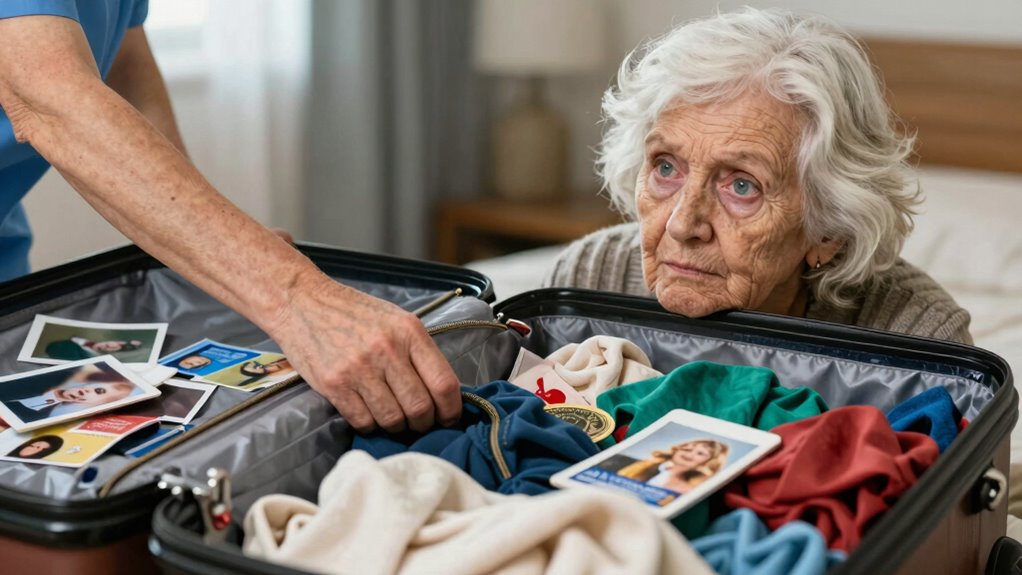

If your loved one obsessively packs or tries to leave, it’s often triggered by confusion, fear, or a need for familiarity. To keep them safe, secure exits with alarms, remove packing items, and create calming routines. Redirect attention with familiar activities and set up a designated safe space. Recognizing behavioral signals early helps you adjust the environment and routines effectively. Continuing interests can help you discover more ways to manage these behaviors and maintain their safety.

Turn quiet afternoons into listening time
- Thousands of audiobooks, podcasts and originals
- Listen on your phone, tablet or Echo — also offline
- Cancel anytime
Key Takeaways
- Recognize triggers like routines or familiar places that prompt packing or exit-seeking behaviors.
- Secure exits with alarms, sensors, or childproof locks to prevent escapes.
- Gently redirect attention to calming activities or familiar objects to reduce anxiety.
- Maintain consistent routines and modify the environment to decrease confusion and restlessness.
- Plan engaging activities during known trigger times to minimize exit-seeking behaviors.
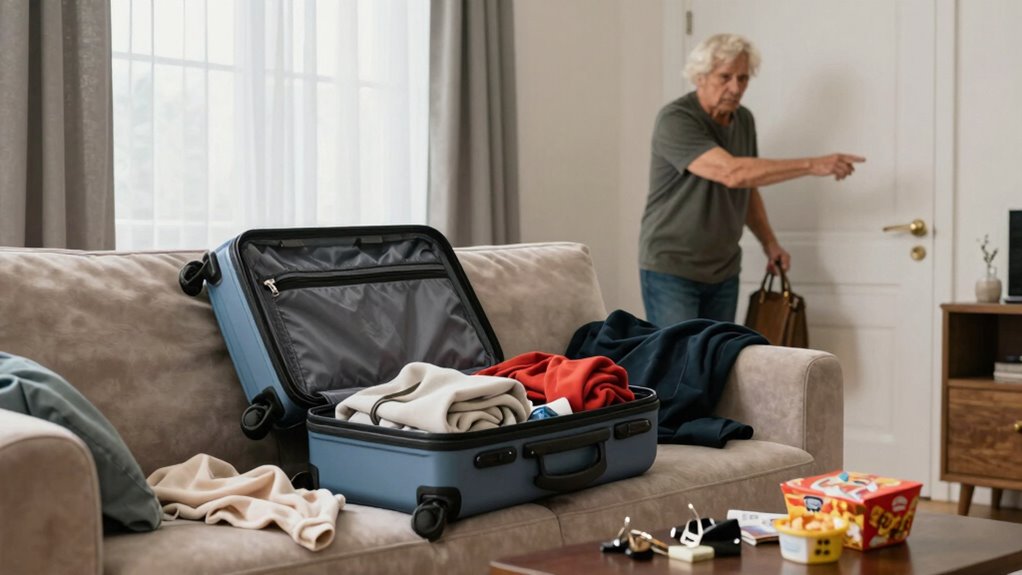
Caring for someone with Alzheimer’s can be challenging, especially when they begin to pack their belongings or attempt to leave the home unexpectedly. These behaviors often stem from confusion, fear, or a desire for familiarity, but they can also be dangerous. Understanding how memory triggers influence these actions is key to managing them effectively. Memory triggers are cues that remind your loved one of past routines or places, and when these triggers are activated, they may feel compelled to pack or leave, even if they’re no longer in their familiar environment. Recognizing these triggers helps you anticipate potential exit-seeking behaviors and prepare accordingly.
To keep your loved one safe, implementing safety precautions is essential. First, consider securing exits with alarms or sensors that alert you when a door is opened. These devices act as early warning systems, giving you the chance to intervene before your loved one leaves unnoticed. You might also use door locks that can only be operated from the inside or install childproof locks to prevent unintentional escape. Additionally, removing or hiding items that might be used for packing, like bags or suitcases, can reduce the temptation to gather belongings. Creating a calm, reassuring environment also helps diminish anxiety that could trigger packing or exit-seeking. Understanding memory triggers and their influence is fundamental to developing effective strategies for safety and comfort.
When your loved one starts packing or shows signs of wanting to leave, try redirecting their attention gently. Offer a familiar activity or engage them in a soothing conversation to help ground them in the present. Sometimes, providing a designated “escape area” with comforting objects or photographs can give them a sense of security without risking their safety. It’s also helpful to keep a list of memory triggers specific to your loved one — such as certain times of day, locations, or routines — and use this information to modify their environment or daily schedule. For example, if they associate a particular time with going outside, plan engaging activities during that period to reduce restlessness. Being aware of behavioral signals can help you intervene early and reduce anxiety for both you and your loved one. Additionally, understanding the importance of environmental modifications can significantly reduce the likelihood of exit-seeking behavior. Incorporating consistent routines can also provide a sense of stability and familiarity, helping to decrease confusion and related behaviors.
As an affiliate, we earn on qualifying purchases.
Frequently Asked Questions
How Can I Prevent Exit-Seeking Behaviors Before They Start?
To prevent exit-seeking behaviors, you should identify memory triggers that prompt your loved one to want to leave. Use environmental modifications like secure doors, alarms, or visual cues to reduce their urge to escape. Keep their surroundings familiar and safe, minimizing confusing or overstimulating areas. Engaging them in calming activities and maintaining routines also helps reduce anxiety, lowering the chances of exit-seeking behaviors before they start.
Are There Specific Triggers That Cause Obsessive Packing?
Packing triggers often stem from emotional cues like anxiety, fear, or a sense of loss. You might notice your loved one packing when they’re feeling overwhelmed or uncertain, as it’s a way to seek control or reassurance. To prevent this, observe their emotional cues closely and address underlying feelings. Providing comfort, establishing routines, and offering reassurance can reduce the urge to pack obsessively, helping them feel safer and more secure.
What Safety Measures Can Protect My Loved One During Exit Attempts?
Don’t put all your eggs in one basket—safety measures are essential during exit attempts. You should implement travel safety precautions, like alarms or GPS trackers, to monitor your loved one’s whereabouts. Additionally, home modifications such as door locks, safety gates, and window latches can prevent unsafe exits. These steps help protect them while giving you peace of mind, knowing you’ve minimized the risk of wandering or injury.
How Do I Handle Aggressive Behavior Related to Packing or Exit-Seeking?
When your loved one shows aggressive behavior related to packing or exit-seeking, stay calm and use gentle reassurance. Identify emotional triggers, like frustration or fear, and address them patiently. Implement environmental modifications by creating a safe space and reducing stimuli that may cause agitation. Redirect their attention to calming activities, and avoid confrontation. Consistent routines and clear communication help manage aggression, making both of you feel more secure.
When Should I Consider Professional Intervention for These Behaviors?
You should consider professional intervention if packing and exit-seeking behaviors become frequent, intense, or unsafe. A medical assessment can help rule out other issues and determine if medication is needed. Behavioral therapy can teach your loved one safer ways to express their needs. If these behaviors interfere with daily life or cause you significant stress, seeking help from healthcare professionals is essential for effective management and safety.
Conclusion
By understanding the signs of obsessive packing and exit-seeking, you can better support your loved one and prevent potential dangers. Stay vigilant and patient, knowing that with your care, you’re more powerful than a superhero, capable of steering even the most challenging moments. Remember, your dedication can turn chaos into calm and keep your loved one safe and loved. In this journey, your compassion truly makes all the difference—you’re their guiding light through the fog.
Cold & flu season Picks
humidifiers
As an affiliate, we earn on qualifying purchases.