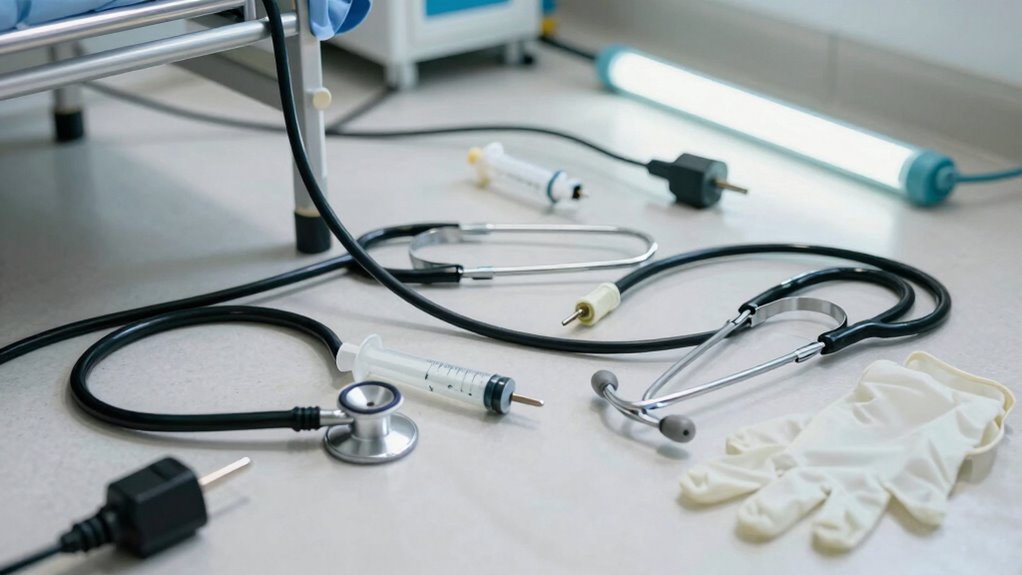

Using extension cords with medical gear puts you at risk of electrical issues like overloads, short circuits, and surges. These problems can damage sensitive devices such as ventilators or dialysis machines, and even cause fires or shocks. Extension cords are often unreliable and don’t provide the stable power your equipment needs, risking treatment interruptions. If you’re concerned about safety and reliable operation, understanding the full risks and solutions can help you make better choices.

Turn quiet afternoons into listening time
- Thousands of audiobooks, podcasts and originals
- Listen on your phone, tablet or Echo — also offline
- Cancel anytime
Key Takeaways
- Extension cords can cause electrical overloads, damaging sensitive medical devices.
- Damaged cords increase fire and shock risks, jeopardizing patient safety.
- Extension cords may disconnect unexpectedly, interrupting critical medical treatments.
- Using proper outlets and backup systems ensures reliable power for medical equipment.
- Ignoring electrical safety standards risks device failure and potential life-threatening emergencies.
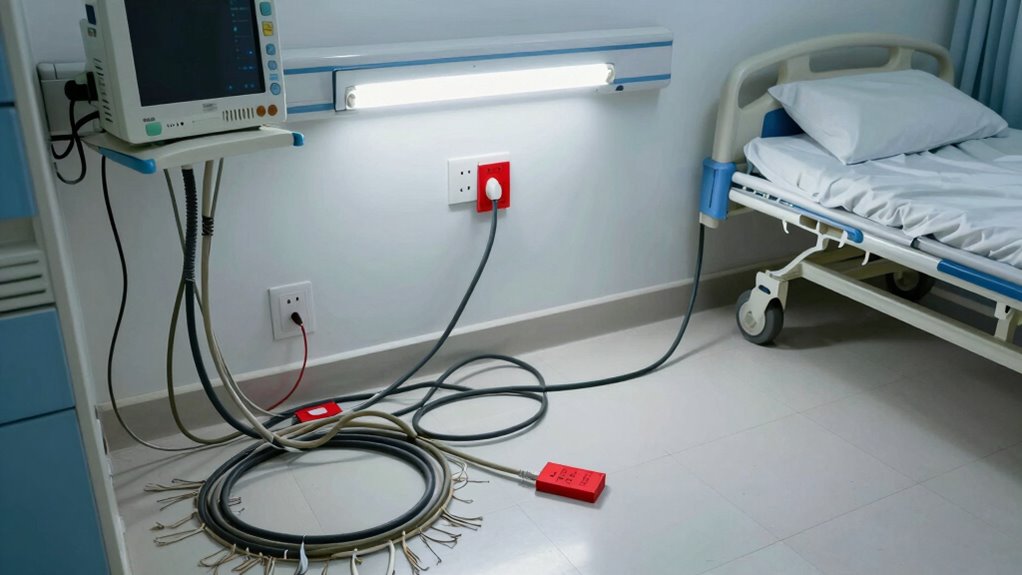
Extension cords are convenient, but they can pose serious risks when used with medical gear. If you rely on medical equipment at home or in emergency situations, understanding the dangers of improper extension cord use is essential. Electrical safety should always be your top priority, especially when dealing with sensitive devices like ventilators, oxygen concentrators, or dialysis machines. These devices require a stable power supply, and using extension cords increases the chance of electrical issues, such as short circuits, overloads, or power surges that could damage your equipment or harm you. When you connect multiple devices or run cords across high-traffic areas, you risk tripping hazards or accidental disconnections, which could interrupt critical treatments.
In emergency preparedness, having reliable access to power is fundamental, but extension cords can undermine this safety net. If a power outage occurs, depending on extension cords for backup power isn’t just risky—it can be dangerous. Power cords that are frayed, damaged, or not rated for medical equipment often fail under stress, leading to electrical fires or shocks. This is why strict adherence to electrical safety standards is essential; using cords with insufficient capacity or poor insulation compromises your safety and your equipment’s functionality. Rather than improvising with extension cords, consider installing dedicated outlets or backup power systems designed specifically for medical gear. Additionally, proper electrical wiring is crucial to ensure safety and reliable operation.
You also need to be aware of the limitations of extension cords in emergency preparedness. While they might seem like a quick fix, they aren’t a reliable or safe long-term solution for powering medical devices. Proper planning involves consulting professionals to install surge protectors or uninterruptible power supplies (UPS) that can handle the electrical load and ensure continuous operation of your medical gear during outages. This approach minimizes the risk of damage or failure, which could have life-threatening consequences. Relying on extension cords in emergencies can delay critical treatment or lead to dangerous situations because cords may become unplugged or fail under stress. Additionally, understanding the importance of electrical safety standards helps prevent accidents and preserves the integrity of your medical equipment. Ensuring that your electrical components meet these standards can significantly reduce the risk of electrical hazards, especially when dealing with sensitive medical devices.
medical grade uninterruptible power supply
As an affiliate, we earn on qualifying purchases.
As an affiliate, we earn on qualifying purchases.
Frequently Asked Questions
Can Medical Equipment Be Safely Powered With Extension Cords Long-Term?
You shouldn’t power medical equipment long-term with extension cords. Doing so risks battery safety issues and potential power surges, which can damage sensitive devices or cause malfunctions. Extension cords may not provide consistent power, increasing the chance of interruptions. For safety and reliability, always use properly grounded outlets and dedicated circuits designed for medical gear, preventing hazards like overloads or electrical faults.
Are There Specific Extension Cords Designed for Medical Devices?
You’ll find that some extension cords are specifically designed for medical equipment, prioritizing medical cord safety and equipment compatibility. About 60% of healthcare facilities prefer these specialized cords to guarantee reliable power and reduce risks. These cords often feature insulated, medical-grade materials that meet strict safety standards. Always verify if an extension cord is labeled for medical use before connecting essential equipment, guaranteeing safety and proper function.
What Are the Legal Regulations Regarding Extension Cord Use With Medical Gear?
You must follow strict legal regulations regarding extension cord use with medical gear to guarantee medical safety and comply with electrical standards. Laws often require using certified, hospital-grade extension cords designed specifically for medical devices. You’re responsible for making sure cords are properly rated, inspected regularly, and used according to manufacturer instructions. Ignoring these regulations can lead to safety hazards, legal liabilities, and compromised patient care. Always prioritize safety and consult relevant standards and authorities.
How Can I Identify if an Extension Cord Is Safe for Medical Equipment?
Think of an extension cord as a lifeline—if it’s not safe, it can threaten your well-being. To identify if an extension cord is safe for medical equipment, check for electrical safety certifications like UL or ETL labels. Confirm it has sufficient cord durability, rated for medical use or high power loads. Avoid cords with frayed wires or damaged insulation, and always opt for heavy-duty, medical-grade cords to protect your equipment and health.
What Are the Alternatives to Extension Cords for Powering Medical Devices?
You can opt for portable solutions like battery-powered devices or uninterruptible power supplies (UPS) to avoid extension cords. These options guarantee your medical devices stay powered reliably without risking electrical hazards. Battery-powered devices are especially convenient for mobility and emergencies. Investing in portable solutions provides peace of mind, reduces trip hazards, and keeps your medical equipment functioning safely and efficiently, even during power outages or in settings where outlets are limited.
Conclusion
You should think twice before using extension cords with medical gear—it’s a risky combo. Studies show that nearly 80% of hospital equipment-related accidents involve electrical issues, often caused by improper power sources. By avoiding extension cords, you reduce the chance of electrical faults and guarantee your medical devices operate safely and reliably. Prioritize your safety and always use properly grounded outlets for your medical gear, because your well-being is worth the extra effort.
Fall Picks
fall essentials
As an affiliate, we earn on qualifying purchases.