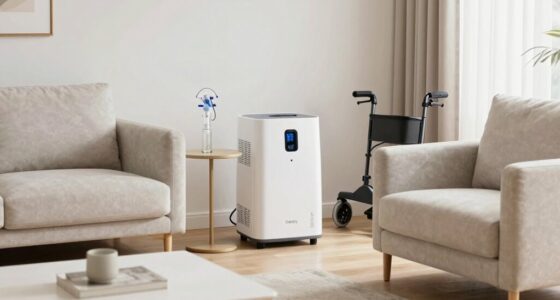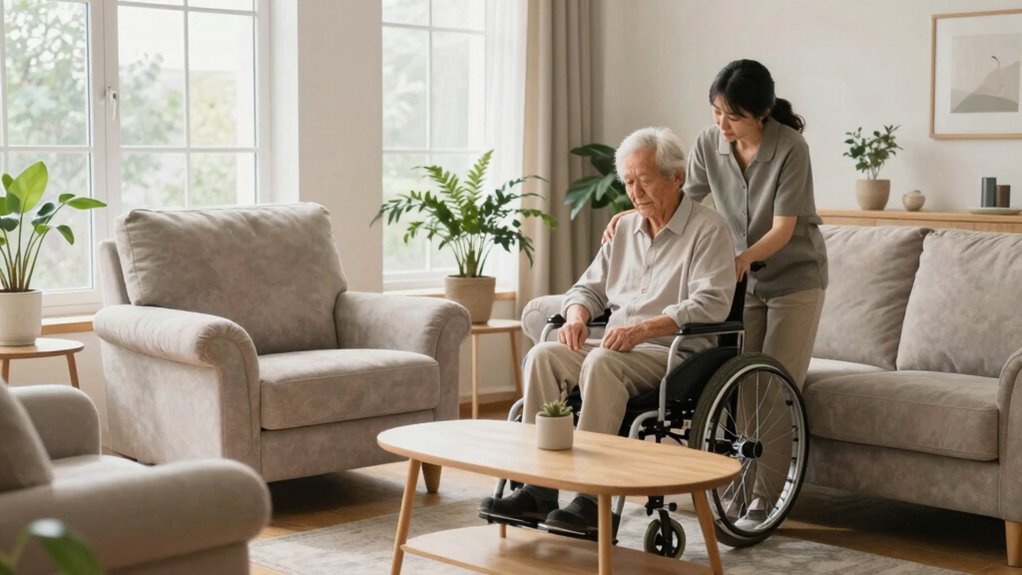

To lower stress at home, organize your space with clear labels and minimal clutter, creating a peaceful environment. Use calming colors, soft lighting, and easy-to-access storage for medications and essentials. Automate routine tasks with smart devices to reduce mental load, and create emergency kits and plans for quick access during crises. These simple tweaks promote safety, serenity, and ease for both caregiver and patient. Keep exploring for more ways to create a truly calming home oasis.

Turn quiet afternoons into listening time
- Thousands of audiobooks, podcasts and originals
- Listen on your phone, tablet or Echo — also offline
- Cancel anytime
Key Takeaways
- Organize and declutter spaces to create a calm, peaceful environment for both caregiver and patient.
- Clearly label and store medications and emergency supplies in accessible, designated spots.
- Incorporate calming colors, soft lighting, and minimal clutter to promote serenity and reduce stress.
- Use smart home devices and automation to streamline routine tasks and reduce mental load.
- Develop and practice emergency plans to increase confidence and reduce anxiety during crises.
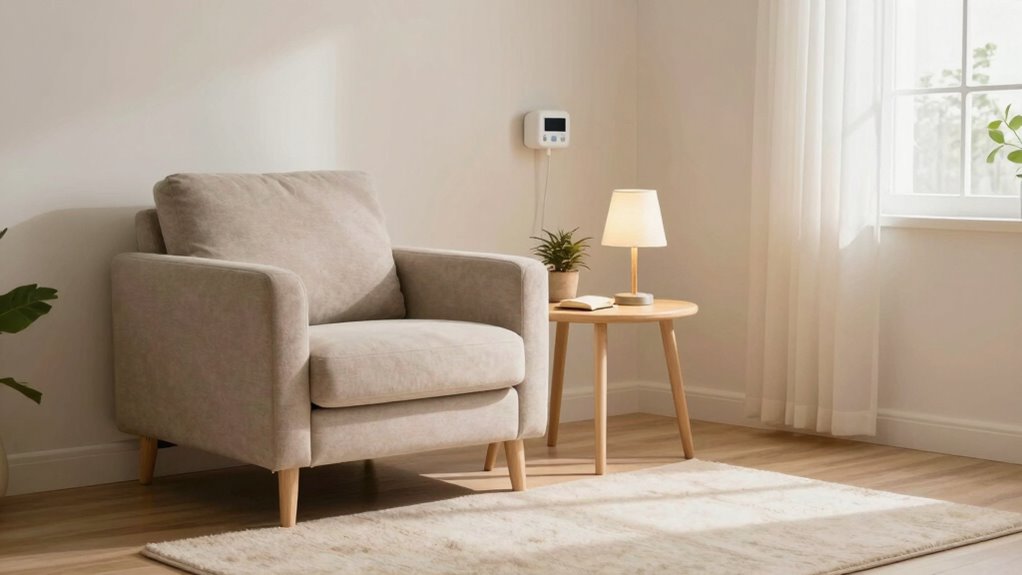
Creating a calming home environment can substantially reduce stress and improve your overall well-being. When your space feels organized and peaceful, it’s easier to focus on what truly matters—your health and the health of your loved ones. One of the most effective ways to achieve this is by streamlining medication management. Keep all medications in clearly labeled containers and store them in a designated, easily accessible spot. This reduces the chaos of searching for pills and minimizes the risk of missed doses or accidental overdoses. Establishing a daily routine for medication intake can also provide a sense of control, which is comforting during stressful times. Consider using a pill organizer or setting reminders on your phone to guarantee that medications are taken correctly and on time. Consistency in medication management not only improves health outcomes but also alleviates worry, creating a more tranquil environment. Incorporating technology reviews and tips can help you find the best tools to support your organization efforts. Utilizing organizational strategies rooted in proven methods can further enhance your home setup and reduce daily stressors. Additionally, integrating digital organization tools can streamline your planning and keep important tasks and reminders in one accessible place. Implementing smart home devices can also automate routine tasks, reducing the mental load involved in daily caregiving. Ensuring that your home is equipped with reliable home safety features can further minimize hazards and boost confidence in handling emergencies.
Emergency preparedness is another vital aspect that can lower stress levels for both caregiver and patient. When you have a clear plan in place, it reduces panic and confusion should a sudden crisis occur. Start by creating an emergency kit that includes essentials like water, non-perishable food, a flashlight, batteries, and necessary medications. Keep important documents—insurance papers, medical records, and emergency contacts—in a designated, easily reachable location. Having a plan for emergencies, such as medical crises or natural disasters, helps you feel more in control and ready to respond. Practice emergency drills periodically so everyone knows what to do and feels confident in the steps to take. Updating your plan and kit regularly guarantees you’re prepared for any new needs or circumstances. When you combine this preparedness with organized medication management, you’re building a safer, calmer home environment.
In addition to these practical tweaks, pay attention to the overall ambiance of your space. Use calming colors, incorporate soft lighting, and minimize clutter to create a serene atmosphere. This not only helps reduce stress but also makes caregiving less overwhelming. When your home is thoughtfully arranged, with clear systems for medication and emergency readiness, you’re better equipped to handle the daily challenges that come with caregiving. These small but impactful tweaks foster a sense of security and peace, making your home a sanctuary where stress doesn’t take hold. Ultimately, by paying attention to these details, you’re nurturing both your well-being and that of your loved ones, creating a supportive environment that promotes health, safety, and tranquility.
medication organizer with labels
As an affiliate, we earn on qualifying purchases.
As an affiliate, we earn on qualifying purchases.
Frequently Asked Questions
How Can Technology Improve Home Care Stress Levels?
Technology can considerably reduce your home care stress by using smart alarms and voice assistants. Smart alarms alert you instantly to emergencies or medication schedules, easing worry. Voice assistants help you manage daily tasks hands-free, answer questions, and set reminders effortlessly. These tools streamline communication and improve safety, making caregiving more manageable and less stressful for both you and your loved one.
What Are Affordable Home Modification Options for Stress Reduction?
Creating a peaceful home doesn’t have to break the bank. You can add decorative elements like soothing artwork or cozy textiles to make spaces calmer. Installing simple noise control solutions, such as rugs or weather stripping, drastically reduces background noise and stress. These affordable modifications transform your environment into a sanctuary, making caregiving easier and more comfortable for both of you without draining your wallet.
How Do I Involve Patients in Home Setup Decisions?
You involve patients in home setup decisions by encouraging patient engagement and making decision-making involvement a priority. Ask for their preferences, listen actively, and explain options clearly. Include them in planning discussions and decision processes, ensuring their comfort and needs are central. By empowering patients to share their input, you foster a sense of control and collaboration, leading to a more personalized and stress-reducing home environment for both of you.
Are There Specific Lighting Tips to Reduce Caregiver Stress?
You can reduce caregiver stress by optimizing lighting ambiance with soft, warm lights that create a calming environment. Incorporate natural light by positioning furniture near windows and using sheer curtains to diffuse sunlight gently. Avoid harsh fluorescent bulbs, as they can cause strain. Consistent, well-placed lighting helps both you and the patient feel more comfortable, reduces fatigue, and promotes a soothing atmosphere that eases daily routines.
How Can I Maintain Privacy While Enhancing Accessibility?
To maintain privacy while enhancing accessibility, you should create designated private zones with clear boundaries, like curtains or screens. Use accessible locks or smart security systems to control access and address privacy concerns. Balance accessibility by installing easy-to-reach storage and adjustable fixtures, ensuring both privacy and ease of use. Regularly communicate with your loved one to adjust setups, maintaining an ideal accessibility balance without compromising privacy.
Conclusion
By making simple tweaks to your home setup, you’re planting seeds of calm that grow into a peaceful sanctuary. Think of your space as a guiding lighthouse, illuminating a safe harbor amid stormy seas. These changes aren’t just adjustments—they’re beacons of reassurance for both caregiver and patient, helping stress fade like shadows at dawn. With each thoughtful touch, you craft an environment where comfort blossoms, and worries gently drift away like leaves on a tranquil stream.
Halloween Picks
halloween
As an affiliate, we earn on qualifying purchases.