To prevent medical equipment from taking over your home, first assess your space and storage needs, choosing solutions like wall-mounted shelves or stackable bins. Organize devices by how often you use them, keeping daily essentials within easy reach. Label everything clearly and maintain your gear to guarantee safety. Regularly review your setup, adjusting as needed. Staying organized helps keep your home safe and equipment ready—continue to discover effective tips to maintain order.
Key Takeaways
- Assess available space and choose compact, wall-mounted storage solutions to maximize efficiency.
- Organize equipment by usage frequency, storing daily items within easy reach and seasonal items separately.
- Label all items clearly with purpose, maintenance info, and expiration dates for quick identification.
- Regularly review and declutter storage areas, removing outdated or unused equipment.
- Designate a central, discreet location for medical gear to prevent clutter and ensure easy access.
Evaluate Your Home Space and Storage Needs for Medical Equipment

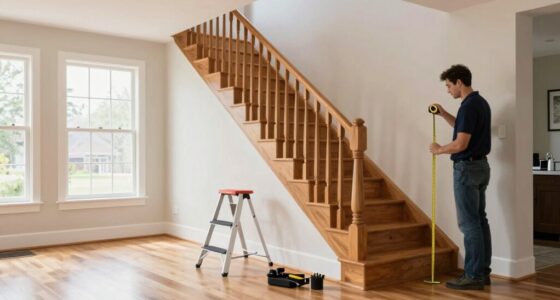
Before organizing your medical equipment, it’s essential to assess your available home space and determine your storage needs. Your home layout plays a key role in deciding where to store items efficiently. Measure the areas where you plan to keep your equipment, ensuring there’s enough room without cluttering your living spaces. Consider your storage capacity—do you need a small cabinet, a closet, or a dedicated storage room? Think about accessibility and safety as well. If space is limited, prioritize compact storage solutions or wall-mounted organizers. Understanding your home layout and storage capacity helps you create an effective plan, preventing clutter and ensuring your medical equipment remains accessible when needed. This step sets the foundation for a well-organized storage system. Gold IRA markets offer insights into the importance of secure and efficient storage solutions, which can be applied to managing medical equipment storage at home. Additionally, evaluating storage options can help you select the most suitable solutions for your space and needs. Incorporating space-saving techniques can further optimize your storage efficiency and keep your home organized. Considering the proper ventilation is also crucial to prevent mold and maintain a safe environment around your stored equipment. Moreover, understanding environmental considerations ensures your equipment is stored in conditions that prolong its usability and safety.
Organize Your Medical Devices by How Often You Use Them
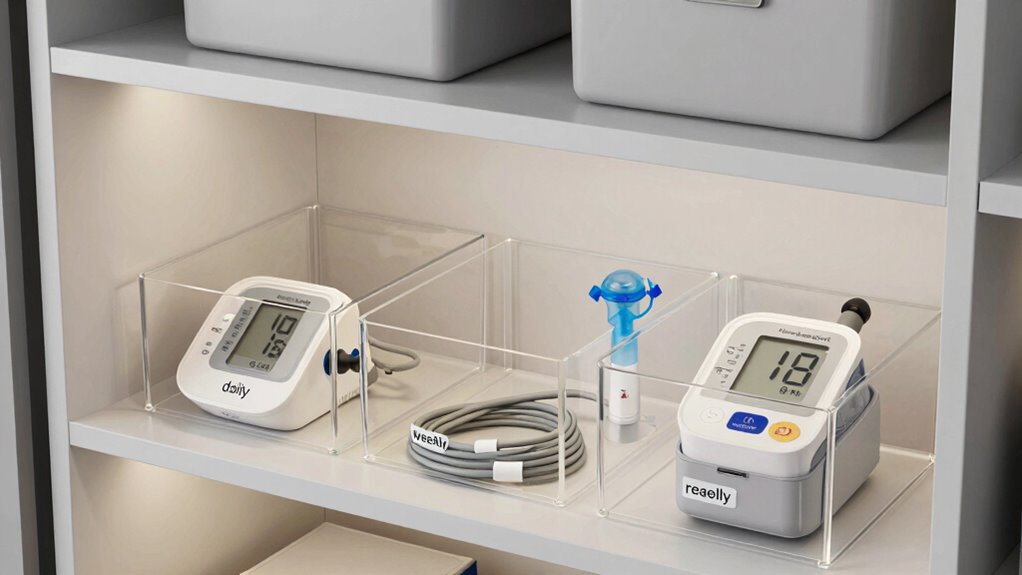
To keep your medical devices accessible, store the ones you use daily in easy-to-reach spots. For equipment you use less often, consider designated storage solutions that keep them organized but out of the way. This approach helps you save time and maintains a tidy space. Additionally, implementing organized storage solutions can make all your devices easier to locate and manage. Drawing inspiration from biographical figures who demonstrate resilience and adaptability can help you develop a personalized system that works best for your needs. Incorporating seasonal checklists for cleaning and maintenance can also help ensure your equipment remains safe and functional over time, much like safe home charging practices that keep your EVs in top condition. Moreover, using natural materials in storage furniture can enhance both the aesthetics and environmental friendliness of your organization system.
Daily Use Storage Tips
Organizing your medical devices based on how often you use them can make daily routines more efficient. Keep frequently used items accessible by placing them in storage benches or drawer organizers near your daily living areas. Storage benches provide discreet seating and convenient storage for essentials like inhalers or glucose meters. For smaller devices or supplies, wall mounted organizers are ideal—they keep everything visible and within arm’s reach, reducing clutter and search time. Use labels to quickly identify compartments and ensure everything has a designated spot. This system minimizes the chance of forgetting or misplacing critical equipment. Incorporating organization techniques into your routine can also help in maintaining healthy skin around your medical devices, especially if you use products containing glycolic acid. Additionally, choosing security features for your storage solutions can help safeguard sensitive medical supplies. Prioritizing color accuracy for your home’s lighting and decor can also help create an environment that enhances the visibility of your organized space. Being aware of vetted privacy policies when selecting storage solutions or sharing your organizational methods can help protect your personal information. By prioritizing easy access for daily use, you streamline your routine and keep your home tidy without sacrificing convenience.
Infrequent Equipment Solutions
When it comes to infrequently used medical devices, choosing the right storage approach can prevent clutter and make retrieval easier when needed. Keep these items in a dedicated, clearly labeled storage bin or cabinet near your main living area or bathroom. Regularly perform medical equipment maintenance to ensure devices are in good working order, even if seldom used. Store emergency preparedness supplies, like oxygen tanks or first aid kits, in an accessible yet secure spot. Consider using stackable containers or wall-mounted shelves to maximize space and stay organized. Proper storage systems can help keep your home safe and ensure that your equipment remains functional over time. Implementing organized storage solutions tailored to your space enhances accessibility and reduces clutter. To further protect your equipment, consider climate-controlled storage to prevent damage from humidity or temperature fluctuations. Additionally, using UST projectors and ALR screens for home safety tutorials or emergency instructions can be a helpful addition. Properly categorizing and storing infrequent equipment also facilitates space optimization, making it easier to locate devices quickly during emergencies. By categorizing and storing infrequent equipment properly, you reduce clutter and save time during emergencies. This approach ensures your devices are ready when needed without overwhelming your home environment.
Choose the Best Storage Solutions for Your Medical Equipment

Are you unsure which storage solutions best suit your medical equipment? To keep your home organized, consider innovative storage options that maximize space. Using modular shelves, stackable bins, or wall-mounted cabinets helps you utilize vertical space efficiently. Think about your specific needs and choose solutions that offer easy access and safety. Additionally, incorporating connected fitness technology can help monitor and manage your equipment more effectively. Here’s a quick comparison:
| Storage Type | Best For |
|---|---|
| Wall-mounted shelves | Frequently used small devices |
| Stackable bins | Infrequent or seasonal equipment |
| Compact cabinets | Protecting delicate gear |
These options help you stay organized without clutter, ensuring your medical equipment is accessible yet out of the way. Incorporating storage organization tips can further enhance your space management. Utilizing space-saving storage methods can significantly improve your home’s functionality and safety. Implementing smart storage solutions tailored to your needs can optimize your space and promote safety. For example, sound healing techniques can be used in dedicated storage areas to create a calming environment. The right storage boosts space maximization and keeps your home safe and tidy.
Designate a Dedicated Spot for Essential Medical Gear

You should pick a central spot for your essential medical gear so it’s easy to find quickly. Use clear labels to identify each item, preventing confusion during emergencies. Keep everything accessible so you can grab what you need without searching or fumbling. Incorporating a simple organizing system can help maintain order and ensure your medical supplies stay manageable.
Choose a Central Location
Choosing a central location for your medical equipment guarantees quick and easy access during emergencies. Select a spot that’s convenient and often used, like a hallway closet or a dedicated cabinet. To keep the space organized and visually appealing, consider decorative storage options that blend seamlessly with your home’s decor. Aesthetic solutions such as stylish bins or baskets can hold smaller items without cluttering the area. Keep essential gear within arm’s reach but out of the way of daily traffic. By designating this spot, you prevent medical equipment from spreading throughout your home, making retrieval faster when it matters most. This approach balances functionality and design, ensuring your medical supplies are accessible yet unobtrusive.
Use Clear Labels
Clear labels make it easy to identify and locate essential medical gear quickly. Use color-coded labels to differentiate items, making retrieval faster and reducing confusion. Guarantee your labels are durable; medical equipment often requires frequent handling, so label durability is key to preventing wear and tear that can obscure information. Stick to clear, legible fonts and weather-resistant materials if necessary. Proper labeling helps you maintain organization and ensures everyone in your household can find what they need without hassle. By designating a spot for each type of medical gear and labeling it clearly, you minimize clutter and confusion. This simple step creates a streamlined system, giving you peace of mind and keeping your home safe and organized.
Keep It Accessible
Designating a specific spot for your medical gear guarantees quick access when every second counts. Choose a location that’s convenient, accessible, and integrates well with your home decor so it doesn’t look out of place. Keep essential items together in a designated container or cabinet, making it easy for family members to locate them quickly. Incorporate this spot into your daily family routines by regularly checking and restocking supplies. Clear signage or labels can help everyone remember where to find and return equipment. By keeping your medical gear reachable, you minimize chaos during emergencies and maintain a tidy, organized home. This simple step ensures that in urgent moments, your family can respond promptly without searching through clutter.
Label and Maintain Your Equipment for Safety and Efficiency

Proper labeling and regular maintenance are essential to guarantee your medical equipment remains safe and functions efficiently. Start by clearly labeling each item with its purpose, usage instructions, and expiration dates to improve storage organization and prevent mix-ups. Consistent maintenance, such as cleaning and inspecting equipment for damage, helps identify issues early and prolongs lifespan. Always follow safety precautions, like unplugging devices before cleaning and storing batteries separately. Keep labels visible and up-to-date so you can easily locate and identify equipment when needed. Regular checks also ensure batteries are charged and parts are in good condition. Implementing these practices minimizes risks and keeps your equipment working smoothly without cluttering your home. Proper care promotes safety and enhances the longevity of your medical devices.
Regularly Review and Optimize Your Storage System

After labeling and maintaining your equipment, it’s important to periodically review your storage system to guarantee it still meets your needs. Regularly evaluating your inventory management helps identify items that are no longer necessary or need replacement, preventing clutter. As you review, focus on space optimization—rearranging or consolidating storage to make better use of available areas. This process ensures your medical equipment is easy to access and organized efficiently. By staying proactive, you reduce the risk of items becoming forgotten or misplaced. Adjust your storage setup as your needs change, and consider implementing new solutions that improve organization. Regular reviews keep your system streamlined, making it simpler to find what you need when you need it, and help prevent your home from becoming overwhelmed.
Keep Your Home Safe and Your Medical Equipment Ready to Use
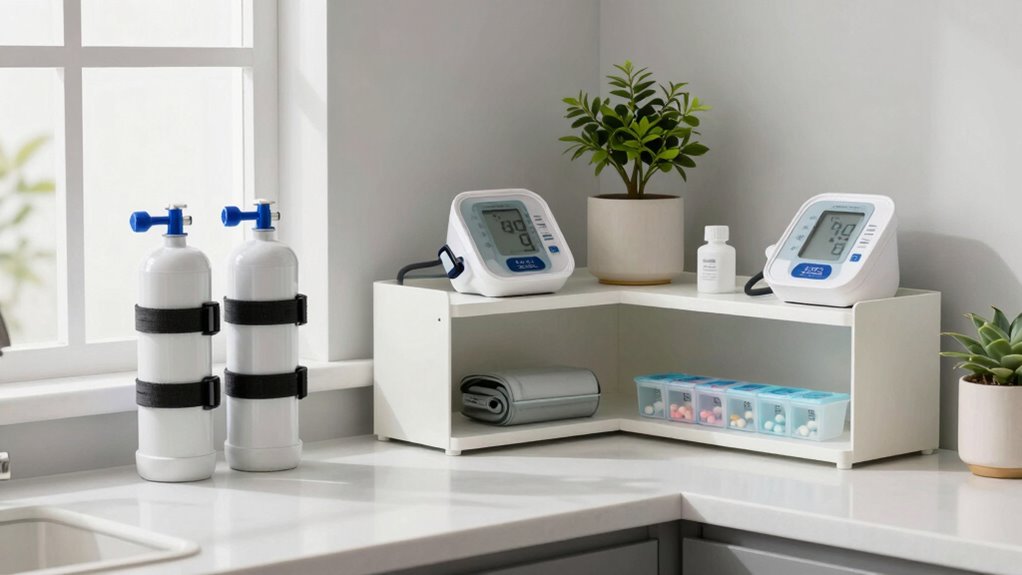
Maintaining a safe home environment is essential to guarantee your medical equipment is always ready for use. To do this, integrate your equipment into your home decor thoughtfully, avoiding clutter that can cause accidents. Designate specific storage areas that are easily accessible but out of the way, so family routines aren’t disrupted. Keep frequently used devices visible and within reach, while less-used items stay organized in labeled containers. Regularly check that equipment is clean, functional, and charged, ensuring it’s ready when needed. Clear pathways and secure cords to prevent trips or falls. By aligning your medical gear with your existing home decor and routines, you create a safer, more efficient space where your equipment is always prepared and your family stays protected.
Frequently Asked Questions
How Can I Make Medical Equipment Storage More Discreet?
To make medical equipment storage more discreet, choose aesthetic solutions like decorative baskets, storage ottomans, or hidden cabinets that blend seamlessly with your decor. Use furniture with built-in compartments or install wall-mounted units to keep equipment out of sight but easily accessible. Keep cords tidy with cable covers, and opt for neutral colors to maintain a clean, unobtrusive look. This way, your space stays functional and stylish without the equipment taking over.
What Are Space-Saving Options for Large Medical Devices?
A stitch in time saves nine, so choosing space-saving options for large medical devices is smart. You can opt for compact furniture that hides equipment when not in use, or install wall-mounted solutions to keep bulky devices off the floor. These options maximize your space and keep your home organized. With strategic storage, you’ll make your home feel less cluttered and more accommodating, without sacrificing essential medical needs.
How Do I Prevent Medical Supplies From Cluttering Common Areas?
To prevent medical supplies from cluttering your common areas, incorporate smart decorating ideas that hide or organize items seamlessly. Use stylish storage containers and furniture with hidden compartments to keep supplies out of sight. Integrate technology by using wall-mounted organizers or charging stations that blend into your decor. Regularly declutter and establish designated spots for supplies to maintain a tidy, functional space without sacrificing style or convenience.
Are There Safety Tips for Storing Hazardous or Fragile Medical Items?
Like Pandora’s box, hazardous or fragile medical items demand careful handling. Store medications and sharp tools in secure, clearly labeled containers, keeping them out of children’s reach. Use lockable cabinets for extra safety and guarantee emergency preparedness by organizing a first aid kit nearby. Regularly check expiration dates and dispose of unused meds properly. Prioritizing medication safety protects your loved ones and keeps your home safe from preventable accidents.
How Frequently Should I Check and Update My Medical Storage System?
You should check and update your medical storage system at least once a month to guarantee your inventory management stays accurate. Regularly reviewing your storage organization helps you spot expired items and identify any needed replacements. Keep a checklist to track supplies, and adjust your system as your needs change. Staying proactive prevents clutter and keeps essential equipment ready and safe, making your home more organized and efficient.
Conclusion
Keeping your medical equipment organized isn’t just about tidiness—it’s about safety and peace of mind. Did you know that nearly 60% of accidents in the home involve medical devices due to disorganization? By following these tips, you can create a safer environment and guarantee your essential gear is always ready when you need it. Take control today, and make your home a secure, clutter-free space for your health.