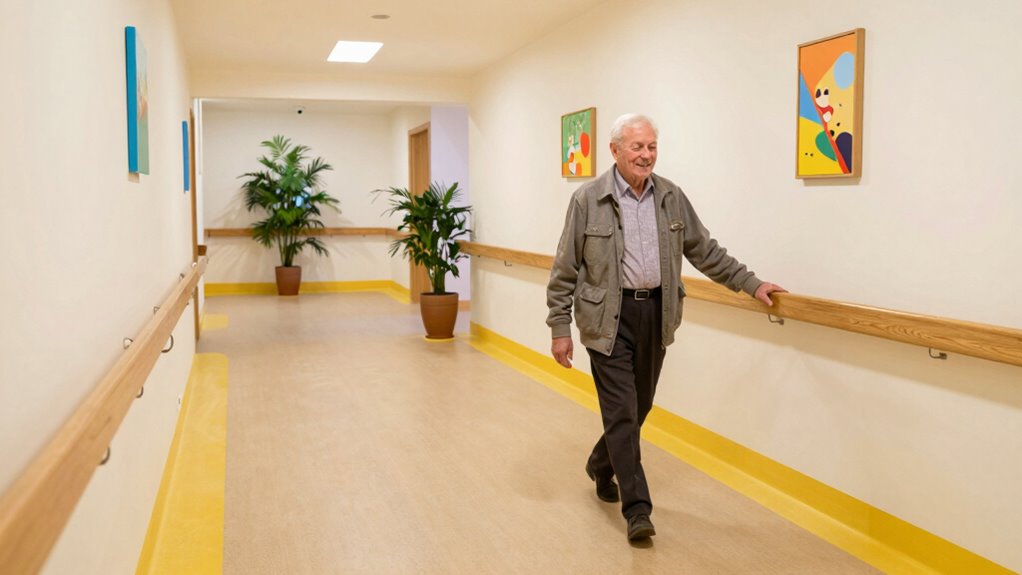

To create a safe indoor walking path for seniors, guarantee the route is wide, obstacle-free, and well-lit to prevent trips and falls. Use slip-resistant flooring with cushioning, like vinyl or rubber, and add sturdy support features such as handrails in key areas. Remove clutter regularly and mark the path with clear signs or contrasting tape for easy navigation. Incorporating these tips can help maintain safety—exploring further will reveal detailed planning strategies.
Key Takeaways
- Clear pathways by removing clutter, loose cords, and small objects to prevent trips and falls.
- Use slip-resistant, cushioned flooring materials like vinyl or rubber for safety and comfort.
- Install bright, even lighting with layered options and automatic controls to improve visibility.
- Add sturdy support features such as handrails and grab bars in key areas for stability.
- Conduct regular safety inspections to identify hazards and maintain obstacle-free, well-lit routes.
What Are the Most Common Indoor Safety Hazards for Seniors?

Indoor safety hazards are a significant concern for seniors because they can cause falls and injuries. Cluttered walkways, loose rugs, and uneven flooring are common issues that can trip you up. Poor lighting makes it harder to see obstacles, increasing risk. Your home decor choices, like decorative cords or furniture placement, may unintentionally create hazards. Additionally, lacking emergency preparedness measures, such as accessible fire alarms or clear escape routes, heightens danger during emergencies. Small objects on the floor or slippery surfaces add to the risk. To reduce these hazards, keep walkways clear, secure rugs, and improve lighting. Thoughtful home decor can also help create a safer environment. Planning for emergencies ensures you’re prepared if accidents happen, making your home safer and more accessible. Understanding contrast ratio and its impact on lighting and visibility can also help optimize your home environment for safety, especially when considering lighting design principles to enhance visibility. Recognizing home safety assessments can further help identify potential risks proactively. Incorporating safer floor materials can minimize slipperiness and reduce fall hazards.
How Do You Design a Safe, Accessible Walking Path in Your Home?
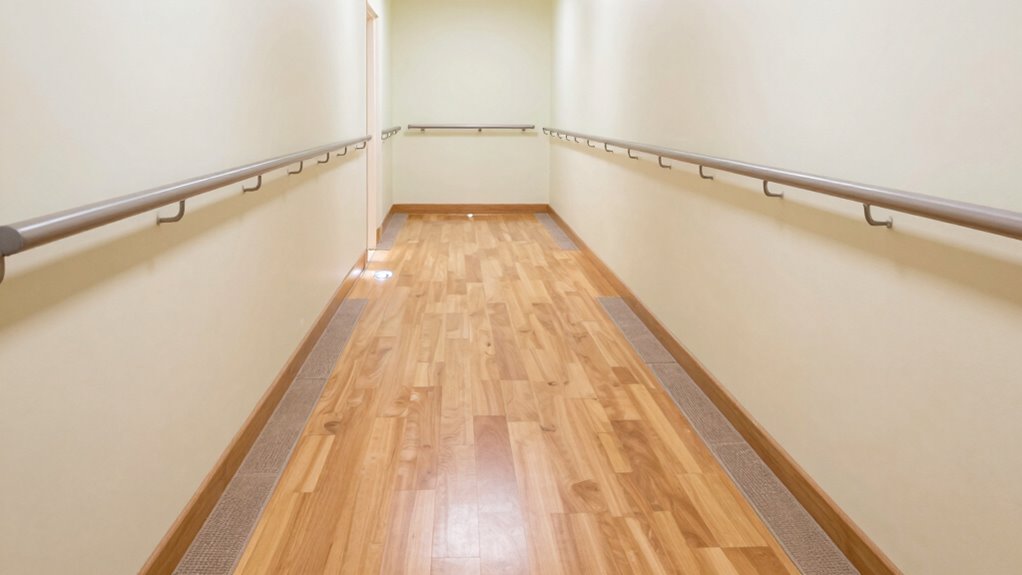
Designing a safe, accessible walking path starts with clearing a clear, unobstructed route through your home. Consider your flooring options—opt for smooth, non-slip surfaces like vinyl, laminate, or low-pile carpets that reduce tripping hazards. Guarantee transitions between different flooring types are seamless to prevent stumbles. Good lighting design is equally essential; use bright, even lighting along the path, avoiding shadows or glare that can cause confusion. Install motion-activated lights or night lights to guide movement during nighttime hours. Keep the walking area free from clutter, cords, and furniture edges that could cause falls. Regularly check that lighting remains effective and flooring stays in good condition. A well-planned path promotes independence and confidence while reducing fall risks. Ensuring your home’s flooring safety is maintained helps prevent injuries and creates a more secure environment for seniors. Additionally, incorporating non-slip flooring solutions can further enhance safety by providing extra grip and stability. Properly maintained flooring and slip-resistant surfaces are crucial in minimizing slip hazards and supporting safe mobility indoors.
What Flooring Materials Are Best for Senior Safety?
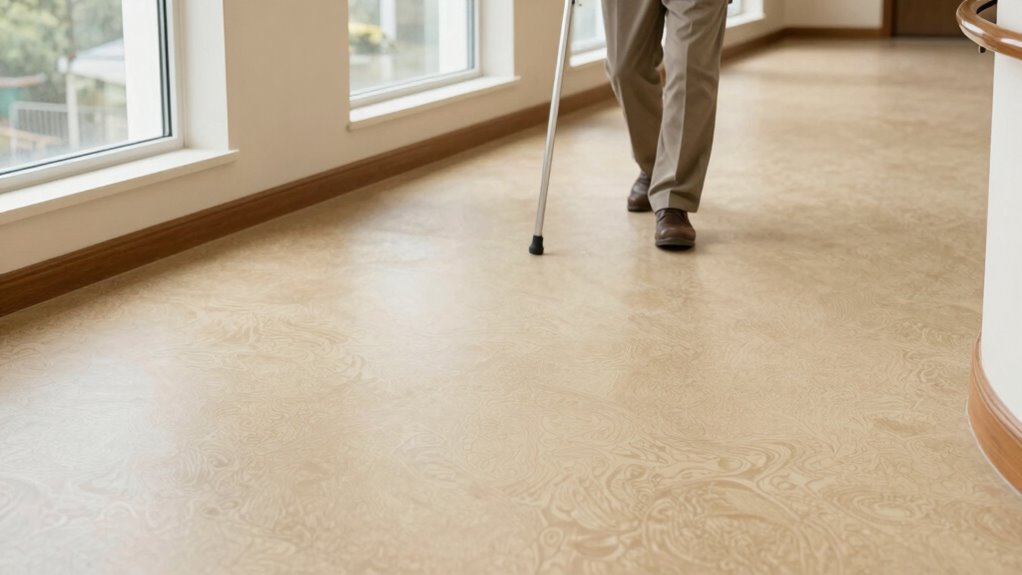
Choosing the right flooring materials can make a big difference in senior safety. Look for options with slip-resistant surfaces, cushioned comfort, and easy-to-clean features. These qualities help prevent falls and make daily maintenance simpler. Incorporating durable materials into your flooring choices ensures long-lasting safety and reduces the need for frequent repairs. Additionally, selecting surfaces with sound absorption qualities can help minimize noise and create a calmer environment for seniors. When considering flooring options, it’s helpful to understand how field‑of‑view and imaging‑scale examples relate to safety, such as ensuring clear sightlines and appropriate space for mobility aids. Understanding material properties such as grip and shock absorption can further enhance safety considerations. Leveraging architectural solutions can also optimize the overall safety and functionality of indoor spaces for seniors.
Slip-Resistant Surface Options
Selecting the right flooring material is crucial for reducing slips and falls among seniors. For maximum safety, consider options with slip-resistant surfaces. These include:
- textured flooring that provides better grip underfoot
- floors treated with non-slip coatings that add an extra layer of traction
- rubber flooring, soft yet slip-resistant, ideal for high-traffic areas
- vinyl sheets with embedded textured patterns for enhanced stability
- choosing flooring that supports European cloud innovation can also contribute to sustainable facility management and safety standards. Incorporating non-slip surface treatments into flooring options can further enhance safety by providing additional grip, especially in areas prone to moisture or spills. These choices help prevent accidents by offering secure footing. Non-slip coatings and textured flooring are especially effective at reducing hazards caused by spills or moisture. When selecting flooring, prioritize materials that combine durability with slip resistance, ensuring a safer environment for seniors to walk confidently indoors. Additionally, selecting materials with proven slip resistance can significantly improve overall safety and reduce the risk of falls. Implementing proper maintenance and cleaning routines further maintains the effectiveness of slip-resistant surfaces over time.
Cushioned Comfort Features
After ensuring flooring options have slip-resistant surfaces, it’s important to contemplate how the material feels underfoot. Cushioned comfort is essential for seniors, as soft flooring can reduce impact and lessen fatigue during daily activities. Materials like cork, rubber, or foam-backed vinyl provide excellent soft flooring options that absorb shocks and offer gentle support. These surfaces help prevent injuries from falls and make walking more comfortable, especially for those with joint or muscle issues. When selecting flooring, prioritize cushioned comfort without sacrificing durability or safety. Soft flooring not only cushions every step but also encourages confidence in walking, promoting independence. Additionally, selecting art care friendly materials can help protect artwork from damage caused by uneven or overly soft surfaces. Incorporating sustainable flooring options can further enhance the safety and eco-friendliness of a home environment. Proper flooring installation methods that minimize unevenness can also contribute to a safer walking surface. When choosing materials, consider their shock absorption qualities to ensure optimal comfort and safety. Remember, a floor that balances safety and comfort creates a welcoming environment where seniors can move safely and comfortably indoors.
Easy-to-Clean Surfaces
Since safety is a top priority, flooring that’s easy to clean plays a crucial role in maintaining a hygienic environment for seniors. Choosing surfaces with stain resistance helps prevent permanent marks from spills, simplifying cleaning routines. Regular cleaning schedules keep floors hygienic and safe, reducing slip risks. Consider materials like:
- Vinyl flooring that resists stains and moisture
- Linoleum with a smooth, easy-to-wipe surface
- Laminate flooring that’s durable and easy to maintain
- Sealed hardwood that’s resistant to spills and stains
These options make cleanup quick and effective, minimizing the time and effort needed to keep the walking path safe. Easy-to-clean surfaces not only promote hygiene but also ensure that floors remain slip-resistant and visually appealing for daily use.
How Can Proper Lighting Make Your Indoor Path Safer?
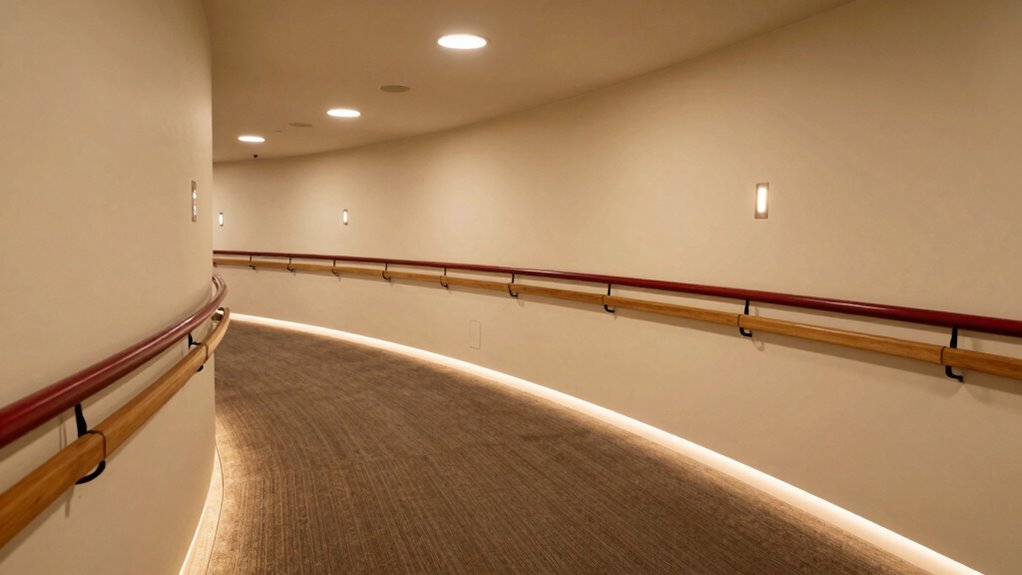
Proper lighting is key to keeping your indoor path safe for seniors. You want bright enough lighting to see clearly without causing glare or harsh shadows that could trip someone. Finding the right balance guarantees the space is both safe and comfortable to walk through. Additionally, incorporating smart lighting systems can help adjust brightness levels automatically based on the time of day or movement, further enhancing safety and energy efficiency. Using appropriate light placement ensures even illumination and reduces potential hazards caused by uneven lighting. Ensuring the adequate illumination throughout the pathway minimizes the risk of accidents and promotes confidence while walking.
Brightness Levels Matter
Bright lighting plays a crucial role in making indoor walking paths safer for seniors. Proper brightness ensures the lighting ambiance is welcoming yet functional, reducing the risk of falls. It also enhances visual contrast, helping seniors distinguish obstacles from the background. To achieve this, consider these elements:
- Bright, evenly distributed ceiling lights that eliminate dark spots
- Task lighting near stairs and doorways for extra visibility
- Adjustable lamps to adapt to different needs and times of day
- Wall-mounted lights that highlight pathways and edges
- Selecting lighting with the appropriate brightness levels ensures consistent visibility and safety throughout the space. Additionally, understanding the lighting design principles can help optimize the placement and intensity of lights for maximum safety.
These measures improve safety by providing clear visibility without overwhelming glare. Consistent brightness levels help seniors navigate confidently, reducing accidents and promoting independence. Proper lighting levels truly make a difference in creating a safe, comfortable indoor walking environment.
Avoid Glare and Shadows
Although good lighting is essential for safety, glare and shadows can still pose hazards on your indoor walking path. To guarantee safety, focus on glare reduction by using fixtures with diffusers or matte finishes that minimize harsh reflections. Proper shadow management involves positioning lights to evenly illuminate the floor without creating dark spots or sharp shadows that can cause trips. Avoid placing lights directly behind or above walkways, which can cast confusing shadows. Instead, opt for layered lighting—combining ambient, task, and accent lights—to create a balanced environment. Regularly check and adjust lighting angles to prevent glare and shadow issues. These steps help you maintain clear visibility, making your indoor path safer and easier for seniors to navigate confidently.
How Do You Remove Clutter and Obstacles to Prevent Falls?
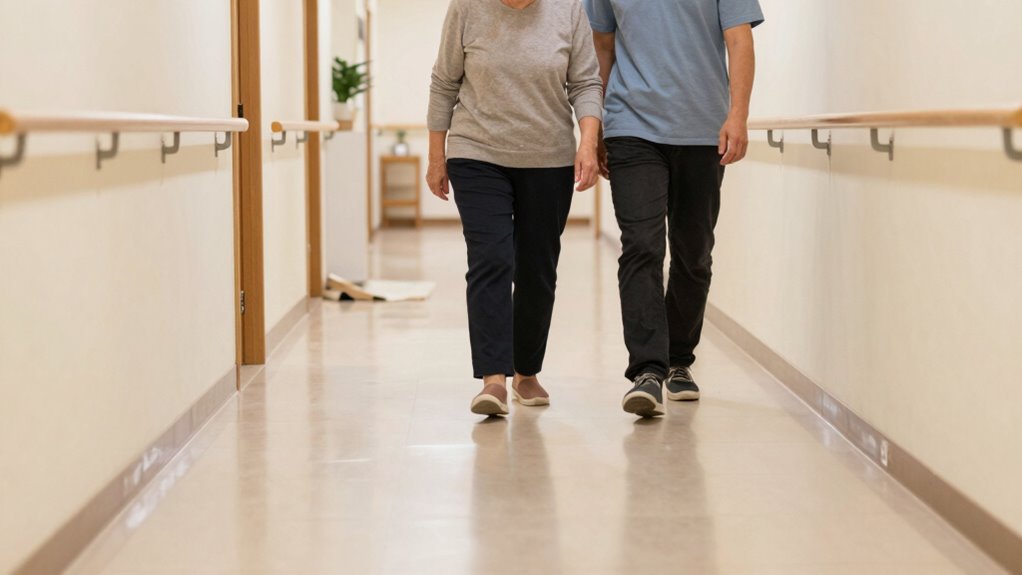
Removing clutter and obstacles from indoor pathways is essential for preventing falls among seniors. A clean, clear space reduces the risk of tripping or stumbling. To achieve effective clutter reduction and obstacle removal, consider these steps:
Keeping indoor pathways clear helps prevent falls and ensures safety for seniors.
- Clear walkways of loose cords, rugs, and small furniture that can cause trips.
- Store frequently used items in accessible locations, avoiding cluttered surfaces.
- Use organizers and bins to contain clutter, keeping floors free.
- Regularly inspect and remove any new obstacles that appear, maintaining a safe environment.
Where and How Should You Install Support Handrails and Grab Bars?
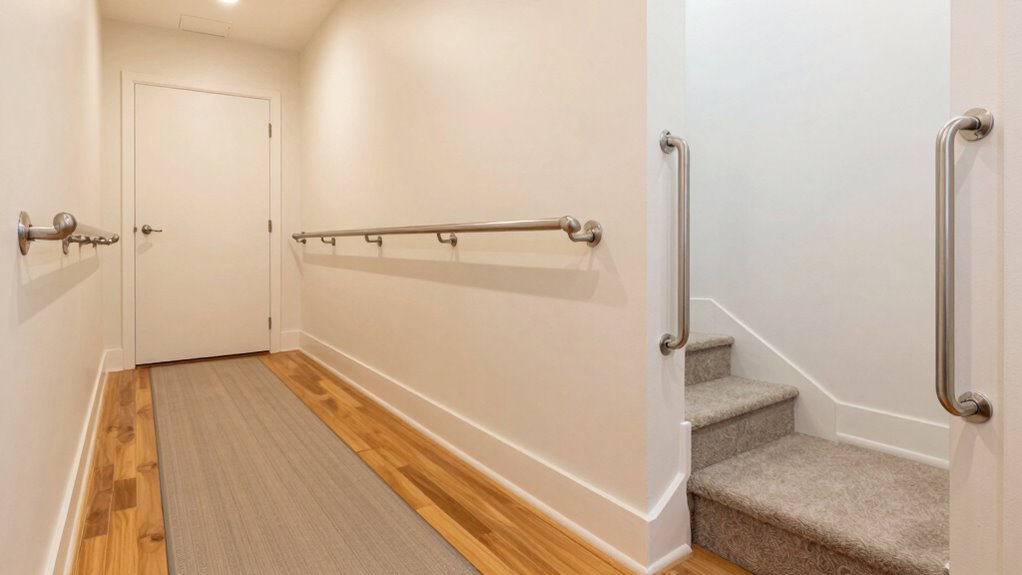
You should install support handrails and grab bars in areas where seniors need extra stability, such as along stairways and in bathrooms. To guarantee safety, mount them securely into wall studs or use appropriate anchors for different wall types. Proper placement and strong mounting techniques are essential for maximum support and safety.
Optimal Installation Locations
Choosing the right locations for support handrails and grab bars is essential to maximize safety and accessibility. You should install them where seniors need stability most, such as along stairways, near toilets, and beside showers. Consider lighting placement to guarantee these features are clearly visible, especially in dim areas. Maintain obstacle clearance around grab bars to prevent tripping hazards. Visualize these key spots:
- Along staircases, where handrails provide support on each side.
- Near the toilet and sink, for easy assistance when sitting or standing.
- Inside and outside shower areas, to prevent slips.
- Along hallways or corridors with poor lighting, ensuring support is easy to find.
Proper placement ensures safety, minimizes falls, and promotes independence.
Secure Mounting Techniques
Ensuring support handrails and grab bars are securely mounted is essential for safety and stability. Proper mounting involves choosing the right hardware and reinforcement techniques. Use heavy-duty mounting hardware, such as lag bolts or anchors, appropriate for your wall type. Reinforcement techniques, like installing anchors into wall studs or adding backing plates, guarantee the support can withstand weight and pressure.
| Wall Type | Recommended Mounting Hardware |
|---|---|
| Drywall | Wall anchors, toggle bolts |
| Tile | Drill with masonry bit, heavy-duty anchors |
| Plaster | Lag bolts into studs, reinforcement plates |
Always verify the hardware’s weight capacity and ensure support bars are anchored into studs whenever possible for maximum safety and durability.
How Can You Clearly Mark and Signal Your Indoor Walking Route?

How can you make your indoor walking route unmistakable and easy to follow? Using clear visual cues and tactile markers is key. First, apply brightly colored tape or paint along the floor to create a distinct path that catches the eye. Second, install tactile markers, like textured tiles or rubber pads, at key points for easy identification by touch. Third, use contrasting colors on walls or furniture to guide the eye along the route. Fourth, add simple signage with large, legible text for visual clarity. These strategies help seniors recognize the safe pathway quickly and confidently. Combining visual cues with tactile markers ensures the route is both seen and felt, reducing confusion and preventing falls. Clear marking makes indoor navigation safer and more accessible.
How Can Technology Help Enhance Indoor Safety for Seniors?
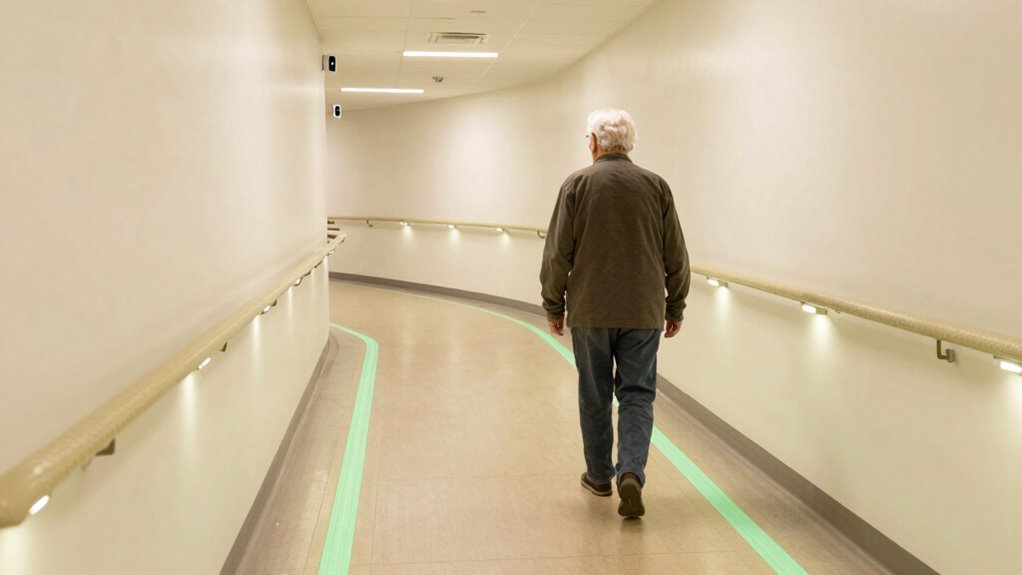
Technology plays a essential role in making indoor environments safer for seniors by providing real-time assistance and enhancing awareness. Smart sensors can detect falls, obstacles, or unusual movement, alerting caregivers immediately if something’s wrong. These sensors are discreetly embedded in walls or floors, continuously monitoring activity and ensuring safety without intruding on daily life. Wearable devices, such as wristbands or pendants, also offer crucial support by tracking location, detecting falls, and sending emergency alerts directly to caregivers or family members. These tools empower seniors to move more confidently indoors, knowing help is just a click or a signal away. By integrating smart sensors and wearable devices, you create a responsive safety network that proactively minimizes risks and promotes independence.
What Are Common Mistakes to Avoid When Planning Indoor Walkways?
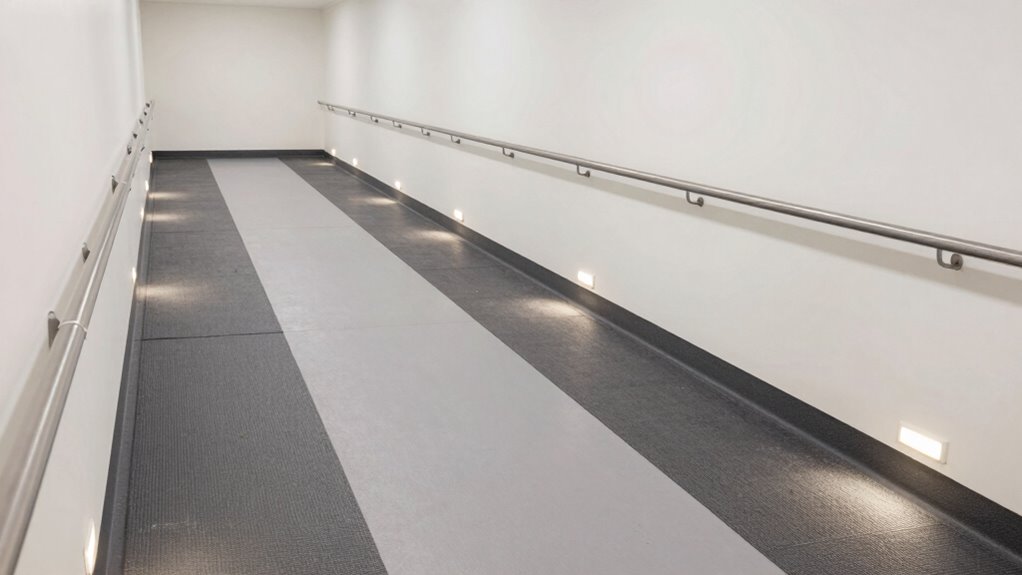
When designing indoor walkways for seniors, overlooking common pitfalls can lead to hazards that compromise safety and independence. Poor path planning can create narrow or cluttered routes, increasing the risk of falls. Failing to consider obstacle avoidance may leave tripping hazards like loose rugs or furniture in the way. Ignoring surface transitions, such as uneven flooring or thresholds, can cause missteps. Finally, neglecting adequate lighting hampers visibility, making navigation difficult. To avoid these mistakes, visualize a clear, wide path free of obstructions, with smooth transitions and good lighting. Proper path planning ensures safe navigation, while obstacle avoidance minimizes hazards. Keep these in mind to create an indoor walkway that promotes confidence and safety for seniors.
How Do You Maintain and Review Your Safe Indoor Path Over Time?
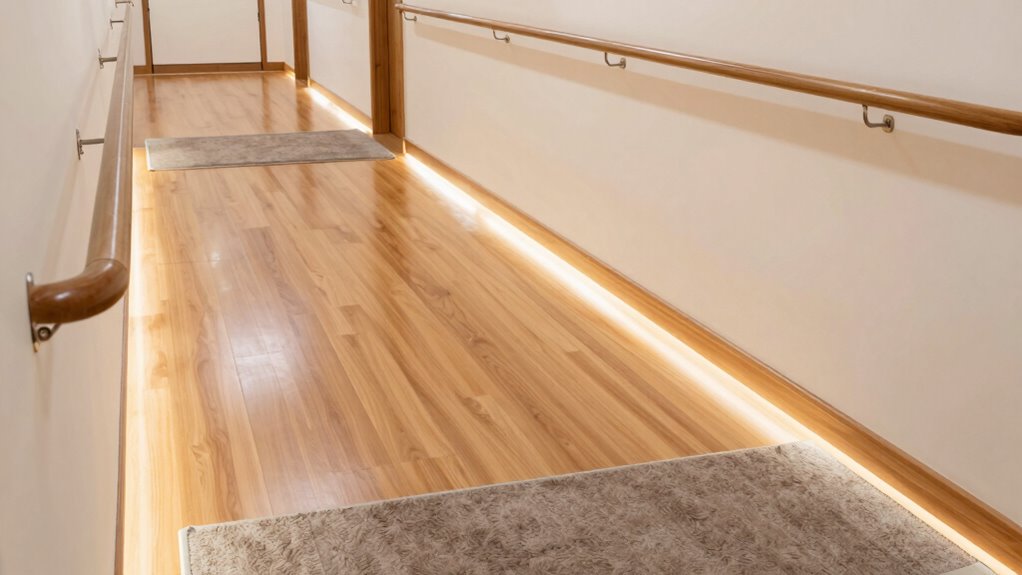
Regularly inspecting your indoor walking path is essential to guarantee it remains safe for seniors. Consistent path maintenance helps identify potential hazards like loose rugs, uneven flooring, or clutter that could cause falls. Conduct a safety review at least once a month, checking lighting, handrails, and clear walkways. Keep pathways well-lit and ensure handrails are sturdy and secure. Remove any obstacles promptly and repair any damage immediately. Reassess the layout periodically, especially if there are changes in household members or mobility needs. Staying proactive with your safety review and path maintenance ensures your walking environment remains secure and accessible, reducing the risk of accidents and promoting independence for seniors over time.
Frequently Asked Questions
How Can I Ensure My Indoor Walking Path Is Wheelchair Accessible?
To guarantee your indoor walking path is wheelchair accessible, you should add accessible ramps where needed and widen doorways to at least 32 inches. Remove any rugs or clutter that could cause tripping. Keep pathways clear and well-lit, and install grab bars if necessary. Regularly check for obstacles and maintain smooth flooring to make navigation safe and easy for wheelchair users.
What Are the Best Ways to Prevent Slips on Polished Floors?
Did you know slips are responsible for nearly 25% of falls among seniors? To prevent slips on polished floors, you should use non-slip mats in high-traffic areas and ensure proper footwear with good grip. Regularly clean and dry the floors to remove water or debris, and encourage seniors to walk slowly and carefully. These steps considerably reduce the risk of falls and keep your indoor space safer.
How Often Should I Inspect Safety Features Like Handrails?
You should inspect safety features like handrails regularly, ideally once a month, to guarantee they’re secure and in good condition. Consistent handrail maintenance helps prevent accidents and keeps your seniors safe. Incorporate safety inspections into your routine to identify any looseness, corrosion, or damage early. If you notice issues during inspections, address them immediately to maintain a safe indoor walking environment. Regular checks are essential for ongoing safety.
Can Rugs Be Safely Used on Senior Indoor Walking Paths?
Rugs can be safe on indoor walking paths for seniors if you use non-slip mats underneath to prevent slipping. Avoid placing area rugs with loose edges or thick piles, as they can cause tripping. Regularly secure and inspect rugs and mats to guarantee they stay in place. By taking these precautions, you help create a safer environment that minimizes fall risks and supports easier navigation for seniors.
What Emergency Equipment Should Be Accessible Along the Route?
You should place emergency exits and fire extinguishers along the route to guarantee quick access during an emergency. Don’t worry about clutter—these should be clearly visible and unobstructed, so seniors can easily locate them. Visual cues like signage help, and consider installing easy-to-reach fire extinguishers near the walking path. This way, you’re prepared for any situation, providing safety and peace of mind for everyone.
Conclusion
Creating a safe indoor walking path for seniors might seem overwhelming, but it’s all about taking small, manageable steps. Don’t worry if it feels like too much at once—start with simple improvements like decluttering or adding good lighting. Over time, these changes can make a big difference in safety and confidence. Remember, making your home safer is a continuous process, and every little effort helps your loved ones stay independent and secure.