

To schedule your daily activities around mobility limits, start by evaluating your needs and choosing appropriate supports or assistive devices to make tasks easier. Set realistic goals and prioritize essential activities, creating a flexible routine that can adapt to fluctuations in your mobility. Incorporate rest periods and time-saving tricks, like batching tasks, to maximize your day. Regularly review and adjust your schedule to stay comfortable and independent—learn more about tailoring your routine effectively.
Key Takeaways
- Prioritize essential tasks during peak energy times and schedule rest periods to prevent overexertion.
- Break larger activities into smaller, manageable steps aligned with current mobility capabilities.
- Incorporate adaptive tools and environmental modifications to facilitate daily tasks and boost independence.
- Build flexibility into routines to accommodate fluctuating mobility levels and unexpected changes.
- Regularly review and adjust your schedule based on progress, feedback, and changing needs.
Assess Your Mobility Limitations and Needs

Understanding your mobility limitations is essential before planning your daily activities. By evaluating what you can comfortably do, you’ll identify suitable adaptive exercises that improve strength and flexibility without causing strain. Consider how your mobility affects your ability to move around, and explore transportation options that fit your needs, whether it’s accessible public transit or ride-sharing services. Knowing these details helps you create a realistic schedule that minimizes frustration and fatigue. Reflect on daily tasks and pinpoint areas where you might need extra support or modifications. This honest evaluation ensures you plan activities that are both enjoyable and manageable, keeping you active and engaged without overextending yourself. Being aware of AI ethics and how it influences technology use can also help you make informed choices about assistive devices and digital tools, ensuring they align with your values and safety. Additionally, understanding the Gold IRA markets can inform your decisions if you consider investing in precious metals as part of your financial planning. Incorporating adaptive strategies can further tailor your routines to suit your specific needs, promoting independence and well-being. Exploring innovative assistive technology can provide new solutions to enhance your daily life and increase your autonomy. Being mindful of how assistive technology integrates into daily life can enhance your autonomy and comfort. Taking these steps sets a solid foundation for effective daily planning.
Choose the Right Supports and Assistive Devices

Choosing the right supports and assistive devices can considerably enhance your daily activity planning by making tasks easier and safer. Adaptive equipment, such as grab bars, shower chairs, or modified utensils, helps you perform activities with less effort and reduces the risk of injury. Ergonomic supports, like cushioned grips or adjustable beds, promote comfort and proper body alignment, preventing strain. When selecting these tools, consider your specific mobility limitations and daily routines. Properly fitted and user-friendly devices ensure you can navigate your environment more independently. Investing in quality supports tailored to your needs will boost your confidence and enable smoother scheduling of your daily activities. Additionally, incorporating electric bikes with sufficient horsepower can provide a convenient transportation option that supports your mobility needs. Being aware of safety standards and proper maintenance for your supports ensures long-term reliability and safety. Understanding the importance of Rhythm Failure can guide you in choosing devices that promote rhythm and stability in your movements. Recognizing adaptive technology can further enhance your independence and safety. Staying informed about assistive device innovations can help you access the latest tools designed to support your mobility. Remember, the right tools are key to maintaining safety and maximizing your functional ability.
Set Realistic Goals for Daily Activities

After selecting appropriate supports and assistive devices, setting realistic goals helps you plan your daily activities effectively. Use motivation strategies to stay focused and positive, reminding yourself of your progress and strengths. Employ goal setting techniques like breaking larger tasks into smaller, manageable steps, which makes daily achievements feel attainable. Be honest about your capabilities and avoid overcommitting, as this can lead to frustration. Adjust your goals as needed, celebrating even small successes to boost confidence. Clear, realistic goals give you direction and prevent burnout. Remember, consistency matters more than perfection. By aligning your goals with your current mobility limits, you create a sustainable routine that encourages progress while respecting your physical boundaries. Regular review and reflection can help you identify areas for improvement and stay motivated to adapt your goals as you advance. Incorporating visual and auditory cues from speech therapy techniques can further support your progress. Additionally, incorporating goal setting techniques from reputable sources can enhance your planning process. Recognizing the importance of personalized strategies ensures your goals remain relevant and achievable, fostering ongoing motivation and success. Utilizing adaptive tools and equipment can also make daily tasks more manageable and support your overall routine.
Prioritize Tasks Based on Accessibility and Importance

Prioritizing tasks based on accessibility and importance guarantees you focus on what truly matters and can be realistically accomplished each day. By evaluating which activities are most urgent or beneficial, you avoid wasting energy on less critical tasks. Use assistive technology to make essential tasks easier and more accessible. Tap into community resources, like transportation services or local support groups, to reduce barriers. Consider these steps: 1. Identify tasks that align with your goals and limitations. 2. Rank tasks by urgency and impact. 3. Use assistive technology to streamline or enable activities. 4. Consult community resources for support or alternatives. Incorporating accessible tools can significantly enhance your ability to complete daily activities efficiently. Recognizing mobility limitations allows for better planning and utilization of adaptive strategies. Being aware of adaptive strategies can help you develop personalized approaches to overcome challenges. Additionally, understanding assistive devices can further empower you to maintain independence in daily routines. Utilizing assistive technology can also help improve safety and reduce risks during daily tasks. This approach helps you maximize productivity while respecting your mobility limits, ensuring each day is both manageable and meaningful.
Create a Flexible Daily Routine to Handle Fluctuations

Since your energy levels and mobility can vary from day to day, creating a flexible daily routine helps you adapt to these fluctuations. Incorporate adaptive tools and environmental modifications to make adjustments easier. For example, use grab bars, adjustable furniture, or voice-activated devices to reduce physical strain when needed. Additionally, adaptive tools can play a crucial role in maintaining your independence and reducing the risk of injury. Designing your schedule to prioritize essential tasks during times when you feel most capable, leaving room for less demanding activities later, is also beneficial. Keep a backup plan for days when mobility is limited, such as shifting outdoor errands to days when you’re more mobile. Flexibility also means being willing to modify your routine as you learn what works best for you. Recognizing the importance of environmental modifications can enhance your ability to maintain independence and comfort despite changing mobility levels. Incorporating motivational messages like uplifting quotes or reminders can boost your morale on challenging days. Establishing a routine that considers ergonomic setups can further reduce strain and improve comfort, making daily activities more manageable despite mobility challenges. This approach reduces frustration and helps you maintain a sense of control despite changing mobility levels.
Build Rest and Recovery Into Your Schedule

Incorporating regular rest and recovery periods into your daily schedule is essential for managing mobility limits and preventing fatigue. Effective rest strategies help your body recharge and reduce strain, keeping you more active throughout the day. Use recovery techniques like gentle stretching, deep breathing, or short naps to promote circulation and ease muscle tension. To maximize your rest, consider these tips: 1. Schedule short breaks every hour to prevent overexertion 2. Incorporate relaxation activities like meditation or mindfulness 3. Use ergonomic supports to reduce physical stress 4. Prioritize sleep quality for overall recovery to support your well-being and maintain daily activity levels.
Use Time-Saving Tricks to Maximize Your Day
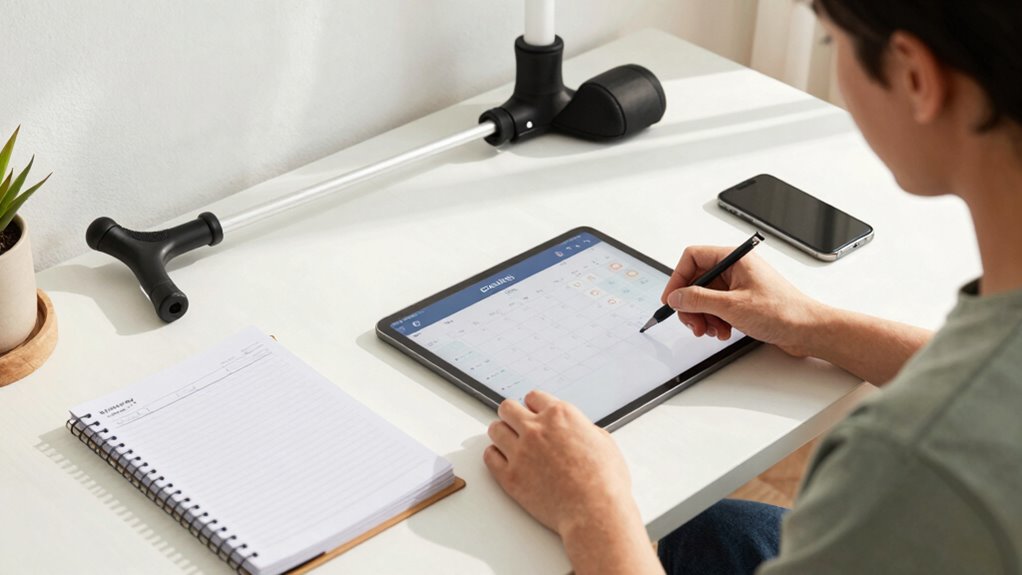
To make the most of your day despite mobility limits, using time-saving tricks can be a game-changer. Adaptive technology, like voice-activated devices or automated organizers, helps streamline daily tasks and reduces physical effort. Incorporate smart tools to manage appointments, reminders, and shopping lists efficiently, freeing up time for what matters most. Effective time management involves batching similar activities, preparing essentials in advance, and minimizing unnecessary trips. Using apps designed for accessibility can also boost productivity by simplifying complex tasks. Prioritize activities to focus on high-impact tasks first, and don’t hesitate to delegate when possible. These tricks help you conserve energy, stay organized, and maximize your day, making daily routines more manageable despite mobility challenges.
Review and Adjust Your Routine as Your Mobility Changes
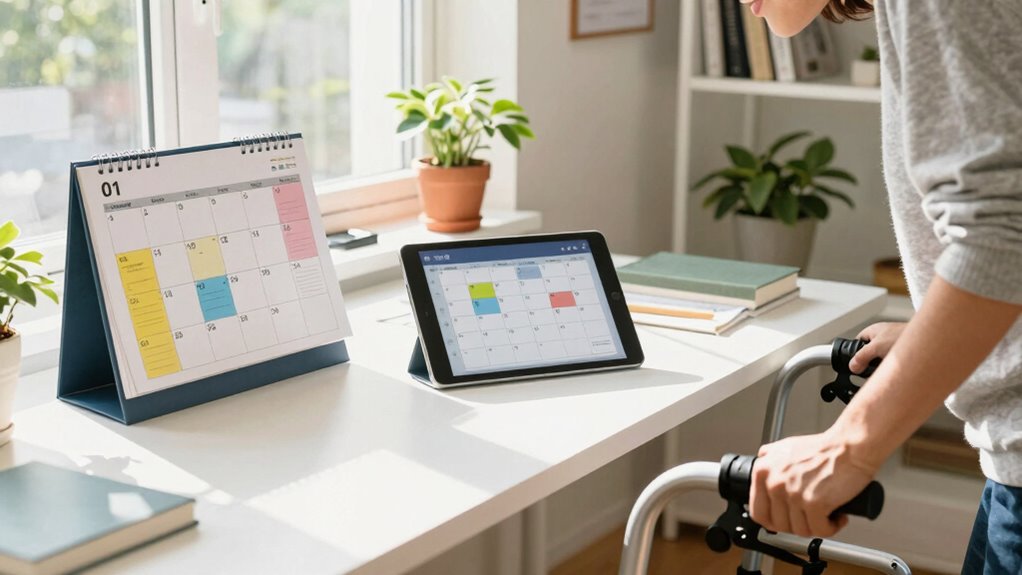
As your mobility evolves, regularly reviewing and adjusting your routine guarantees it remains practical and manageable. Incorporate adaptive techniques to make activities easier and safer. Stay engaged socially by finding new ways to connect, even if your mobility limits traditional interactions. Here are four ways to keep your routine aligned with your changing needs:
Regularly review and adapt your routine to stay safe, independent, and socially connected as your mobility changes.
- Reassess your daily tasks to identify areas for adaptive techniques.
- Experiment with assistive devices to enhance independence.
- Schedule social activities that suit your current mobility, like virtual meetups.
- Seek feedback from healthcare providers or support groups to refine your routine.
Frequently Asked Questions
How Can I Stay Motivated to Stick to My Schedule?
To stay motivated, focus on your exercise motivation by setting clear, achievable goals. Break your schedule into small, manageable tasks and celebrate each success. Remind yourself of the benefits and how it improves your mobility. Keep track of your progress and adjust your goals as needed. Visualize your accomplishments, and don’t forget to reward yourself, which helps maintain enthusiasm and commitment to your daily routine.
What Should I Do if My Mobility Worsens Unexpectedly?
Oh, great, your mobility worsens unexpectedly—time to panic, right? Not quite. Stay calm and use your adaptive equipment to navigate safely. Update your emergency planning, ensuring loved ones know your needs and access points. Keep a list of essentials handy, and don’t hesitate to contact your healthcare provider. Remember, adapting quickly keeps you in control, even when mobility takes a nosedive. Stay prepared, stay safe.
How Do I Manage Social Activities With Mobility Limitations?
You can manage social activities by choosing accessible events that suit your mobility level. Look for venues with ramps, elevators, or seating options, and consider participating in adaptive exercises beforehand to increase your confidence. Communicate your needs with friends or organizers to guarantee accommodations are in place. This way, you stay engaged socially while respecting your limits, making outings enjoyable and stress-free.
Are There Specific Apps to Help Plan Daily Routines?
Think of assistive technology as your compass, guiding you through daily routines with ease. Yes, there are apps designed specifically for this purpose, offering assistive technology features like routine reminders and task organization. Apps such as Medisafe, Any.do, and calendar tools can help you plan and stay on track. They serve as your steady lighthouse, ensuring your day flows smoothly despite mobility limits.
How Can Family or Caregivers Assist in Scheduling Effectively?
Family or caregivers can assist by using assistive technology like reminder apps and calendar tools to organize daily routines. Your support is essential in setting realistic schedules and providing consistent reminders. Engage in open communication to understand mobility limitations and adapt plans accordingly. Caregiver support also involves helping with task prioritization and offering encouragement, ensuring activities are manageable and enjoyable. Your involvement makes a significant difference in maintaining independence and well-being.
Conclusion
By balancing your boundaries and embracing your needs, you’ll build a better, more manageable daily routine. Prioritize, plan, and prepare with patience, and watch your worries wane. Keep your schedule flexible, focus on feasible goals, and forge ahead with confidence. Remember, small steps lead to significant strides. Stay steady, stay smart, and let your daily routine reflect your resilience, turning mobility challenges into manageable milestones instead of obstacles.