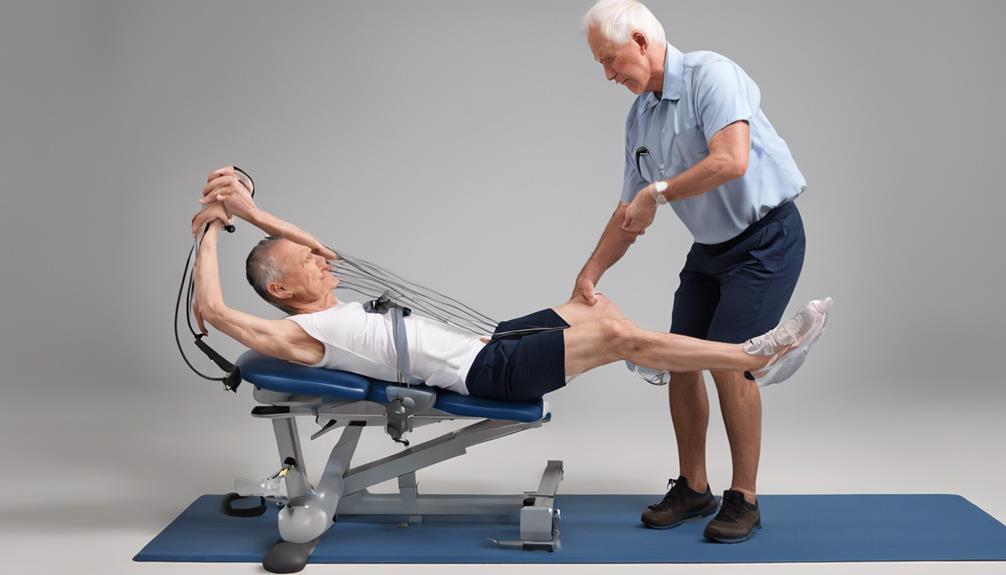
To make dressing easier with one hand during stroke recovery, choose clothing with magnetic closures, Velcro fastenings, or elastic waistbands. Use dressing aids like long-handled reachers, button hooks, and zipper pulls to manage fasteners comfortably. Opt for slip-on shoes and wide-neck or stretchy garments for quick dressing. Practice simple techniques and incorporate adaptive clothing features to boost independence. Keep exploring options to discover even more effective strategies tailored to your needs.

Get comfort and care essentials delivered free — and shop member deals
- Fast, free delivery on millions of items
- Access to Prime Big Deal Days deals on October 6–7
- Prime Video, Amazon Music and more included
Key Takeaways
- Use clothing with magnetic closures or Velcro fastenings to simplify dressing with one hand.
- Select elastic waistbands and slip-on shoes to reduce the need for fastening and tying.
- Utilize dressing aids like long-handled reachers, button hooks, and zipper pulls to assist with fastening and pulling up clothing.
- Opt for wide neck openings and stretch fabrics to make pulling garments on easier and more comfortable.
- Practice proper techniques and take your time to build confidence and independence in one-handed dressing routines.
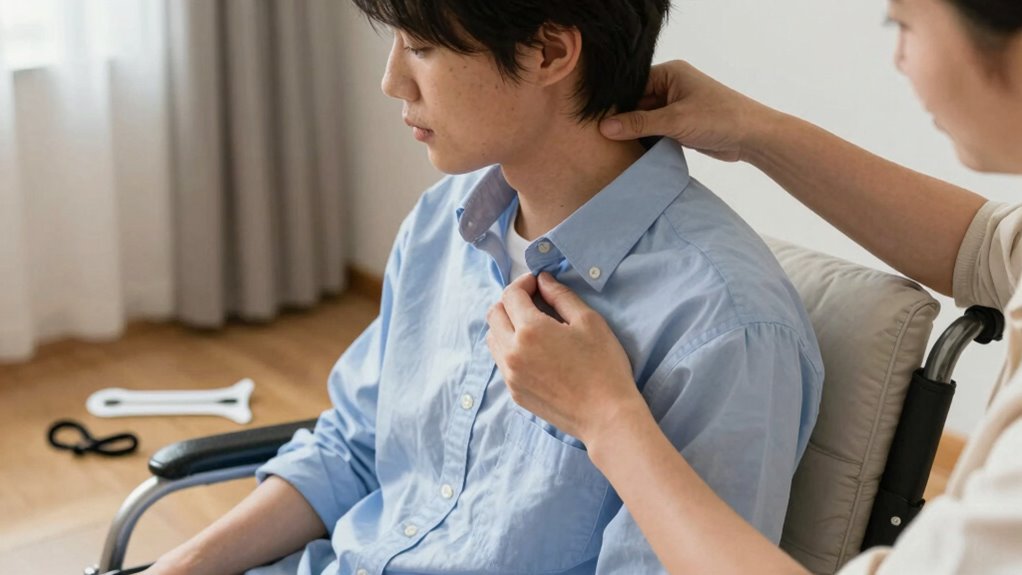
Have you ever struggled to get dressed with only one hand? It’s a common challenge during stroke recovery, but there are ways to simplify the process. Adaptive clothing can be a game-changer, designed specifically to make dressing easier when mobility is limited. These clothes often have features like magnetic closures, Velcro fastenings, or elastic waistbands that eliminate the need for fine motor skills or complex fasteners. Pairing adaptive clothing with dressing aids can considerably boost your independence. Dressing aids such as long-handled reachers, button hooks, and zipper pulls help you manage clothing and fastenings without straining or risking injury. Using these tools allows you to maintain more control and reduces frustration, making the dressing routine smoother and less time-consuming. Additionally, choosing easy-to-operate fasteners can make a significant difference in your daily routine. When selecting clothing, look for options that are easy to put on and take off with one hand. Clothes with wide neck openings or stretch fabrics help you avoid pulling or tugging, which can cause discomfort or even injury. Magnetic shirts or those with hook-and-loop fasteners save you from struggling with tiny buttons or tricky zippers. Elastic waistbands in pants or skirts mean you don’t need to fasten buttons or zippers, allowing for quick and simple dressing. It’s about choosing clothing that’s both functional and comfortable, tailored to your current needs. Using dressing aids further enhances your independence. For example, a long-handled shoehorn helps you slip into shoes effortlessly, while a dressing stick can assist in pulling up your clothing or reaching for objects. Button hooks make fastening buttons easier, especially if your grip is limited. If you’re dealing with a weak or numb hand, consider using elastic shoelaces or slip-on shoes to avoid the need for tying or fastening. Incorporating adaptive clothing options can also reduce the physical effort required and improve overall comfort. Being aware of specialized clothing features can help you select garments that are easier to manage during recovery. Developing proper dressing techniques through practice can further boost your confidence and independence in dressing. Taking your time and practicing with these tools can build confidence and make dressing a less intimidating task.
adaptive clothing with magnetic closures
As an affiliate, we earn on qualifying purchases.
As an affiliate, we earn on qualifying purchases.
Frequently Asked Questions
How Do I Stay Motivated During Stroke Recovery?
To stay motivated during stroke recovery, focus on motivation maintenance by setting small, achievable goals that give you a sense of progress. Celebrate each victory, no matter how minor, to boost your emotional resilience. Surround yourself with supportive people who encourage you, and remind yourself of the reasons you’re recovering. Keep a positive outlook and practice patience, knowing that each step forward brings you closer to regaining independence and strength.
Are There Specific Exercises to Regain Full Arm Mobility?
Think of your arm as a garden awaiting growth. You can nurture it with range exercises to loosen stiff joints and strength training to rebuild muscle. Daily, gently stretch your arm to encourage flexibility, and gradually add resistance to strengthen muscles. Consistency is key—just as a garden flourishes with care, your arm regains mobility through persistent, mindful effort. With patience, you’ll see your strength and range blossom once more.
What Emotional Support Options Are Available for Stroke Survivors?
You can find emotional support through support groups and therapy, which help build emotional resilience. Connecting with others who’ve experienced similar challenges offers comfort and understanding. Consider joining local or online support groups for stroke survivors, where sharing your feelings and hearing others’ stories can boost your morale. Professional counseling also provides a safe space to process emotions, fostering resilience during your recovery journey and helping you stay positive.
How Can Caregivers Assist Without Causing Frustration?
Think of assisting as tuning a delicate instrument—you want harmony, not dissonance. Use assistive devices to make dressing smoother and apply patience strategies to stay calm and encouraging. Break tasks into small steps, offer gentle guidance, and celebrate progress. Your calm, steady presence helps prevent frustration, fostering independence and confidence. Remember, your support is like a gentle breeze that helps your loved one move forward, not a storm that overwhelms.
When Should I Seek Professional Occupational Therapy Help?
You should seek professional occupational therapy help when you find daily tasks increasingly frustrating or difficult, despite using assistive devices and home modifications. An occupational therapist can evaluate your needs, recommend appropriate assistive devices, and suggest home modifications to improve independence. They also teach strategies tailored for your recovery, making everyday activities safer and more manageable. Don’t hesitate to ask for professional guidance to support your journey to regain independence.
Conclusion
With these tips, you’ll find yourself sailing smoother waters on your recovery voyage. Think of each small trick as a steady oar guiding you past choppy waves, turning a formidable journey into a manageable adventure. Embrace patience and creativity, transforming your daily routine into a canvas of progress. Remember, every effort is a brushstroke toward regaining independence, painting a future where you confidently navigate life’s currents with resilience and hope.
Cold & flu season Picks
humidifiers
As an affiliate, we earn on qualifying purchases.