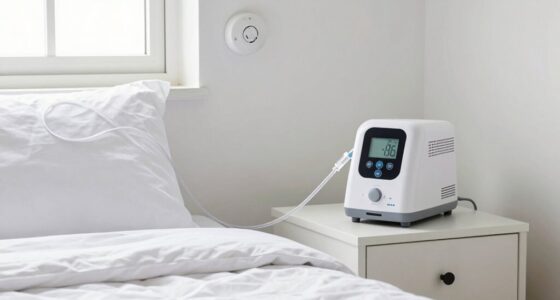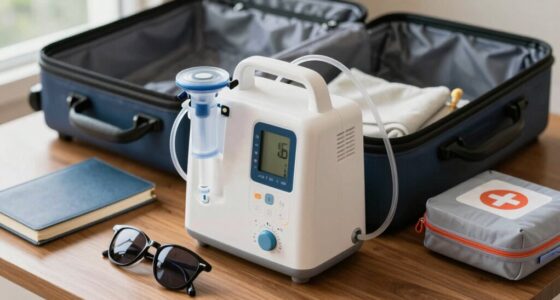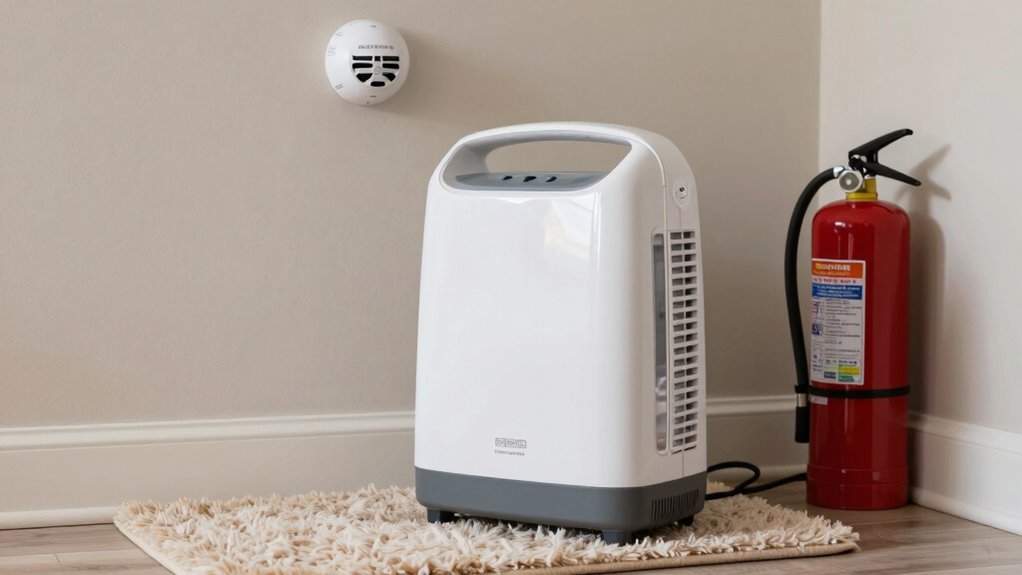

To reduce fire risk around your home oxygen equipment, keep tanks away from open flames, heat sources, and electrical appliances that might spark. Store oxygen cylinders upright in well-ventilated areas, avoiding confined spaces or direct sunlight. Regularly inspect the equipment for leaks or damage, and ensure tubing stays secure. Being aware of hazards and following safety tips can substantially lower fire dangers. Continue exploring essential safety measures to protect yourself and your family.

Turn quiet afternoons into listening time
- Thousands of audiobooks, podcasts and originals
- Listen on your phone, tablet or Echo — also offline
- Cancel anytime
Key Takeaways
- Store oxygen tanks upright in well-ventilated areas away from heat sources and open flames.
- Keep oxygen equipment away from electrical appliances and heat-generating devices.
- Regularly inspect and maintain oxygen equipment to detect leaks or damage promptly.
- Install and test smoke detectors regularly to ensure early fire detection.
- Educate household members on fire safety procedures and emergency response for oxygen-related fires.
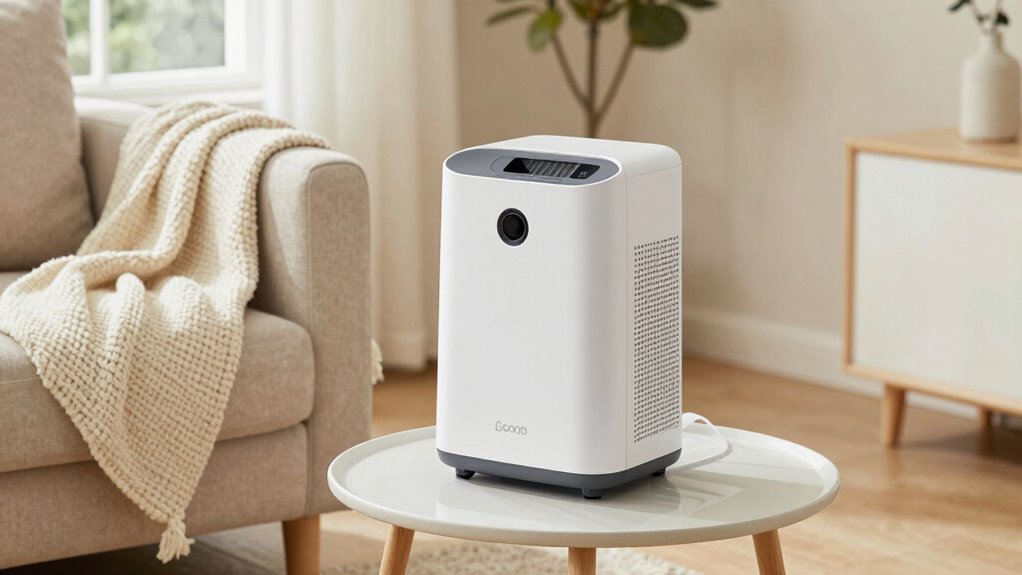
Are you aware of how quickly a fire can start around home oxygen equipment? It’s a real risk that many people don’t fully realize. Because oxygen supports combustion, even a small spark or heat source can turn into a dangerous blaze. That’s why understanding fire safety tips and recognizing oxygen safety hazards is vital to protect yourself and your loved ones. The good news is you can take simple precautions to greatly reduce the fire risk around your oxygen setup.
First, always keep your oxygen equipment away from open flames, heat sources, and electrical appliances that could spark. This means no smoking anywhere near your oxygen system, and making sure candles, stoves, or space heaters are well away from the equipment. Remember, oxygen doesn’t ignite itself, but it makes fires burn faster and more intensely once they start. To reinforce safety, install smoke detectors in key areas of your home and check them regularly. These devices can give you precious seconds to react if something goes wrong.
Keep oxygen equipment away from open flames, heat, and electrical sparks for safer home use.
Another vital step is to maintain your oxygen equipment properly. Regularly inspect your concentrator or tank for leaks, cracks, or damage, and never attempt to repair it yourself. Ensure that all tubing and connections are secure, and replace any worn or damaged parts promptly. Proper storage of oxygen tanks is equally important; keep them upright in a well-ventilated area away from heat and direct sunlight. Never store oxygen cylinders in confined spaces like closets or behind furniture where heat could build up. Additionally, understanding how laboratory safety principles can help prevent accidents around oxygen is beneficial, especially if you handle or maintain the equipment yourself. Recognizing fire hazards associated with oxygen use can help you stay alert and prepared for emergencies. Being aware of the fire risks related to oxygen can improve your safety practices significantly. Moreover, regular training on fire safety procedures can equip you and your household to respond effectively in case of an incident. It is also helpful to familiarize yourself with emergency response steps specific to oxygen-related fires to ensure swift action if needed.
home oxygen tank storage cabinet
As an affiliate, we earn on qualifying purchases.
As an affiliate, we earn on qualifying purchases.
Frequently Asked Questions
Can I Use Candles or Open Flames Near Oxygen Equipment?
You should never use candles or open flames near oxygen equipment. Candles safety is essential because open flame dangers dramatically increase fire risk, especially when oxygen is present. Oxygen supports combustion, so even a small flame can cause a fire to rapidly escalate. To stay safe, keep candles and open flames away from oxygen tanks or tubing, and opt for flameless alternatives like LED candles instead. Your safety depends on it.
How Often Should I Inspect My Oxygen Equipment for Safety Issues?
You should inspect your oxygen equipment weekly to catch safety issues early. It’s ironic how something so essential needs regular attention, yet many overlook it. Follow your maintenance schedules and use inspection checklists to guarantee nothing’s missed—check for leaks, damage, or blockages. Staying vigilant keeps you safe, preventing fire hazards and ensuring your oxygen equipment functions properly when you need it most.
Are There Specific Clothing Materials I Should Avoid When Using Oxygen?
You should avoid clothing made of flammable materials like wool, polyester, or synthetic fibers when using oxygen. Opt for clothing with safe, natural fabrics such as cotton or linen, which are less likely to ignite. Always check material restrictions provided by your oxygen supplier or healthcare provider. Clothing safety is essential, as wearing the right fabrics reduces fire risk and keeps you safe while using oxygen at home.
Is It Safe to Smoke in a Different Room While Oxygen Is in Use?
Think of oxygen as a spark waiting for a flame, so it’s not safe to smoke even in another room. You could accidentally ignite a fire if you smoke near your oxygen equipment. Always follow fire safety precautions by choosing alternative smoking locations away from oxygen. Never smoke around oxygen, as the risk of fire is high, and even small sparks can lead to dangerous outcomes. Stay safe by avoiding smoking altogether when oxygen is in use.
What Should I Do if I Smell a Gas Leak Around the Oxygen Device?
If you smell a gas leak around your oxygen device, act immediately. Use gas leak detection techniques like sniffing cautiously and noticing any strong, chemical odors. Turn off the oxygen supply and ventilate the area by opening windows and doors. Evacuate the space and call emergency response services right away. Do not use electrical switches or flames, as sparks can ignite the gas. Prioritize safety and get professional help immediately.
Conclusion
Remember, your vigilance can make all the difference. Even a small oversight around oxygen equipment can lead to unexpected danger. Keep fire risks at bay by staying alert and following safety steps every day. But here’s the question—are you truly prepared if an emergency strikes? The choices you make now could be the difference between safety and disaster. Stay committed to safety, because sometimes, the smallest actions have the biggest impact.
Halloween Picks
halloween
As an affiliate, we earn on qualifying purchases.