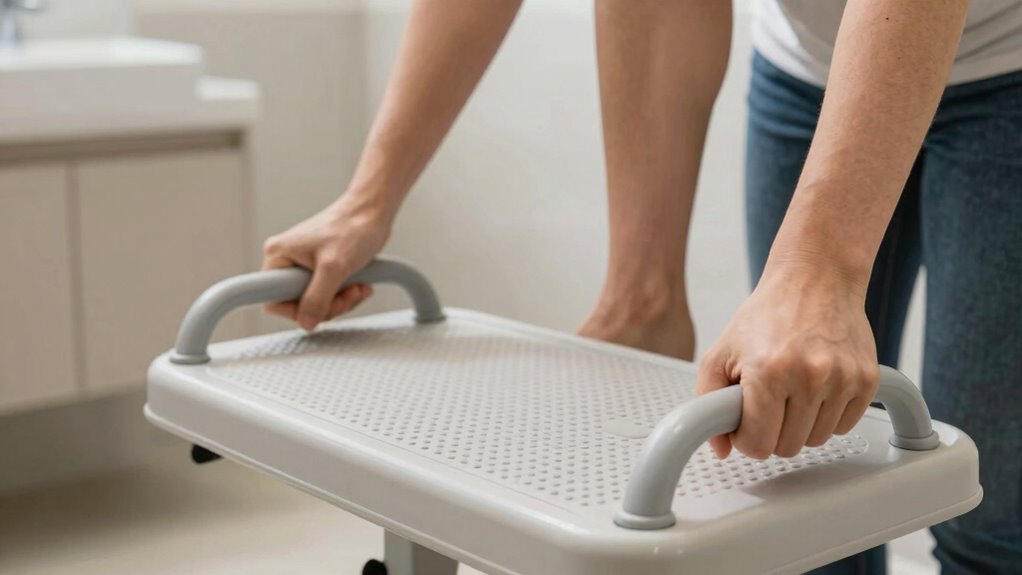

When choosing lift styles for bathroom, bed, and chair transfers, you need to assess the user’s mobility, weight, and safety needs. Consider the environment’s space and accessibility, opting for portable lifts in cluttered areas or ceiling lifts for larger rooms. Prioritize features like ease of operation, stability, and secure grips. Regular maintenance and proper training help guarantee safety and dignity. Keep exploring these factors to find the best solutions for your specific situation.

Turn quiet afternoons into listening time
- Thousands of audiobooks, podcasts and originals
- Listen on your phone, tablet or Echo — also offline
- Cancel anytime
Key Takeaways
- Assess the individual’s mobility, weight, and specific transfer needs for appropriate lift type selection.
- Consider environment constraints, such as space and accessibility, to choose compatible lift styles.
- Prioritize safety features like secure grips, non-slip surfaces, and stability for secure transfers.
- Ensure the lift supports the user’s weight and is easy to operate for caregivers.
- Regularly inspect and maintain lifts, and provide proper training for safe, effective use.
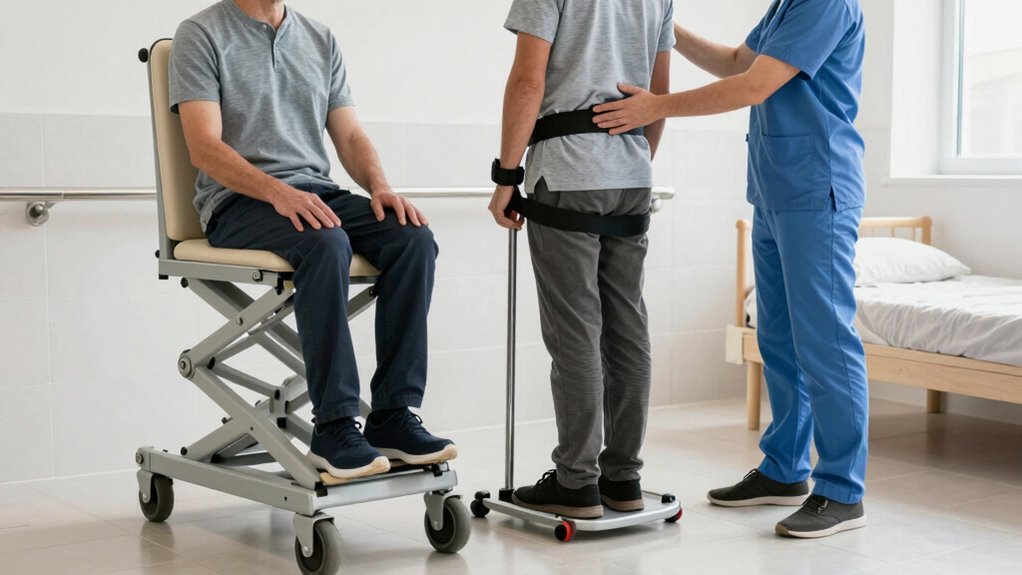
Selecting lift styles for transfers is essential to guarantee safety and comfort for both the caregiver and the person being transferred. When it comes to bathroom, bed, or chair transfers, choosing the appropriate lift depends on several factors, including the individual’s mobility level, weight, and specific needs. One of the most important considerations is wheelchair accessibility. If the person uses a wheelchair, you need a lift that can easily accommodate their wheelchair and facilitate smooth transfers. For instance, a ceiling lift or a portable floor lift with a wide enough base can provide safe, stable transfer options, reducing the risk of accidents. Ensuring the lift can easily navigate around tight spaces or narrow doorways in the bathroom or bedroom is crucial for a seamless transfer experience. Additionally, considering features like ease of operation can make a significant difference in transfer safety and efficiency. Being aware of lift compatibility with various environments can help in selecting the most suitable device for your specific space. Moreover, understanding the importance of proper training**** can greatly enhance the safety and effectiveness of lift transfers.
Safety considerations are paramount when selecting a lift style. You want a device that minimizes the risk of falls or injuries for both you and the individual you’re assisting. For bathroom transfers, where surfaces are often wet or slippery, a lift with secure grips and non-slip features is ideal. For bed transfers, you might consider a Hoyer lift or a stand-assist device, which offers stability and reduces strain on your back. When transferring from a chair, especially if the individual has limited strength or balance, a stand-assist or a sit-to-stand lift can help them move safely while maintaining dignity. Regularly inspecting and maintaining the lift equipment is also vital to ensure ongoing safety and functionality.
Think about the environment where the transfer will take place. In small or cluttered spaces, portable and compact lifts are usually better, as they can be easily stored or moved around. In contrast, larger ceiling lifts may be suitable for larger rooms with ceiling tracks already installed. The lift’s weight capacity is another critical factor — always choose a device that can support the person’s weight comfortably, with some extra capacity for safety. Additionally, consider ease of operation; lifts with simple controls and adjustable features make transfers safer and more efficient, especially if multiple caregivers are involved. Selecting a lift that aligns with the environment and the user’s needs can significantly reduce transfer-related stress and injury risks.
Ultimately, your goal is to select a lift that aligns with the individual’s mobility level, the environment, and safety standards. Proper training on how to use the lift correctly is equally important to ensure safe, effective transfers. Regular maintenance and inspection of the lift equipment also play a vital role in maintaining safety and prolonging the device’s lifespan. By carefully evaluating these factors, you’ll be better prepared to choose a lift style that promotes dignity, safety, and ease during bathroom, bed, and chair transfers.
portable patient lift for bathroom transfers
As an affiliate, we earn on qualifying purchases.
As an affiliate, we earn on qualifying purchases.
Frequently Asked Questions
Can I Use the Same Lift Style for All Transfers?
You can’t always use the same lift style for all transfers because of lift versatility and transfer challenges. Different situations demand specific lifts—what works for a bed transfer might not suit bathroom or chair transfers. Assess the environment, patient needs, and safety considerations. Employing the right lift for each transfer minimizes risks and ensures comfort. So, adapting your lift style to each scenario is key for effective, safe transfers.
How Do I Determine the Right Size Lift for My Needs?
Ever wondered how to find the perfect lift size for your needs? To determine this, consider the lift’s capacity—make certain it supports your weight comfortably. Also, think about portability concerns; if you need to move it frequently, a lightweight, compact lift might be best. Measure your or your loved one’s weight accurately, and select a lift with a capacity slightly above that to ensure safety and comfort.
Are There Specific Lifts Recommended for Different Body Types?
Yes, certain lifts suit different body types and preferences. For example, if you have limited strength or mobility, a patient lift with a wider base and sturdy straps might be best. For larger or heavier individuals, a heavy-duty, bariatric lift provides extra support. Consider your body type considerations and lift style preferences to select a device that offers comfort, safety, and ease of use, ensuring a confident transfer experience.
What Safety Features Should I Look for in a Lift?
You should look for safety features like sturdy lift materials that can handle weight reliably and safety certifications that confirm quality standards. Coincidentally, these features often go hand-in-hand with durable construction. Guarantee the lift has secure straps, non-slip grips, and emergency stop buttons. These safety elements protect you during transfers, giving you confidence and peace of mind knowing the equipment meets safety guidelines and is built with high-quality, reliable materials.
How Often Should I Maintain or Inspect the Lift Equipment?
You should perform regular maintenance and inspections on your lift equipment to guarantee safety and reliability. Follow a consistent maintenance schedule, typically monthly or as recommended by the manufacturer. Use an inspection checklist to verify all parts are functioning properly, looking for wear, damage, or loose components. Regular checks help prevent accidents, extend the lift’s lifespan, and ensure it operates smoothly during transfers.
Conclusion
Choosing the right lift style for bathroom, bed, and chair transfers is essential for safety and comfort. Remember, it’s like finding your trusty steed—whether it’s a modern device or a classic sling, the right choice can make all the difference. Trust your instincts, consult professionals, and don’t be afraid to ask questions. After all, in this brave new world, having the right support can turn a challenging task into a smooth, almost regal passage—like stepping into a carriage on a moonlit night.
Fall Picks
fall essentials
As an affiliate, we earn on qualifying purchases.