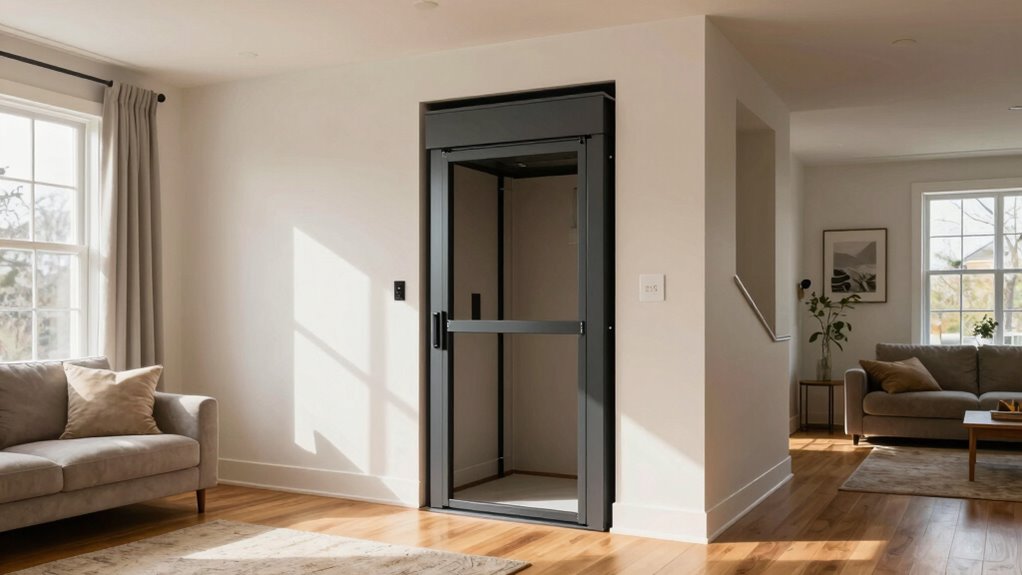

Before choosing a lift, you often overlook how your home’s layout impacts its integration. Failing to plan early can lead to costly structural changes and awkward spaces later. Think about door widths, hall sizes, and the flow of your home to avoid disruptions and safety issues. Proper planning guarantees a seamless fit and saves money. Keep going, and you’ll discover simple steps to optimize your layout and make your home lift-ready from the start.

Turn quiet afternoons into listening time
- Thousands of audiobooks, podcasts and originals
- Listen on your phone, tablet or Echo — also offline
- Cancel anytime
Key Takeaways
- Assess current and future accessibility needs to ensure the lift integrates seamlessly with daily living.
- Plan for structural reinforcement and modifications during the initial design to avoid costly retrofits later.
- Consider optimal lift placement for smooth flow and minimal disruption in home layout.
- Incorporate universal design principles to enhance safety, usability, and aesthetic appeal for all family members.
- Evaluate long-term impacts on home value, safety, and maintenance costs when selecting lift location and features.
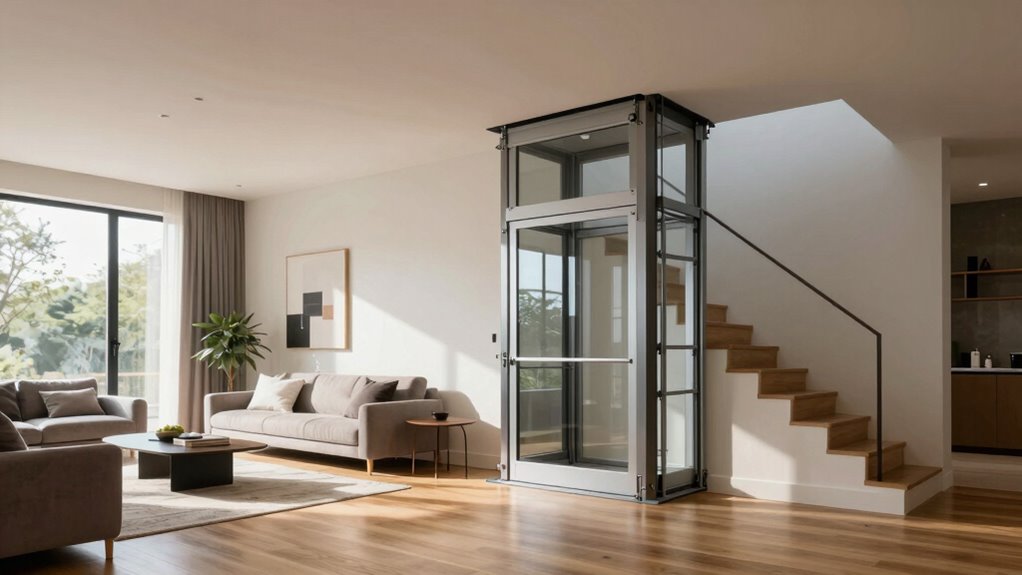
When designing a home, many families focus on aesthetics and functionality but overlook a crucial detail: how the layout interacts with the lift or elevator system. You might choose a beautiful staircase or spacious hallways, but if the space isn’t planned with a lift in mind, you could face major challenges later. Accessibility features are essential, especially if you’re considering a lift for convenience, safety, or future-proofing. Without proper planning, installing a lift can become a costly and complicated project, requiring significant structural modifications. It’s better to address these issues early, during the design phase, rather than trying to retrofit later.
You need to think about where the lift will go and how it will connect to existing rooms. If the home layout isn’t designed with a lift in mind, you might find that inserting one disrupts your current flow or results in awkward corridors and uneven flooring. Proper planning involves allocating enough space not just for the lift shaft but also for doorways, clearances, and safety zones. This prevents the need for extensive structural modifications down the line. When you incorporate accessibility features into your home design from the start, you create a seamless experience for all residents, whether they’re using the lift daily or only occasionally. Recognizing the importance of home layout planning helps ensure the entire process is smooth and cost-effective. Additionally, understanding structural modifications early on allows for better integration of the lift within the home’s overall architecture. Planning for future accessibility can also enhance the home’s value and appeal to future buyers seeking adaptable living spaces. Incorporating universal design principles from the outset ensures that your home remains functional and attractive for everyone, regardless of changing needs.
Plan lift placement early to ensure smooth access and avoid costly structural adjustments later.
Structural modifications are often overlooked because they seem complicated or expensive. However, failing to plan for them can lead to frustration and higher costs later. For example, you may need to reinforce floors or walls to support the weight of a lift or modify door frames and hall widths to accommodate the lift’s dimensions. These adjustments aren’t just about installing a device; they’re about ensuring that the lift functions safely and efficiently within your home’s existing structure. Proper early planning can also help you select energy-efficient lift models that reduce long-term operating costs and environmental impact. If you neglect these modifications during initial construction, you’ll likely face disruptions, increased costs, and possible compromises to your home’s safety and aesthetics. Proper early planning also allows you to select the most suitable and energy-efficient lift models, contributing to a more sustainable home environment.
Ultimately, your goal should be to create a home that combines beauty, comfort, and accessibility. Planning the lift installation alongside the overall layout allows you to integrate accessibility features smoothly and avoid costly structural modifications later. It’s a proactive approach that saves you time, money, and stress while ensuring your home remains functional for everyone. When you think about the layout from the start, including the lift’s placement, you’re building a space that’s adaptable, safe, and welcoming for all residents, now and in the future.
home elevator lift installation kit
As an affiliate, we earn on qualifying purchases.
As an affiliate, we earn on qualifying purchases.
Frequently Asked Questions
How Much Does Installing a Home Lift Typically Cost?
Installing a home lift typically costs between $10,000 and $50,000, depending on the type and features you choose. Your cost considerations should include the lift’s size, design, and installation complexity. Budget planning is essential to guarantee you cover both the purchase and installation fees. Remember, investing in a quality lift adds convenience and safety, so weigh the long-term benefits against the upfront expenses to make the best decision.
What Maintenance Is Required for a Home Lift?
Think of your home lift as a finely-tuned instrument that needs regular care. You’ll need a consistent maintenance schedule, including routine lift lubrication, to keep it running smoothly. Check for any unusual noises or jerky movements, and schedule professional inspections annually. By giving your lift the proper attention, you guarantee safe, reliable operation, just like caring for a treasured family heirloom that keeps everyone moving effortlessly through your home.
Are There Safety Features for Children Using the Lift?
Yes, there are safety features for children using the lift. You should look for child safety measures like safety gates, lockable doors, and sensors that prevent the lift from moving if something’s in the way. Lift security is vital, so make sure the lift includes features such as emergency stop buttons and child locks. These safety features help protect your children and give you peace of mind when using the lift in your home.
Can a Home Lift Be Installed in an Existing House?
Yes, you can install a home lift in an existing house. When doing so, prioritize home safety by ensuring the lift’s installation doesn’t compromise your interior design. Professionals can seamlessly integrate the lift into your current layout, maintaining aesthetics while providing accessibility. Careful planning allows you to enjoy the benefits of a home lift without extensive renovations, making your space more functional and safe for everyone.
How Long Does the Installation Process Usually Take?
Installing a home lift typically takes about four to six weeks, giving your space time to breathe and adapt. During this process, designers focus on customization, tailoring the lift to match your home’s style and layout, while ensuring energy efficiency. Think of it as planting a seed that grows into a seamless addition, blending form and function. Patience pays off, transforming your home into a more accessible and stylish haven.
Conclusion
Before you decide on a lift, remember to take into account your home’s layout carefully—it’s not just about today, but the future, too. Overlooking this detail can turn your modern upgrade into a real headache, much like trying to fit a square peg in a round hole. Think ahead, plan wisely, and don’t let your home become a castle of cards. After all, even Cinderella knew that a well-planned layout makes all the difference when the clock strikes midnight.
Fall Picks
fall essentials
As an affiliate, we earn on qualifying purchases.