![[Editorial] Responding to Ebola: a test](https://caregiversupportnetwork.org/wp-content/uploads/2026/06/editorial-responding-to-ebola-a-test-featured-200x110.jpg)
Lift capacity is just one part of safe transfers. You also need to evaluate ground stability, as unstable ground can cause shifts or sinking. Equipment compatibility and load distribution affect how safely you can lift and move loads. External factors like wind and weather can impact the operation too. By understanding these additional aspects, you reduce risks and guarantee smoother, safer transfers. Keep exploring to uncover more essential factors for successful lifting operations.

Turn quiet afternoons into listening time
- Thousands of audiobooks, podcasts and originals
- Listen on your phone, tablet or Echo — also offline
- Cancel anytime
Key Takeaways
- Ground stability and terrain conditions significantly affect safe lifting beyond just capacity ratings.
- Proper equipment compatibility and rigging are critical to prevent failure during transfers.
- Load center of gravity and distribution influence lift safety, regardless of rated capacity.
- External factors like wind and weather can impact lift safety, even with suitable equipment.
- Comprehensive risk assessment, including all environmental and logistical factors, is essential for safe transfers.
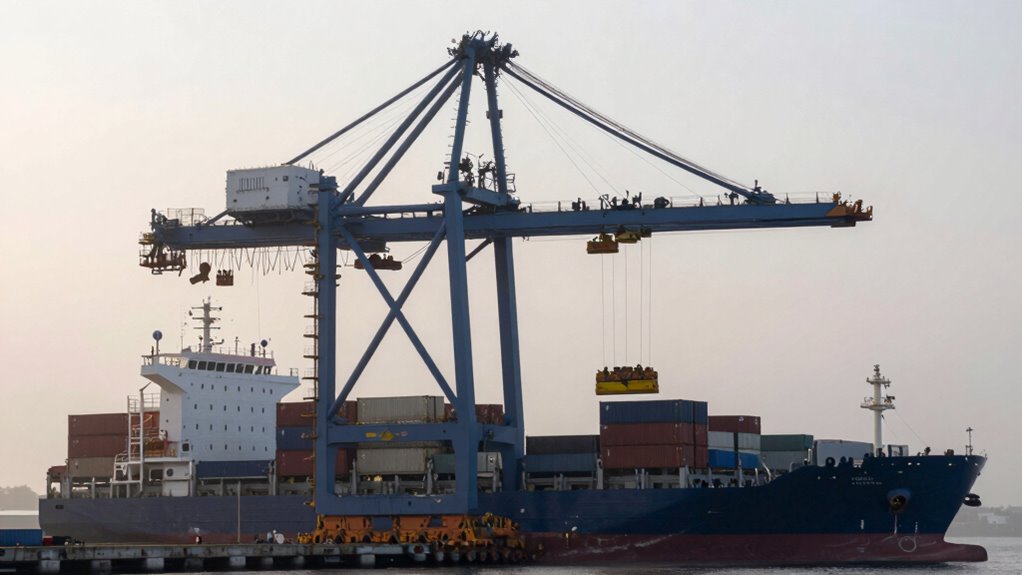
Have you ever assumed that a crane’s lift capacity tells the whole story? It’s a common misconception, but the truth is, there’s much more to a safe and efficient transfer than just the maximum weight the equipment can handle. Lift capacity is a critical factor, but it only scratches the surface. When planning a lift, you need to consider ground stability—how solid the surface beneath the crane is. Even if your crane’s capacity is sufficient, unstable ground can cause shifting or sinking, risking the entire operation. You must evaluate whether the ground can support the load, especially on uneven or soft terrain. Failing to do so can lead to accidents that damage equipment, delay your project, or even cause injuries.
Besides ground stability, equipment compatibility plays an essential role. Not all cranes or lifting devices are designed for every transfer. You need to match the crane’s specifications with the weight, shape, and size of the load. For example, a crane with a high lift capacity might still be incompatible if the rigging gear or attachments aren’t rated for the weight or are unsuitable for the load’s shape. Using incompatible equipment can compromise safety, cause equipment failure, or make precise positioning impossible. It’s necessary to double-check that all components—slings, hooks, spreader bars—are rated for the job and compatible with each other. Additionally, understanding the load’s center of gravity and how it interacts with the crane’s reach and boom length is essential. A heavy load positioned too far from the crane’s center can create leverage that exceeds the lift capacity, even if the weight itself is within limits. This is where a thorough assessment becomes necessary, factoring in the load’s distribution and how various elements of the lift interact.
Furthermore, considering ground conditions such as soil type and compaction can significantly influence stability and safety during lifts. Incorporating soil testing into your planning can help identify potential issues before the lift begins. A comprehensive risk assessment helps identify potential hazards and plan mitigation strategies, ensuring a safer operation. It’s also vital to consider the load’s shape and how it influences rigging and lifting techniques, as irregularly shaped loads may require specialized equipment or handling methods. Also, being aware of external conditions like wind and weather can help prevent unforeseen complications during the lift. Even if your equipment is perfectly suited and the ground is stable, external conditions can still pose risks. A proper assessment involves an integrated approach—balancing lift capacity with ground conditions, equipment compatibility, environmental factors, and load dynamics.
ground stability testing equipment
As an affiliate, we earn on qualifying purchases.
As an affiliate, we earn on qualifying purchases.
Frequently Asked Questions
How Does Transfer Technique Impact Safety During Patient Lifts?
Transfer technique directly impacts safety by ensuring patient comfort and proper transfer coordination. When you use correct methods, you minimize the risk of injury for both yourself and the patient, preventing slips or falls. Good technique also promotes smooth, coordinated movements, making the transfer safer and more comfortable. Paying attention to patient comfort encourages cooperation, while effective transfer coordination reduces strain and mishaps, ultimately creating a safer environment for everyone involved.
What Role Does Transfer Equipment Maintenance Play in Lift Success?
If you neglect transfer equipment maintenance, your lifts could suddenly fail when you need them most. Regular maintenance schedules are critical—they guarantee equipment stays reliable and safe. Without routine checks, wear and tear can compromise the equipment’s integrity, risking patient safety and your own. Staying vigilant with maintenance keeps your transfer equipment in top shape, making every lift successful and reducing hazardous surprises.
How Can Staff Training Improve Transfer Outcomes?
You can improve transfer outcomes by prioritizing staff training, focusing on skill development and staff education. When your team understands proper techniques and safety protocols, they’re more confident and effective during transfers. Continuous training keeps skills sharp and updates staff on best practices. This not only reduces the risk of injury but also guarantees smoother, safer transfers, creating a safer environment for both staff and patients.
What Are Common Risks Associated With Improper Transfers?
You risk turning a simple transfer into a disaster, and that’s no exaggeration. If you don’t handle transfers properly, patient comfort suffers, and environmental hazards like slippery floors or clutter can cause falls or injuries. Improper techniques can lead to skin tears, fractures, or even more serious harm. Always prioritize safe transfer practices, ensuring the environment is hazard-free and the patient feels secure, to avoid these potentially dangerous outcomes.
How Do Patient Characteristics Influence Transfer Planning?
You must consider patient characteristics when planning transfers by conducting a thorough patient assessment and mobility assessment. These assessments help you understand their strength, balance, and any limitations, ensuring a safe transfer. Factors like age, medical conditions, and cognitive status influence your approach. By tailoring your plan based on these assessments, you reduce risks and improve safety, making transfers smoother and more secure for both patient and caregiver.
Conclusion
So, next time you’re considering a transfer, remember—it’s not just about lift capacity. Sometimes, the smallest detail or the right timing makes all the difference. It’s funny how life often surprises us when things align perfectly—like a perfect transfer at just the right moment. Don’t overlook the unseen factors. Trust that with a little patience and attention, you’ll find success even when it seems like half the story is enough.
Halloween Picks
halloween
As an affiliate, we earn on qualifying purchases.