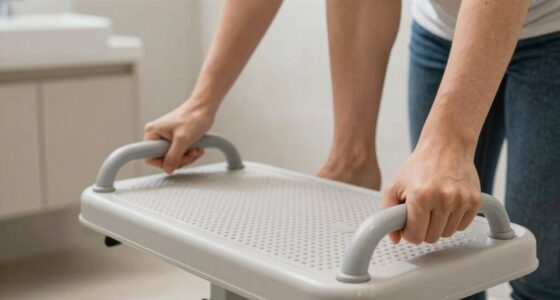

Choosing between a sit-to-stand and a full patient lift depends on what problem you’re trying to solve. If you want to promote independence and comfort for patients with partial mobility, a sit-to-stand lift might be best. But if safety and support for highly dependent or immobile patients are your goals, a full lift will serve you better. Keep exploring to discover how to match the right device to your patient’s specific needs.

Turn quiet afternoons into listening time
- Thousands of audiobooks, podcasts and originals
- Listen on your phone, tablet or Echo — also offline
- Cancel anytime
Key Takeaways
- Determine if the goal is to promote independence and comfort for partial weight-bearing patients or to ensure maximum safety for severe mobility issues.
- Choose a sit-to-stand lift for easier, space-efficient transfers focused on patient engagement; opt for a full lift for comprehensive support and stability.
- Assess environmental constraints: tight spaces favor sit-to-stand lifts, while larger, safety-focused settings benefit from full patient lifts.
- Consider transfer complexity: simple sit-to-stand transfers vs. complex lifts from lying or seated positions.
- Align device choice with patient mobility level and care objectives to effectively address specific transfer challenges.

Are you unsure whether a sit-to-stand lift or a full patient lift is the right choice for your needs? Deciding between these two options depends on understanding the specific problems you’re trying to solve, especially when it comes to patient comfort and equipment efficiency. If your priority is to promote independence while minimizing discomfort, a sit-to-stand lift might be the better option. This device allows patients to shift from a sitting to a standing position with support, which can help reduce strain and improve comfort. It’s especially useful for patients who need assistance with standing but can bear some weight. Because sit-to-stand lifts are generally smaller and easier to maneuver, they often result in better equipment effectiveness, making them ideal for facilities with limited space or those aiming to streamline transfers.
Sit-to-stand lifts promote independence, comfort, and efficiency, ideal for patients who can bear some weight and limited space settings.
However, if your patient requires more all-encompassing support, such as assistance with lifting from a lying or seated position into a wheelchair or bed, a full patient lift might be more appropriate. These lifts are designed to handle a broader range of movements and can accommodate patients with higher levels of dependency or those who cannot bear weight at all. While they might be bulkier and require more setup time, full patient lifts provide increased safety and security during transfers, which can substantially enhance patient comfort by reducing the risk of falls or injuries to caregivers. From an equipment effectiveness standpoint, full lifts might seem less nimble, but their versatility saves time when managing complex transfers, ultimately reducing caregiver strain and improving overall workflow.
Your decision should also consider the patient’s specific needs and mobility level. A sit-to-stand lift is less invasive and more comfortable for patients who can partially support themselves, making it easier for them to feel engaged in their transfer process. Conversely, if your patient’s condition is more severe, and they need full support during transfers, a full patient lift ensures safety and minimizes physical stress for both patient and caregiver. Think about the environment as well—smaller lifts are more suited for tight spaces, while full lifts excel in settings where stability and all-inclusive support are paramount.
Ultimately, the choice hinges on the problem you’re addressing: promoting patient comfort and efficiency with a sit-to-stand lift or providing full support and safety with a full patient lift. Understanding each device’s strengths helps you make an informed decision, ensuring the right balance between comfort, safety, and workflow efficiency in your care setting.
As an affiliate, we earn on qualifying purchases.
Frequently Asked Questions
How Do Costs Compare Between Sit-To-Stand and Full Patient Lifts?
The cost comparison shows that sit-to-stand lifts are generally more affordable upfront and easier on your budget. They typically have lower purchase prices and maintenance costs, making them ideal for facilities with tight budgets. Full patient lifts, while more expensive initially, can reduce labor costs and improve safety. When considering budget considerations, weigh the long-term savings and safety benefits of each option to make an informed decision.
What Training Is Required for Proper Use of Each Lift?
You need to follow specific training protocols and meet certification requirements to use both lifts safely. For sit-to-stand lifts, you’ll learn proper body mechanics, secure positioning, and device operation through hands-on training. Full patient lifts require thorough instruction on device setup, safe transfer techniques, and patient safety, often involving formal certifications. Ensuring you complete these trainings helps prevent injuries and guarantees proper, confident use of each lift.
Are There Specific Patient Conditions Suited for Each Type of Lift?
You’ll find that patient mobility and lift technology often go hand in hand. For patients with limited strength or balance issues, a full patient lift suits their needs, providing safe, supportive transfer, especially with fragile or heavy individuals. Conversely, for those with partial mobility, a sit-to-stand lift offers a less invasive, quick solution. Always assess individual patient conditions to choose the safest, most effective lift technology.
How Do These Lifts Affect Caregiver Safety and Ergonomics?
You improve caregiver safety and ergonomics with these lifts by reducing strain and preventing injuries. The sit-to-stand lift enhances ease of transfer, offering better patient comfort and less physical effort for you. A full patient lift minimizes awkward movements, protecting your back and joints. Both lifts make transfers safer and more comfortable, ensuring you maintain proper posture and reduce fatigue during caregiving tasks.
What Maintenance Is Needed for Sit-To-Stand and Full Patient Lifts?
You should regularly inspect and clean your sit-to-stand and full patient lifts to maintain device durability and guarantee user comfort. Check for loose bolts, worn pads, and battery charge levels, and replace parts as needed. Lubricate moving components to prevent squeaks and ensure smooth operation. Routine maintenance reduces breakdowns, extends lifespan, and keeps both caregivers and patients comfortable and safe during transfers.
Conclusion
Choosing between a sit-to-stand and a full patient lift is like selecting the right key for a lock—each opens a different door. You’re not just solving a mobility problem; you’re granting independence and dignity. By understanding the symbolism behind each tool, you guarantee safety and comfort, guiding your patient toward freedom. Remember, your decision isn’t just about equipment—it’s about opening pathways to trust, strength, and renewed hope.
Cold & flu season Picks
humidifiers
As an affiliate, we earn on qualifying purchases.