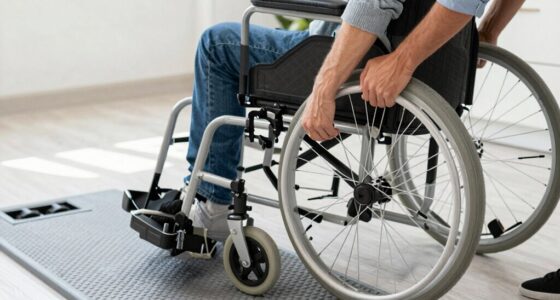

You need recline or tilt features more than speed because these adjustments focus on your safety and comfort. Slower, controlled movements help reduce the risk of falls and joint strain, especially if you have mobility issues or arthritis. They support proper posture, improve circulation, and prevent long-term aches. Prioritizing stability over quick adjustments means you can relax and stay safe. Keep exploring, and you’ll discover how ergonomic designs and assistive tech can make your seating even better.

Turn quiet afternoons into listening time
- Thousands of audiobooks, podcasts and originals
- Listen on your phone, tablet or Echo — also offline
- Cancel anytime
Key Takeaways
- Seniors prioritize safety and stability, preferring gradual adjustments over quick movements to prevent falls.
- Recline and tilt functions support better circulation and reduce joint pressure, enhancing comfort during prolonged sitting.
- These features aid in achieving proper posture, reducing musculoskeletal strain and promoting long-term health.
- Ease of controlled movement minimizes physical effort and reliance on others, maintaining independence.
- Focus on comfort and safety over speed helps accommodate mobility limitations and chronic conditions.

As seniors age, choosing the right seating options becomes increasingly important for comfort and safety. When it comes to recline or tilt chairs, the goal isn’t just about style or speed; it’s about supporting your health and well-being. You might find that these features are essential, especially if you experience mobility issues, arthritis, or chronic pain. Recline and tilt functions can help reduce pressure on your joints, improve circulation, and make daily activities more comfortable. Instead of prioritizing quick movements or rapid adjustments, many seniors need these features to enhance stability and ease of movement. That’s where assistive technology and ergonomic design come into play, making these chairs more than just furniture—they become tools for maintaining independence.
Assistive technology in recline or tilt chairs serves a critical purpose. These advancements include powered mechanisms that allow you to adjust your seat effortlessly, often with the push of a button. You won’t have to strain or rely on others to reposition yourself. This technology can help you find a comfortable posture, whether you’re resting, reading, or watching TV. It’s especially beneficial if you have limited strength or dexterity, guaranteeing you stay comfortable without risking falls or injuries. Ergonomic design complements this by shaping the chair to support your natural body curves, reducing strain on your spine, hips, and knees. It encourages proper alignment, which is essential for preventing long-term musculoskeletal issues. Incorporating ergonomic principles into chair design can significantly enhance your overall safety and comfort. Additionally, understanding assistive technology can help you select the most suitable features for your needs.
Many seniors find that the focus should be on comfort and safety rather than speed. When you’re seated, you want to feel secure, not rushed or unstable. Recline and tilt features allow you to shift your position gradually, helping you avoid sudden movements that could lead to falls. The ability to recline also assists in breathing and digestion, especially after meals, by helping you find a better posture. Additionally, these chairs often include features like adjustable headrests, lumbar support, and padded armrests, all designed with ergonomic principles to promote comfort throughout the day. Furthermore, water chemistry and maintenance play a role in ensuring that your environment remains safe and hygienic, which is especially important for individuals with mobility challenges. Proper care and regular maintenance of your seating environment contribute to a safer, healthier space, supporting your overall well-being. Regularly inspecting and maintaining your seating environment can prevent issues that compromise safety and hygiene.
electric recliner chair with tilt and recline
As an affiliate, we earn on qualifying purchases.
As an affiliate, we earn on qualifying purchases.
Frequently Asked Questions
How Do Recline and Tilt Features Improve Safety for Seniors?
Recline and tilt features improve safety for seniors by providing comfort enhancement, allowing them to adjust their seating position easily to avoid falls or discomfort. These features help reduce pressure points and improve circulation, minimizing health risks. Additionally, they consider aesthetic considerations, ensuring the chair remains attractive while supporting safety. You’ll find these adjustments make daily activities safer and more comfortable, promoting independence and confidence in seniors’ mobility.
Can Recline or Tilt Chairs Help With Specific Medical Conditions?
Reclining or tilting chairs can substantially benefit seniors with medical conditions like osteoporosis or arthritis, where ergonomic design and seating comfort are vital. Studies show that proper positioning can reduce pain and improve circulation. By adjusting the chair’s angle, you support better posture and ease pressure on sensitive areas, helping manage symptoms and enhance overall comfort. These features are essential for promoting health and well-being in daily routines.
Are There Age-Related Restrictions on Choosing Recline or Tilt Options?
There aren’t strict age restrictions on selecting recline or tilt options, but ergonomic benefits and aesthetic preferences often influence your choice. As you age, you might prefer options that enhance comfort, reduce pressure, and support posture, which recline and tilt functions supply. Consider your mobility, health needs, and style when choosing these features. Always consult with a healthcare professional to guarantee your chair’s adjustments align with your comfort and safety.
How Do I Determine the Best Recline or Tilt Angle for My Needs?
Choosing the right recline or tilt angle is like tuning a musical instrument—you want perfect harmony. To do this, consider your ergonomic positioning needs and comfort optimization. Test different angles to find the one that supports your back, aligns your hips, and reduces pressure points. Consult with a healthcare professional or ergonomic specialist if needed. Ultimately, the best angle feels natural and keeps you comfortable for extended periods.
What Maintenance Is Required for Recline or Tilt Chairs?
You should regularly inspect your recline or tilt chair for fabric durability and motor health. Clean the fabric to prevent wear and tear, and check for any tears or stains. Lubricate and test the motor periodically to guarantee smooth operation. If you notice unusual noises or sluggish movement, consult a professional for motor maintenance. Proper upkeep extends your chair’s lifespan and keeps it functioning safely and comfortably.
Conclusion
You might think speed is the key to comfort, but for seniors, recline and tilt features often matter more. These adjustments can improve circulation, reduce pressure sores, and boost overall comfort. Some experts believe these positions mimic natural postures, easing strain on joints and muscles. So, next time you’re choosing a chair, remember: prioritizing recline and tilt isn’t just about luxury — it’s about supporting health and well-being in everyday life.
Halloween Picks
halloween
As an affiliate, we earn on qualifying purchases.