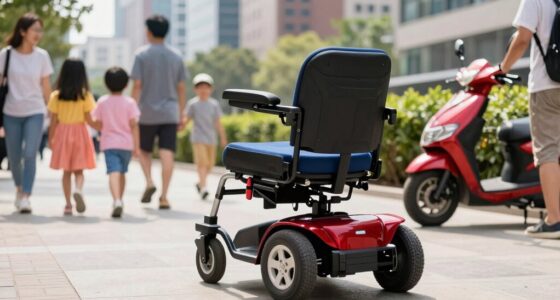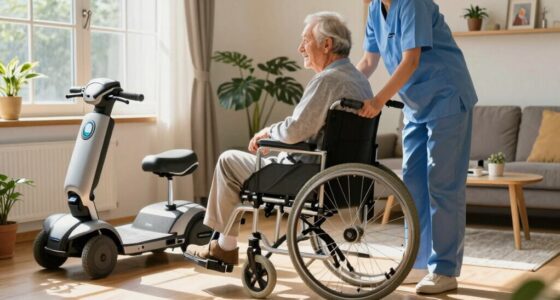
To determine if a senior can safely operate a power chair, assess their physical and cognitive abilities, such as strength, coordination, reaction time, and understanding of emergency procedures. Check if they comfortably manage controls and respond confidently in simulated hazards. Involving healthcare professionals for a thorough evaluation can help identify any concerns. If you want to guarantee safety and proper use, continue exploring expert tips and assessment methods further.

Turn quiet afternoons into listening time
- Thousands of audiobooks, podcasts and originals
- Listen on your phone, tablet or Echo — also offline
- Cancel anytime
Key Takeaways
- Assess the senior’s physical strength, coordination, and vision to ensure they can control the power chair effectively.
- Confirm their understanding of emergency procedures and ability to respond quickly in hazards.
- Observe comfort and confidence during control operation, noting any struggles or uncertainties.
- Involve healthcare professionals for comprehensive evaluations and tailored recommendations.
- Ensure familiarity with safety features and test their proper use in simulated emergency situations.

Determining if a senior can safely operate a power chair is essential for their independence and well-being. You want to guarantee they can navigate daily activities without risking injury or accidents. The first step involves evaluating their physical and cognitive abilities. Check if they have the strength, coordination, and vision necessary to control the device. Many power chairs come equipped with adaptive controls, which can be tailored to individual needs. If a senior has limited hand mobility or strength, adaptive controls like joystick modifications, touchpads, or sip-and-puff systems can make operation easier and safer. It’s also important to appraise their understanding of emergency procedures. They should know how to quickly stop the chair if they feel unsafe or if an obstacle appears suddenly. This includes familiarity with the power chair’s emergency stop features, such as an accessible button or lever that halts movement immediately. Testing their ability to respond quickly and correctly in simulated emergency situations helps determine if they can manage real ones confidently.
You should observe how comfortably they operate the controls, paying attention to their reaction time and precision. If they struggle with basic maneuvering or seem unsure about the controls, it might indicate that additional training or modifications are needed. Training sessions focusing on both operation and emergency procedures can boost their confidence and safety. During these sessions, guarantee they understand how to handle common hazards like obstacles, uneven terrain, or sudden stops. Also, verify that they know how to use safety features, such as seat belts, anti-tip mechanisms, and the power chair’s alarm system. These features are essential for preventing accidents and providing reassurance during use.
Additionally, assessing their familiarity with adaptive controls and ensuring they can operate them comfortably can significantly impact their safety. These controls can be customized to match their physical and cognitive abilities, increasing confidence and reducing risk. Furthermore, involving a healthcare professional or occupational therapist in the evaluation can provide valuable insights into their overall mobility skills and help tailor the appropriate solutions. A comprehensive assessment that includes regular skill evaluations can help identify any emerging challenges before they lead to safety concerns. It’s important to also consider the training and support available to ensure they feel confident and prepared. Regular reassessment is also crucial, especially if the senior’s health or abilities change over time. By thoroughly evaluating their physical capabilities, understanding of controls, and emergency procedures, you can guarantee they maintain their independence while minimizing risks. Additionally, staying informed about advancements in assistive technology can help identify new features that enhance safety and ease of operation.
power wheelchair adaptive controls
As an affiliate, we earn on qualifying purchases.
As an affiliate, we earn on qualifying purchases.
Frequently Asked Questions
Can a Senior Operate a Power Chair Without Prior Training?
A senior can operate a power chair without prior training, but it’s not recommended for safety reasons. Proper training is vital to guarantee power chair safety, helping them learn controls, navigation, and emergency procedures. Without training, the risk of accidents increases. It’s best to provide thorough instruction and assess their comfort and skills before trusting them to operate the chair independently, promoting safety and confidence.
What Are the Legal Requirements for Seniors Using Power Chairs?
Legal guidelines and safety regulations for seniors using power chairs vary by location, but generally, you’ll need to guarantee they have a medical assessment confirming their ability to operate it safely. You should also check if any licensing or registration is required, and follow manufacturer instructions for proper use. Staying compliant helps prevent accidents and ensures the senior’s safety, giving you peace of mind while they navigate their environment.
How Often Should a Senior’s Driving Skills Be Reassessed?
You should reassess a senior’s driving skills at least once a year, as age-related decline can creep up unexpectedly. Regular cognitive assessments help catch issues early, ensuring safety remains a steady ship on rough waters. If there are any concerns about their ability, more frequent evaluations are wise. Staying proactive keeps their independence secure while reducing risks for everyone on the road.
Are There Specific Medical Conditions That Disqualify Power Chair Use?
Certain medical contraindications, like severe cognitive impairments, uncontrolled seizures, or significant cardiovascular issues, can disqualify a senior from using a power chair. Equipment restrictions may also apply if they can’t operate controls safely. You should consult with healthcare professionals to assess these factors thoroughly. They’ll evaluate whether medical conditions or restrictions prevent safe use, ensuring the senior’s safety and independence while avoiding potential accidents.
How Do Environmental Factors Affect a Senior’s Ability to Operate a Power Chair?
Did you know that over 60% of seniors face mobility challenges due to environmental factors? Environmental assessments reveal how uneven terrain, poor lighting, or cluttered spaces can hinder safe power chair operation. These factors directly impact a senior’s ability to navigate confidently, increasing fall risks. To guarantee safety, evaluate surroundings carefully, address hazards, and adapt environments, helping seniors maintain independence and reduce accidents while using their power chairs.
Conclusion
Ultimately, keeping an eye on your loved one’s abilities can feel like a coincidence of care and concern coming together. When you notice small changes—like hesitations or difficulty steering—you’ll realize it’s time to reassess their safety. Sometimes, those subtle signs show up when you least expect, reminding you that staying attentive is key. By staying observant and supportive, you help guarantee they enjoy independence without risking their safety—turning everyday moments into a shared commitment to well-being.
Halloween Picks
halloween
As an affiliate, we earn on qualifying purchases.