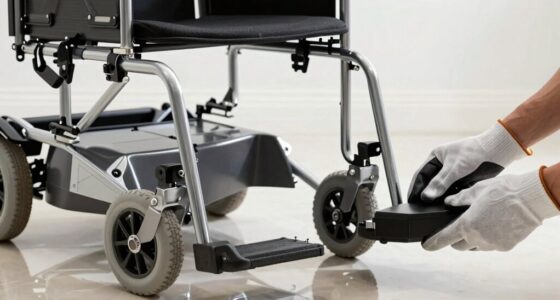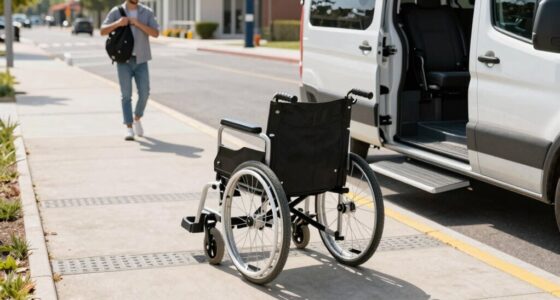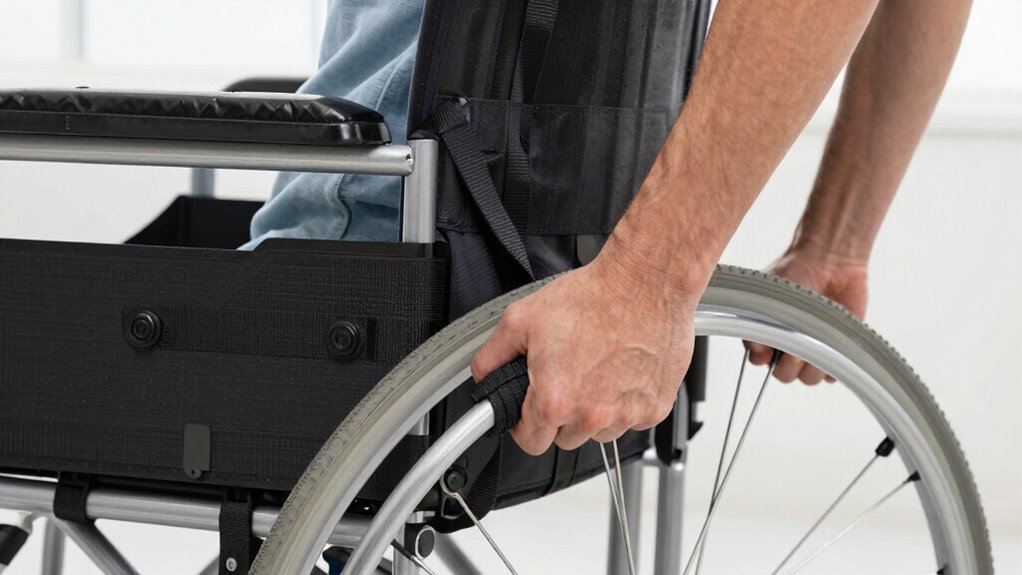

Before lifting heavy mobility gear, you should assess the weight and plan your approach carefully. Use proper ergonomic techniques by keeping objects close, maintaining a straight back, and bending at your hips and knees. Always ask for assistance if needed and use mechanical aids when available. Remember to check your environment for hazards and avoid twisting your body. Following these safety tips will help you handle mobility gear more safely—learn more to protect yourself and your patient.

Turn quiet afternoons into listening time
- Thousands of audiobooks, podcasts and originals
- Listen on your phone, tablet or Echo — also offline
- Cancel anytime
Key Takeaways
- Assess the weight and plan your movement to avoid sudden, awkward motions, ensuring proper control.
- Use mechanical aids or assistance for heavy or cumbersome mobility devices.
- Maintain a straight back, bend at hips and knees, and keep objects close to your body during lifting.
- Avoid twisting your torso; turn your feet to move the entire body instead.
- Take breaks, stretch regularly, and recognize personal limits to prevent fatigue and injury.

Caring for someone who relies on heavy mobility gear can be be physically demanding and requires careful planning. When you’re tasked with lifting or repositioning mobility devices like wheelchairs, scooters, or other assistive equipment, manual handling becomes a critical concern. It’s essential to approach these tasks with proper techniques to prevent injury to yourself and the person you’re assisting. Using ergonomic techniques helps guarantee that you lift safely, reducing strain on your back, shoulders, and arms. This means keeping the object close to your body, maintaining a straight back, and bending at your hips and knees rather than your waist. By doing so, you distribute the weight more evenly and lessen the risk of muscle strain or injury.
Proper ergonomic techniques reduce injury risk when lifting or repositioning mobility devices.
Before attempting any lift, take a moment to assess the situation. Check the weight of the mobility gear and consider whether you need additional help or equipment, like a transfer belt or lift assist. Planning your movements ahead of time minimizes sudden, awkward motions that could lead to injury. When you’re ready, position yourself close to the device to maximize control and minimize the effort required. Avoid twisting your torso during the lift; instead, move your feet to turn your whole body. This is especially important when handling bulky or awkward items that might shift unexpectedly. Remember that proper body mechanics can greatly influence the safety and ease of lifting tasks.
Additionally, be aware of your own physical limits and avoid pushing beyond your comfort zone. If the mobility gear is particularly heavy or cumbersome, don’t hesitate to ask for assistance or use mechanical aids designed to make the task easier. Proper training on ergonomic techniques can also boost your confidence and safety when handling these devices regularly. Incorporating proper body mechanics into your routine can significantly reduce the risk of injury and enhance overall safety during transfers.
Furthermore, taking regular breaks and stretching can help prevent fatigue and reduce the likelihood of injuries caused by overexertion. Additionally, be sure to check the environment for obstacles or hazards that could interfere with safe handling. Proper body mechanics and ergonomic principles are vital for maintaining your health while providing essential care.
As an affiliate, we earn on qualifying purchases.
Frequently Asked Questions
How Often Should Heavy Mobility Gear Be Inspected for Safety?
You should inspect heavy mobility gear regularly, ideally before each use, to guarantee safety. Follow strict safety protocols by performing thorough equipment maintenance checks, looking for wear and tear, loose parts, or damage. This routine helps prevent accidents and prolongs the gear’s lifespan. Additionally, schedule more detailed inspections periodically—such as monthly or quarterly—based on manufacturer guidelines and usage frequency, to keep everything functioning safely and reliably for your loved ones.
Are There Specific Training Programs for Lifting Heavy Mobility Equipment?
Yes, there are specific training programs designed for lifting heavy mobility equipment. These programs teach you proper lifting techniques to prevent injuries and promote safety. They often include instruction on ergonomic equipment, which helps reduce strain during lifts. By participating in these trainings, you’ll learn how to handle heavy gear safely and efficiently, ensuring both your well-being and that of the person you’re assisting.
What Are the Signs of Caregiver Strain or Injury From Lifting?
You might not realize it, but nearly 80% of caregiver injuries come from lifting. Signs of strain include persistent back pain, muscle soreness, or numbness, signaling injury risk. To prevent this, use ergonomic techniques like bending your knees and keeping the load close, which helps with injury prevention. If you experience these symptoms, take a break and seek medical advice to avoid long-term issues.
Can Heavy Mobility Gear Be Safely Transported in a Vehicle?
Yes, you can safely transport heavy mobility gear in a vehicle if you focus on vehicle safety and equipment securement. Make certain the gear is properly secured using straps or tie-downs to prevent shifting during transit. Position the gear to maintain vehicle balance and avoid obstructing your view or access to controls. Regularly check the securement during the trip, and always follow manufacturer instructions for both the gear and your vehicle.
What Are Alternative Methods to Lifting Heavy Mobility Gear Safely?
You should use ergonomic techniques, like keeping your back straight and bending at your hips and knees, to lift heavy mobility gear safely. Additionally, employ assistive devices such as transfer belts, slide sheets, or hoists to reduce strain and prevent injury. Always plan the lift, ask for help if needed, and make certain the pathway is clear. These methods protect both you and the person you’re caring for.
Conclusion
Remember, using proper lifting techniques protects both you and your loved one. It might seem easier to rush or rely solely on strength, but rushing increases the risk of injury. Instead, take a moment to plan, bend your knees, and keep the gear close to your body. Picture yourself lifting confidently and safely—this mindset guarantees you avoid strains and accidents. With a little care, you can make every transfer smooth, safe, and stress-free for everyone involved.
Evergreen bestsellers Picks
bestsellers
As an affiliate, we earn on qualifying purchases.