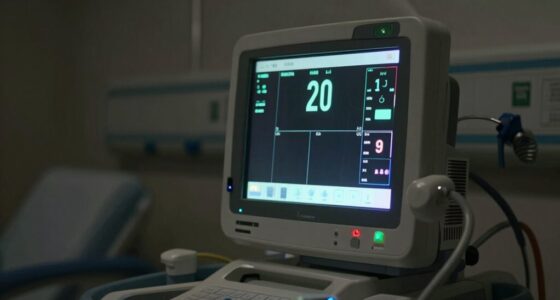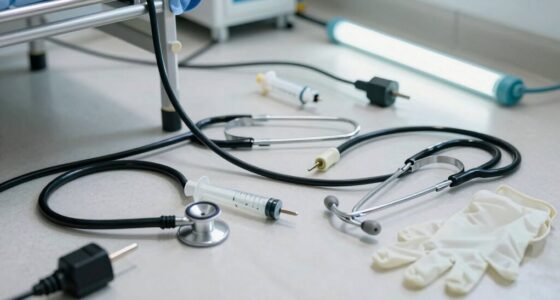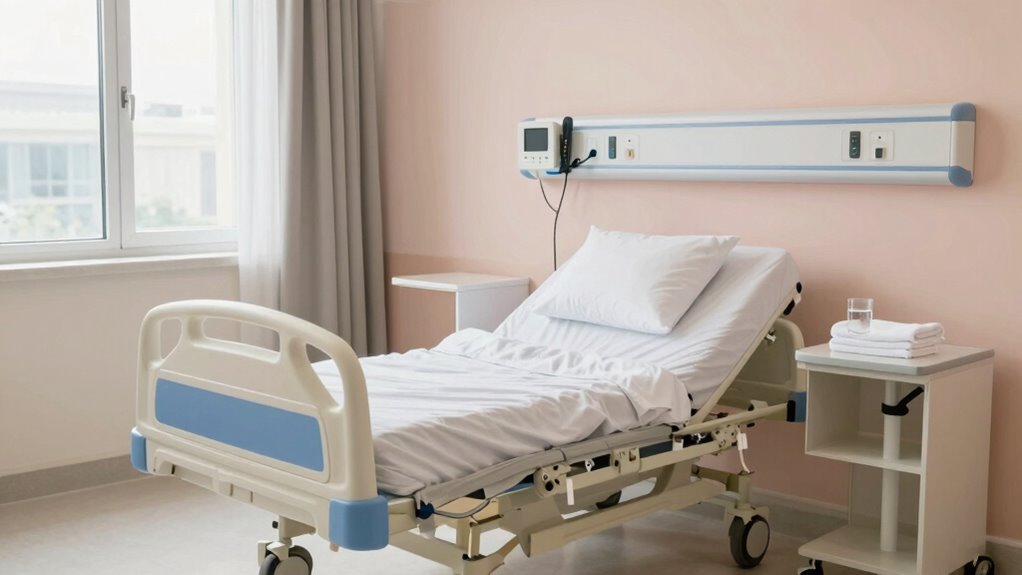

Create a calm, organized recovery room by choosing a quiet spot with good lighting and minimal clutter. Keep essentials like medications, wound care supplies, and mobility aids within reach in labeled containers. Use non-slip flooring and install grab bars for safety. Keep the environment cozy with supportive furniture and adjustable lighting to suit your needs. By setting up this comfortable space, you’ll make home care easier from day one. Stay with us to learn more helpful tips.

Turn quiet afternoons into listening time
- Thousands of audiobooks, podcasts and originals
- Listen on your phone, tablet or Echo — also offline
- Cancel anytime
Key Takeaways
- Designate a quiet, well-lit space with adjustable lighting and comfortable furniture for optimal rest and ease of movement.
- Organize all supplies in labeled, accessible containers to streamline daily care routines and reduce search time.
- Install safety features like non-slip flooring and grab bars to prevent falls and enhance mobility.
- Keep essential items, emergency contacts, and medications within arm’s reach for quick access.
- Maintain a clutter-free environment with proper ventilation and easy waste disposal for safety and hygiene.
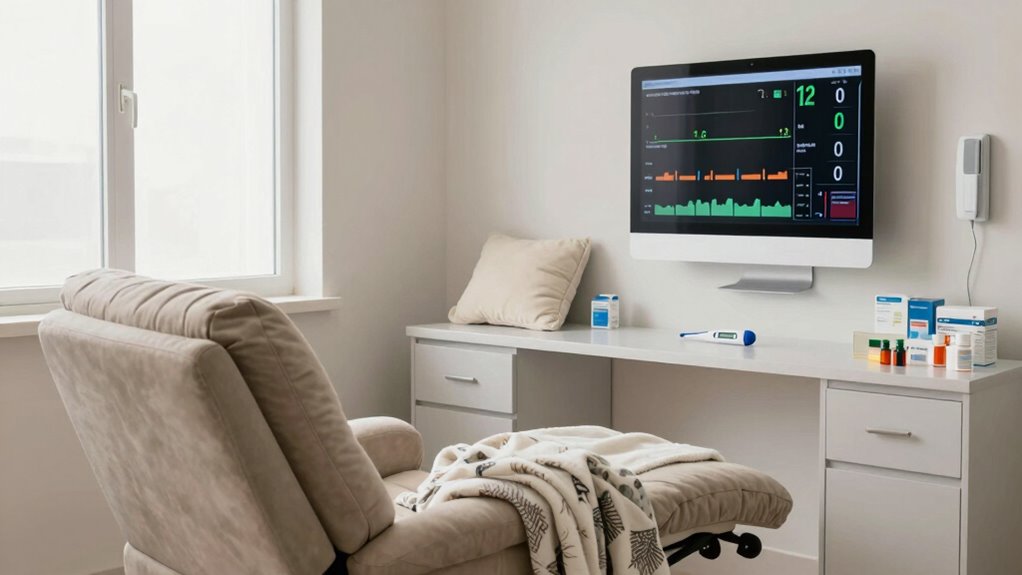
Have you ever wondered how to create a comfortable and efficient recovery room? Setting up a space that promotes healing and makes home care easier from day one isn’t just about placing a bed or chair—it’s about thoughtful planning. The goal is to guarantee post-surgery comfort and streamline equipment organization so that everything you need is within easy reach. When you prioritize these aspects, you reduce stress and help foster a smooth recovery process.
Start by choosing a quiet, well-lit area with minimal foot traffic. Comfort is key, so invest in a supportive, adjustable bed or recliner that allows the patient to sit or lie comfortably. Use soft, breathable bedding and have extra blankets available for added warmth and comfort. Keep in mind that post-surgery, patients may experience discomfort or fatigue, so the environment should be inviting and calming. Good lighting is essential—consider adjustable lamps so you can control brightness based on needs, whether they’re resting or reading.
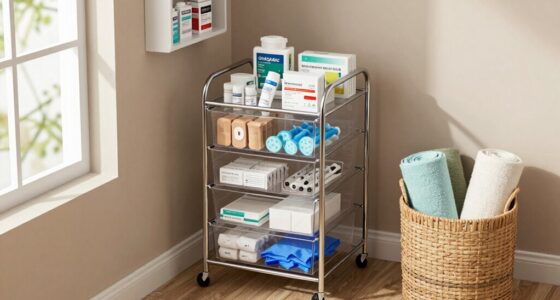
Equipment organization plays a crucial role in making home care manageable. Gather all necessary supplies beforehand and organize them in a designated spot near the bed or chair. This typically includes medications, wound care supplies, hand sanitizers, and any mobility aids like walkers or crutches. Use clear containers, labeled if needed, to keep small items tidy and easily accessible. An organized setup minimizes the time spent searching for supplies and helps maintain cleanliness. It also reduces the risk of misplaced items, which is especially important when quick access to medications or emergency supplies is needed. Additionally, incorporating biodiversity-friendly practices, such as using eco-friendly storage solutions, can contribute to sustainable living even in a home care environment. Including proper lighting can further enhance safety and ease of use, especially during nighttime hours. Ensuring that the space is ergonomically arranged can also help prevent strain for both the patient and caregiver during daily routines. Paying attention to air quality by maintaining good ventilation can help reduce the risk of infections and promote overall well-being in the recovery environment.
In addition, install essential tools within arm’s reach—like a bedside table with drawers or shelves—to keep essentials close without cluttering the space. Keep a trash bin nearby for easy disposal of used tissues, gloves, or other waste. For safety, ensure the flooring is non-slip and free from clutter that could cause falls. If the patient has mobility restrictions, consider adding handrails or grab bars for added security. Keep emergency contact information, a phone, and a list of medications nearby, so you’re prepared for any situation.
adjustable hospital bed for home use
As an affiliate, we earn on qualifying purchases.
As an affiliate, we earn on qualifying purchases.
Frequently Asked Questions
How Do I Choose the Best Location for the Recovery Room?
You should choose a quiet, easily accessible space close to your main living area for your recovery room. Use decorating tips like calming colors and comfortable furniture to create a relaxing atmosphere. Incorporate good lighting ideas, such as adjustable lamps and natural light, to guarantee the room is bright enough for daily activities while maintaining a soothing environment. Prioritize convenience and comfort to make recovery smoother from day one.
What Safety Features Are Essential in a Recovery Room?
Did you know that proper safety features can reduce post-surgery complications by up to 50%? In your recovery room, prioritize emergency preparedness with accessible first aid supplies and clear exit routes. Guarantee medication management is foolproof by organizing medicines safely and labeling them clearly. Install non-slip mats and secure electrical outlets to prevent accidents. These features help you respond quickly and confidently, creating a safer environment for your recovery journey.
How Can I Make the Space More Comfortable for the Patient?
You can make the space more comfortable by adding decorative lighting that creates a warm, calming atmosphere, helping your patient relax. Choose comfortable furnishings, like plush chairs or a supportive bed, to guarantee they feel cozy and at ease. Keep essentials within reach, and consider soft textiles or blankets for added comfort. These touches help create a soothing environment, making recovery less stressful and more pleasant from the very first day.
What Medical Supplies Should Always Be Stocked in the Recovery Room?
You should always stock essential medical supplies like pain relievers, antiseptics, and bandages to guarantee quick response. Keep medication management tools like pill organizers and dosing schedules handy, and prioritize emergency preparedness with a thermometer, gloves, and a first aid kit. By having these supplies ready, you create a safe, efficient recovery environment, enabling you to manage medications effectively and respond swiftly to emergencies.
How Do I Ensure Proper Infection Control in the Recovery Area?
To guarantee proper infection control, you should follow strict sterilization procedures for all medical tools and surfaces, preventing cross-contamination. Always wear personal protective equipment like gloves, masks, and gowns when caring for patients, and change them regularly. Keep the recovery area clean and organized, disinfect high-touch surfaces frequently, and wash your hands thoroughly. These steps create a safer environment and promote faster, safer recovery for your loved ones.
Conclusion
With a well-organized recovery room, you create a sanctuary where healing feels like a gentle tide, constantly guiding you toward wellness. By setting up essentials within reach and ensuring a calming environment, you’re not just preparing a space—you’re crafting a haven that makes every moment of recovery smoother from day one. Think of it as planting the roots of comfort and care, helping you bounce back stronger and more resilient with each passing day.
Halloween Picks
halloween
As an affiliate, we earn on qualifying purchases.