
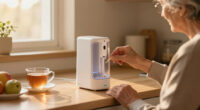
As a caregiver, you should keep essential items like medications, emergency contacts, a flashlight, a phone, and basic comfort items within arm’s reach to guarantee safety and quick access. Avoid clutter, hazardous objects, or heavy, unstable items that could cause trips or injuries. Keep pathways clear and store anything that might pose a risk out of reach of children and pets. To discover more tips on maintaining a safe, accessible space, keep exploring the key details.

Turn quiet afternoons into listening time
- Thousands of audiobooks, podcasts and originals
- Listen on your phone, tablet or Echo — also offline
- Cancel anytime
Key Takeaways
- Store essential safety items like a flashlight, phone, and medical info within easy reach for emergencies.
- Keep medications, medical devices, and frequently used items nearby, but out of children’s and pets’ reach.
- Avoid clutter and hazardous objects near the bed to prevent trips and accidents.
- Limit items to only necessary safety and health tools to reduce clutter and confusion.
- Do not place heavy, unstable, or potentially dangerous objects close to the bed area.
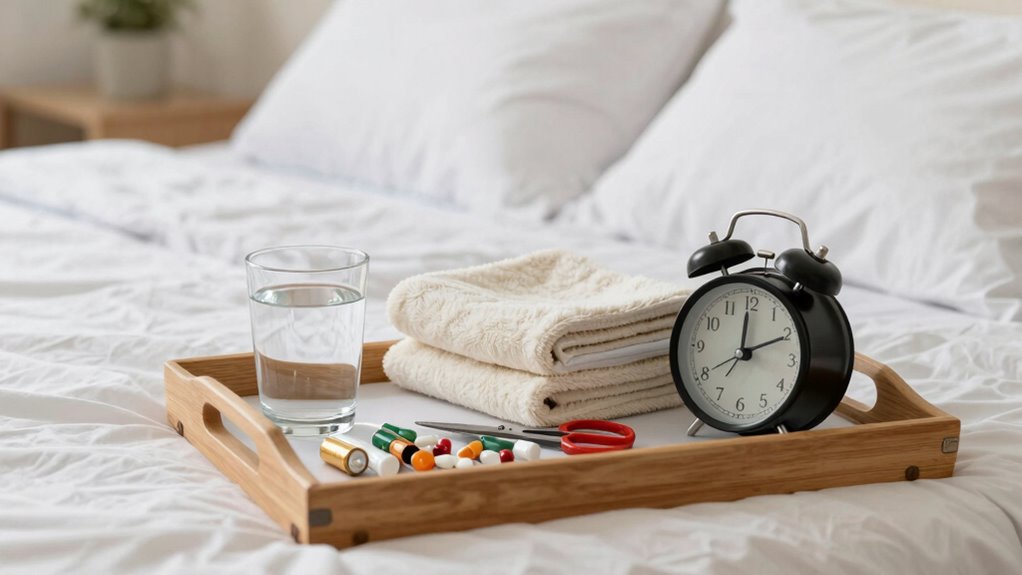
When caring for someone near the bed, having essential items within easy reach can make a significant difference in safety and comfort. The goal is to guarantee that everything you need is close at hand, so you can respond quickly without confusion or delays. One of the most important aspects of this is medication safety. Store medications in a clearly labeled, secure container, preferably in a designated spot that’s easy to access but out of reach of children or pets. Make sure you keep a current list of all medications, including dosages and times, nearby. This helps prevent errors, especially if someone else needs to step in or if you’re coordinating with healthcare providers. Also, consider keeping a medication schedule or reminder system close by to assure doses aren’t missed or doubled.
Emergency contacts are another vital element to have within arm’s reach. Write down or save on your phone the numbers of healthcare providers, family members, and emergency services, and keep this list in a visible spot. This way, if an emergency arises, you don’t waste valuable time searching for contact information. It’s also helpful to have a quick-reference card with relevant medical information, allergies, or special instructions for the person you’re caring for. Having these contacts readily available can streamline emergency responses and provide peace of mind. Keeping a medical information card nearby can be especially useful in urgent situations.
Beyond medication safety and emergency contacts, there are other essential items you should store near the bed. A flashlight or a small lamp is useful in case of power outages or if you need to see clearly at night. Keep a glass of water and some tissues handy, so you can attend to basic needs without unnecessary movement. If mobility is limited, having a reacher or grabber within reach can help avoid unnecessary strain or falls. Additionally, consider placing a phone or a communication device nearby to call for help or check in with others as needed. To further enhance safety, consider placing non-slip mats around the bed area to reduce the risk of slipping or falling on smooth surfaces. Also, regularly checking the bedside area for hazards can help maintain a safe environment. Keeping the space clutter-free not only prevents accidents but also ensures that emergency items are easy to locate quickly when needed.
medication organizer with secure lock
As an affiliate, we earn on qualifying purchases.
As an affiliate, we earn on qualifying purchases.
Frequently Asked Questions
How Often Should Caregivers Replace Items Stored Near the Bed?
You should replace personalized accessories and decorative items near the bed every few months or when they show signs of wear or damage. Regularly updating these items helps keep the space safe and inviting. Be mindful to avoid clutter, which can be a tripping hazard. Checking and revitalizing these items ensures the caregiver’s environment remains comfortable, safe, and personalized without becoming unsafe or outdated over time.
Are There Specific Safety Standards for Items Stored Near the Bed?
Yes, there are specific safety standards for items stored near the bed, focusing on bedside safety and storage regulations. You should guarantee that items are within easy reach but not cluttered, reducing tripping hazards. Avoid storing sharp objects or flammable items close to the bed. Follow guidelines from health authorities or safety organizations to prevent accidents, and regularly review your storage setup to maintain a safe environment for the person you’re caring for.
Can Storing Certain Items Cause Health or Safety Risks?
Storing hazardous materials near the bed can ensure safety risks, with studies showing that clutter risks lead to nearly 20% of falls in homes. Items like medications or cleaning supplies, if not stored properly, can cause health hazards or accidental poisoning. Clutter risks are worse at night when quick access is needed, so keep dangerous items out of reach and organize your space to prevent accidents and guarantee safety.
How Should Medications Be Stored Near the Bed?
You should store medications near the bed following medication safety and storage guidelines. Keep them in a secure, clearly labeled container out of children’s reach, ideally in a bedside drawer or cabinet. Make certain they are stored at room temperature unless specified otherwise. Regularly check expiration dates and avoid keeping outdated meds nearby. Proper storage minimizes accidents and maintains medication effectiveness, so always prioritize safety and adherence to recommended guidelines.
What Are Emergency Essentials to Keep Within Easy Reach?
Keep emergency supplies like a flashlight, batteries, a first aid kit, and a phone charger within easy reach to guarantee quick access during emergencies. Safety precautions include regularly checking these items, replacing expired supplies, and keeping them in a designated, accessible spot. By doing so, you can respond swiftly to emergencies, minimizing risks and ensuring both your safety and the person you’re caring for are protected.
Conclusion
By keeping essential items within reach and avoiding clutter, you can guarantee safety and quick access when needed. Remember to store things like medications, a phone, and a glass of water nearby, but steer clear of loose cords or heavy objects that could cause accidents. Isn’t it worth creating a safe, organized space that promotes peace of mind and quick response? Ultimately, a well-arranged bedside can make all the difference in caring for your loved one.
Cold & flu season Picks
humidifiers
As an affiliate, we earn on qualifying purchases.